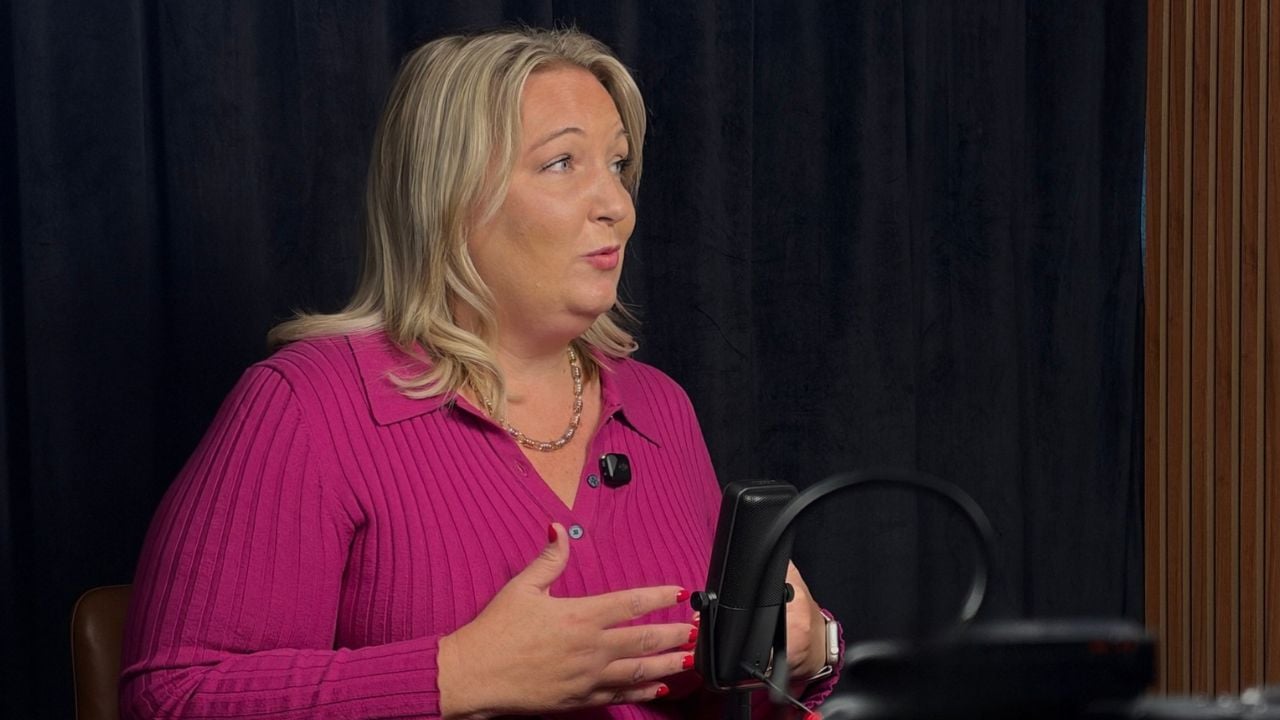
If you’d prefer to listen, you can stream the full episode on Spotify and Apple Podcasts or watch the video version here. For accessibility, we’ve included the full transcript below for anyone who prefers to read along or who is hearing impaired.
Rachel Smith: When I'm working 60 hours, I'm not my best for my clients, not my best for my family. Nothing good is coming out of me if I'm working that much. When I'm working a delegated chunk of time, I become extremely trustworthy. And it is notable that I think we as realtors need to remember we are helping people with the largest transaction in their life in a lot of cases. We've got to be our best.
Welcome to The Justin Landis Show, your real estate podcast about having conversations, building relationships, and creating freedom.
Justin Landis: Today I'm here with one of Bolst's top producers, Rachel Smith. Rachel, thanks for being here today.
Rachel Smith: Hey, thanks for having me.
Justin Landis: Rachel, I cannot wait to dig into things with you today, especially how you probably were working while your Tesla was driving you here. Are we going to get into that today?
Rachel Smith: Yeah, let's talk about that.
Justin Landis: We'll definitely get to that at some point, because what we're talking about is you have built a high volume business working part time. And I wanted to get that out up front because I know people are going to be really curious about that. So tell us a little bit about how you got into real estate, and then we can get to what led you to build the business you have today.
Rachel Smith: Yeah, I'm glad to be here. Thanks for having me. So about six years ago, we had a pandemic, obviously. Before that, I was primarily a stay-at-home mom for three boys, at the time they were about 12 and younger. I was doing a lot of part-time work, a lot of fundraising and volunteering at the school, all these things filling my time. The pandemic hit, it all shut down, and my husband and I were out for a walk and he said, you know what, I wonder if you could actually make some money. And I was like, oh, could you please make some money, he's like, can you be a contributor, sure, sure, I can. But I looked at him and said, well, what would I do, I mean, I've been home with kids primarily for 15 years, what fits? And he was like, you are obsessed with houses, you're obsessed with making home, you're obsessed with the lighting in our house, you're obsessed with the countertops, you're obsessed with the space and making sure people feel comfortable, he's like, why don't you buy and sell houses? And I was like, I don't know if I can, I barely paid attention when we bought our houses. And he laughed and said, why don't you just give it a try? So I signed up for the class, took the class, turns out they don't teach you anything in the class, they did not teach you how to help people buy and sell houses.
Justin Landis: Absolutely not.
Rachel Smith: But past the class, I knew how large an acre was, so that was good.
Justin Landis: I think I still know, which in the city of Atlanta is very helpful since there are no lots that are an acre.
Rachel Smith: There are no acres.
Justin Landis: Exactly.
Rachel Smith: Yeah, so I ended up passing everything, and then I was like, well shoot, now what, I don't really know anything. So I looked you up and I stalked you for a minute and I called you to see if I could get on your team. That was my end goal.
Justin Landis: And you did, you joined the team and it was immediately a success. I knew when I met you, you got started, I was like, she is amazing, she's going to do amazing. And you did, first year at JLG, Rookie of the Year.
Rachel Smith: Yeah, it was awesome. So I called you excessively, and I think I had a couple of friends call you too because I called my friends and said, I know I can do this, I just need some other people to vouch for me because I have no work history, he's not even going to look at me. So I think that they maybe got shuffled over to Jared. Anyway, got in the door at JLG, had a dynamite year. And then after a little while on the team, I decided to go on my own, which we've never talked about this, but I'm so sorry that I left.
Justin Landis: Well, let's just hash it out right here publicly on the podcast. I mean, that first year, you were a great fit for the team, and this maybe is something people will be interested in, because if I remember correctly, you loved it, and we loved you, but then it just wasn't the right fit for your business moving forward. Maybe tell people a little bit about that, because that can be helpful for somebody listening.
Rachel Smith: Absolutely. So being on a team was amazing. I remember the first phone call I did, we were on a Zoom, it was the pandemic, and I got off and went to my husband and said, I finally found people who are like me. There were like 20 of us on this call, and all of them made me feel at home. I was like, these people are as loud as I am, they talk as much as I am, they're hilarious like I am. And he was like, no, hold the phone.
Justin Landis: Yeah, you and I, we talk loud and we're hilarious, it's a great combo.
Rachel Smith: It's a great combo. So they were all boisterous, and I was like, this is a great fit. After I got into it, I started to realize pretty quickly that I naturally was able to navigate my sphere, and I was able to leverage a lot of what I had done for 15 years as a stay-at-home mom and get that converted over into real business. I found that I enjoyed that more than working with the team leads. But I love the team, it's a luxury product, you get your marketing, you get camaraderie, but I didn't have space for a luxury product in my life.
Justin Landis: Yeah, because you had a lot of other things going on, and that was one of your prime factors in your decision.
Rachel Smith: Absolutely, absolutely. And I really would encourage any new agent to go on a team just to learn the business. When we say I didn't know, Ben literally sat down with me and said, so what do you know about real estate, Rachel? And I was like, I mean, nothing, I know the size of an acre. And he said, okay, let's go through and talk about some basics, and I said, yeah, yeah, that sounds good. He's like, earnest money, and I was like, he's like, due diligence, and I was like, nope, nope, not it. And he was like, you really don't know anything, and I said, nope, you really are going to have to teach me. This is why I called Justin excessively, because I knew, I was like, I did not pay attention when I was buying my houses. So Ben taught me everything I know.
Justin Landis: Yeah, it was a luxury to be on the team. And then so you made the decision to go on your own. Tell us what happened then, and what were your goals once you started working your own business?
Rachel Smith: Yeah, so my goal before I left was to hit five million in volume and have 75% of that be my own sphere, that was sort of the rule of thumb, and I thought that would probably take me a couple of years. It took me about ten months. And when I left, I worked my tail off, to be honest, it takes a lot to build out your business. I was working a lot of hours, and had to figure out your systems, so I was adapting a lot of the systems that you taught me into my own business, and I was learning how to do marketing, learning how to manage my time better. I didn't have a team meeting that held me accountable, so then I also had to learn how to read the statistics about the market on my own and really evaluate them and think of them critically. So there was a lot that came at me that first year, and I worked a lot of hours. A lot of hours.
Justin Landis: But you knew after you did that, you didn't want to keep doing it. So how did you start to make the shift from I'm working 60 hours to now, we're going to get to it in a little bit, you're working part time and doing even more volume. So how did that shift start to happen from I'm working all the time to my business is a lot more intentional and productive per hour?
Rachel Smith: I found, well, I'll be real honest, I negotiated a deal on Christmas with Mark Dacre, our lender, he was in it as well. We were talking on Christmas day and I was missing my family life. And then that same year, we had people over for Easter, and everybody had finished the meal and they're doing dishes, and it's still fun time, and I had to go show houses. And I said, this is not sustainable. And what I noticed, sort of in my periphery, in my family, was that my kids did not find me trustworthy. My clients found me trustworthy.
Justin Landis: Because you were showing up for them on Christmas and Easter.
Rachel Smith: Showing up, yep. My kids, I felt some distance, and that was heartbreaking. My top priority was to raise these boys into men, and I was missing it. So I knew I had to figure something out. I think after that year I also ended up really sick, and I was like, I've got to figure this out, like this cannot be how people are making money, there's no way. So I did an audit, I started really looking at how I use my time. I really looked at what my family needed, and I actually started with what my family needed, and then I let work fit into that. So I was looking at what hours of the day was my family occupied, what hours of the day did I actually have available, what seasons, like summers were definitely chaotic, so I knew I would have to throttle back my business in the summer, and then I could ramp up again in Q1, Q2, and Q4, but that Q3 was going to be rough.
Justin Landis: I want to pause here for everybody, because I think this is really practical, to take an audit of both the things you are doing and what your priorities are. Because one way to take an audit, I'm actually doing one right now, we were talking about this before we started, and it's quite frankly a little depressing how much time I am not doing things that are productive. You can just list everything you're doing, I'm listing like everything, like open the mail, forward this email, send a code to somebody, seeing all the things you're doing. That's one thing, but you also said, what do I want to be doing? So you also had there, hey, at three o'clock I need to pick the boys up from school, three to four, not available. And then you've got to work those things you are doing into the things that are top priority, which often means getting rid of things, right? I mean, that's one of the biggest things, getting rid of things that are not highest value.
Rachel Smith: Exactly, which does mean that there are sections of my business that are not robust, and that had to be okay. So marketing is one of those things where I really had to lean on Bolst to provide my marketing, it's not my own flair, it's not my own personality, but because of my limited time, I was like, man, I've really just got to use the leverage that Bolst offers. And I started to tick off a lot of my business and think, okay, where else can I find this? So if I'm not showing houses at certain times during the week, then how do I make sure my clients are still taken care of? It means I need to train a showing assistant in the exact way I want them showing the houses, and then I need to have a relationship with them that's trustworthy. So that takes time and thoughtfulness to build up to having enough leverage to make sure that you can guard your space.
Justin Landis: Yep. And now you have built that leverage, you've built a system. Tell everybody, how much do you think you're working now, and how much volume are you doing this year?
Rachel Smith: So this year, I would love to talk about throttling your business. So last year, in the last 12 months, it's been about a million.
Justin Landis: Awesome, congratulations.
Rachel Smith: But a lot of that business was at the front end of the last 12 months, because we had a lot of personal stuff in our family, I sent a kid to college, I had an in-law move here to be near family, and my sister got married. So we had a lot of extra in our life. The way I work my life, there's not a lot of room for extra. So what I had to decide at the beginning of the year was, I need to throttle this whole thing back this year and have to be okay with it. So my volume dropped substantially the second half of the year, and now I'm back in, after we had the Top Producers Conference, I was like, okay, I'm ready to re-throttle. And I know that I'm capable of shifting my business into different gears depending on my life. I refuse to be a slave to my work, I refuse to put my family on the back burner, which means that I also will make less this year than I did last year. It has to be okay, and as long as I plan on it, it's okay.
Justin Landis: So deciding to go part time, so what I would call part time...
Rachel Smith: So I would say I work 20 productive hours.
Justin Landis: That's more than I'm going to pay for this week, I'm going to be here 50 hours.
Rachel Smith: I doubt that that is true, Justin, I know you better than that. But I know that I have the hours from nine until two every day that I've blocked to be fully productive. And so what that means to me is that I am not hobbying around, I am not looking on the FMLS and just scrolling through houses to see what's pretty, I am not. I am literally saying, okay, what is productive, what's going to move my business forward, and what needs to be taken care of right now. I don't break for walks, I know this goes against a lot of time blocking experts, but I don't break for walks, I don't break for lunch, I literally am like, this is my seat, I call it my address, and when I am in the address, that chair, I know that I am working, it is my address and I can be addressed by all work things. Once I get out I say, okay, I'm free, and I've done enough.
Justin Landis: Yep. And part of why you can throttle back and throttle forward is you have a system that you know works and produces business. And I want you to talk about your Spark Hour, which is one of your keys to this system and success. Tell us a little bit how you start that first nine o'clock hour.
Rachel Smith: Yeah, you light it up.
Justin Landis: You've got to light, set it on fire, we're setting the whole thing on fire.
Rachel Smith: Burned down, some days, yes. But most days that Spark Hour is me initiating with people I want to be talking to. So the way I think of that hour is, where do I want my business in a month, or in 60 days, or even right now I'm thinking, what do I want 2027 to look like? So if I want 2027 to be dynamite and full of fire, I have got to spark every day in order to start a fire. So I take an hour and I connect with people, and that looks a ton of different ways, it could be phone calls, it could be thank you notes, it could be a text that says, hey, I'm thinking of you. I often will schedule five or six coffees or drinks in a row, and I'll just be like, okay, this is the day I'm going to do that, and I just book it, and I take an hour to just make sure that that day is booked.
Justin Landis: The key is this is out proactive, you are making it happen, it's not coming into you, you're going to get it.
Rachel Smith: I'm going to find it. I'm finding who might need a painter, or who is thinking of having a baby, or needs a baby gift, or whatever.
Justin Landis: So you're doing that, that gets things set up, and then you're going out and about the rest of the day and doing your day. And one of the things you mentioned is you love to double up, when you're doing things, tell people what that means.
Rachel Smith: Yeah, I rarely do anything that is not a double effort, if not triple or quadruple.
Justin Landis: So what do you mean by double? Let's talk about the Tesla now, when I'm driving.
Rachel Smith: So it used to be that when I was driving, I would rarely drive without being on the phone and making phone calls and connecting with people. That was the first broker I had, the most memorable advice I can remember, he told me to never be in the car and not be on the phone. I have done that for 20 years now, you get a lot of extra phone calls.
Justin Landis: A ton.
Rachel Smith: A lot of extra phone calls, and they're casual because you're not in front of your computer trying to take notes about someone or dig up something about their house, they're casual, they're like, hey, I was thinking of you, I'm stuck in traffic, how are you, want to hang out, waste some time with me?
Justin Landis: Yep, wonderful way to just be in front of people. But now you've taken this to a whole new level thanks to technology.
Rachel Smith: So I have a Tesla, I have sunglasses.
Justin Landis: Are you allowed to say this? Is this something you want to say publicly?
Rachel Smith: I know, I know, don't tell anyone, but sometimes I put on my sunglasses and as long as my Tesla is not watching where my eyes are and I'm not moving around too much, I can get a good bit of work done to the side. So I often will have my computer propped up on my right leg and my console and I'll just be zipping through emails, mostly I'm just RSVPing to things or deleting stuff, or I'm putting stars by the things that I know when I get to my destination I need to take care of this immediately. So it's sort of admin time.
Justin Landis: Exactly. Another way that I'm doubling up...
Rachel Smith: I will use the time that I'm at a soccer game to talk with people, and I'll ask them really good questions.
Justin Landis: You are a great question asker.
Rachel Smith: Well, thank you. I think that the most important part of this is that I need to listen incredibly well. That is actually where most of my business comes from. I'm listening for pain points, I'm listening for what they have going on in their life, and in the meantime I'm just caring for them. I think I'm a good friend, I'm loyal, I like asking questions, but I really want to hear what is happening in their world. Sometimes it relates to real estate, and at that point I'm always happy to help with whatever they have going on.
Justin Landis: Man, so good, Rachel, so good. And then as we wrap up today, you have something that you're using that I think you're willing to share with everybody, is that true?
Rachel Smith: All right.
Justin Landis: Tell us what you use each week to keep yourself organized from that nine to two, and how everybody can take advantage.
Rachel Smith: It is so basic, but it is a game changer. It's an Excel spreadsheet that you can drop into your own Google Drive, I've made it so you can copy it, and it basically counts how many people you have talked with and how many people you've connected with, how many appointments you've had, and what has closed. It literally is putting a number in a box, and then it transfers over to how many you did in a month, because my husband puts a code in there that makes it all transfer. And on that spreadsheet I also put what my hours look like, so if you wanted to follow a light schedule that is more part time, you can, which usually, I mean, it really is us hunkering down and just making the most of the four hours or five hours that I have a day.
Justin Landis: Because you see it right in front of you, you track it, and then the numbers are real and you can see what you've actually done.
Rachel Smith: Exactly. And on that spreadsheet, I didn't put it in there because it's a little personal, but I do have all of my goals on that spreadsheet, I just keep it open in a window all day so I can see exactly what I want to make that year and how close I am, and I know what I have to do every day to get that. So if one in 60 conversations ends up in a transaction and I'm at 24, I best use my Spark Hour to get some conversations.
Justin Landis: Man, the practical takeaways for everybody today are so many. You've got the Spark Hour, you've got to do outbound, that is just part of real estate, you've got to make something happen, and you're doing it in your first best hour of the day. You've got your tracking, you've got it right in front of you, you know your goals, you're super efficient on everything, you're doubling up your activity. And then we also talked about doing an audit, both of your own time and your top priorities, and marrying those two things together. None of these require heavy use of AI or coding something or being in the business 50 years, these things are simple, but they are impactful.
Rachel Smith: I have found them to be super helpful. I think it also helps, I think when I'm working part time, one of the things that is notable, when I'm working 60 hours, I'm not my best for my clients, not my best for my family, nothing good is coming out of me if I'm working that much. When I'm working a delegated chunk of time, I become extremely trustworthy. And it is notable that I think we as realtors need to remember, we are helping people with the largest transaction in their life in a lot of cases, we've got to be our best.
Justin Landis: What do you tell an agent right now who's listening, who feels like they're having to choose between their family and their career?
Rachel Smith: Oh, man. Well, I would first say choose your family all day, because they will be life giving, and that's helpful for your business. The other thing I would say is set limits as to what is enough at work. I think in real estate, when you're in a commission based business, you can always make more, you can always work more, and there's always more to do. But setting those lines to say, okay, this is enough for what we're doing, this covers my bills, this covers our vacations, whatever your goals are, and saying it's enough, and then taking a day off to reflect on, oh yeah, that week was enough, like I accomplished it, and now I'm going to go into the next week and I'm going to do it again. But yeah, I really think it is the best way to show up for your family and for your clients, it's life-giving.
Justin Landis: Rachel, thanks so much for sharing your wisdom and your story today.
Rachel Smith: Thanks, appreciate it. It's good to see you, Justin.
Justin Landis: Yeah, great to have you. All right everybody, thanks for listening. Do not forget to get the spreadsheet that Rachel uses to keep herself organized. All you have to do is go into the show description or go into the episode notes, we've got a link there for you, it's completely free. Thanks so much for being here this week, we will see you again next week.