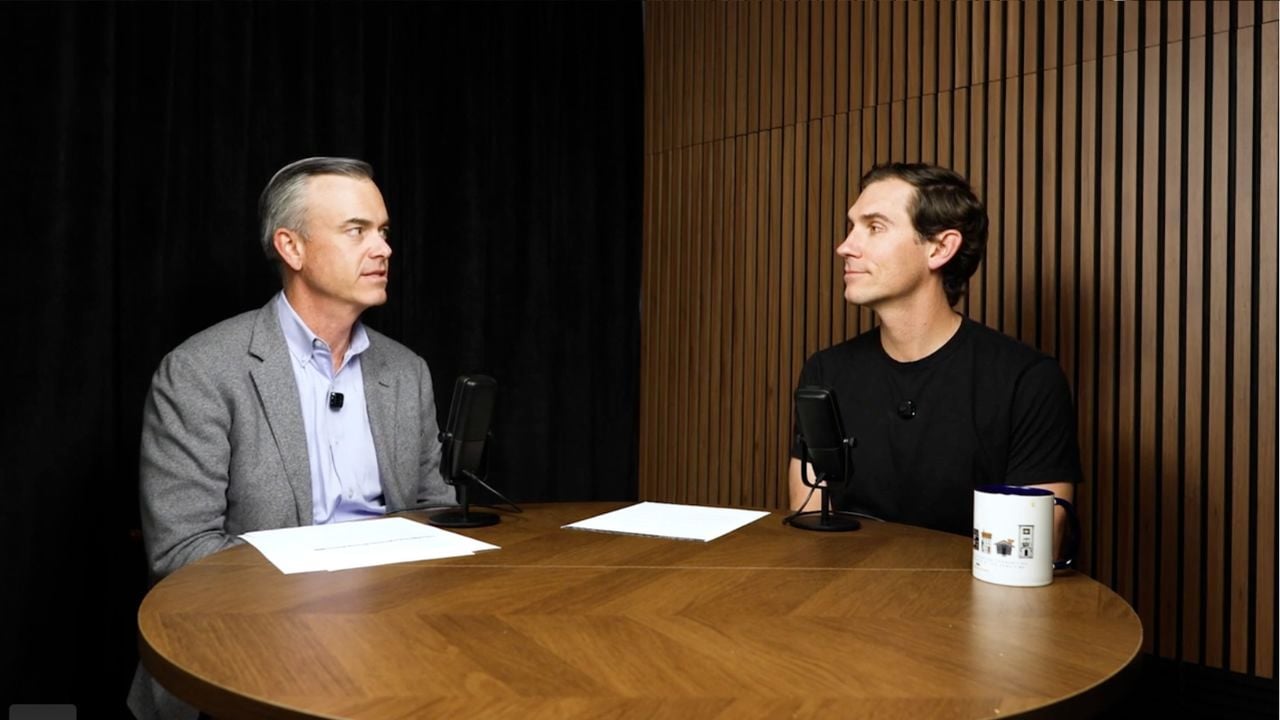
If you’d prefer to listen, you can stream the full episode on Spotify and Apple Podcasts or watch the video version here. For accessibility, we’ve included the full transcript below for anyone who prefers to read along or who is hearing impaired.
Charlie Pollard: How do you know if you have a relationship with somebody? I mean, of course, we all have acquaintances and things like that. I think the test for whether or not you have a professional relationship with someone, and that goes, I think, for no matter what you do, is if they'll take your phone call, they'll spend time and they'll work on something that they're not getting paid for. If you call that mortgage loan officer and say, hey, listen, I've got this deal at the table, it's about to close, this guy's telling me this, she's telling me, is this right, let me look at it, yeah, you're good to go. Because if you don't, you have to foster those relationships. If you don't have someone that is willing to really give their full attention to you when they're not getting paid, then I don't think you've got a relationship.
Welcome to The Justin Landis Show, your real estate podcast about having conversations, building relationships, and creating freedom.
Justin Landis: Today I'm here with my longtime friend, Charlie Pollard. Charlie, thanks for being here.
Charlie Pollard: Happy to be here.
Justin Landis: Charlie, we go way back, I don't know if you remember when we met.
Charlie Pollard: I believe it was the first day of college at Georgia Tech.
Justin Landis: I believe you're right. The way I recollect it was first day of college, our first conversation was about, well, I'm from South Carolina, West Virginia, and we bonded over mediocre college football teams.
Charlie Pollard: We did. And I was so thankful to do it, because my previous trip to Georgia Tech, the people that I was around, not a great vibe, not a lot of sports fans. So I was worried coming to school, and now we share one, we share a mediocre college football team.
Justin Landis: So tell everybody, because you went to school to be an engineer, just like me, so not real estate, now you're a partner at a closing attorney firm. How did you originally get into real estate?
Charlie Pollard: I mean, engineering school, got into software, and just like you, worked for a couple years.
Justin Landis: Yeah, we did the same thing, different companies.
Charlie Pollard: As a consultant, and I could see the writing on the wall about the travel, I didn't really love the nature of the work, decoding software and coding software and explaining it to people. So I didn't really know what I wanted to do, but I was interested in law school, always had that in the back of my mind. So after a couple years of consulting, I went to Georgia State, went to law school, really just to keep learning, keeping my options open because I still didn't really know what I wanted to do. And then your first year of law school, it is general, you're doing all the things that everyone else does. And I actually reached out to you and some of our other friends from Georgia Tech that were getting into real estate, and I decided that I was drawn to the transactional piece of law, and who isn't interested in real estate, especially when you're young and you know that one day you want to buy some, and I got the referral from you to work for an attorney, and I've been in the business ever since. So a lot of credit to you for that first introduction.
Justin Landis: Yeah. I mean, and obviously this has become a great career for you, and one of the things that I think is cool for our listeners today is you get to see a lot of real estate agents, maybe more real estate agents than almost anybody because of all the transactions coming in. So I want to talk today about some of the things that you see real estate agents do or not do at closing that could help people listening. So let's start with some of the things that you see agents do that you think they could benefit by not doing or doing something differently. What are some common mistakes you see real estate agents make as far as it comes to closing?
Charlie Pollard: Brand new agents try to, well first off, just be very technical, they write bad stipulations to contracts, so you're setting yourself up way in advance for a challenge.
Justin Landis: Right, because if you're new to the business, you kind of feel like sometimes you need to project yourself as a complete expert.
Charlie Pollard: And no one expects that, especially when you're new. If your clients are working with you, they know you a little bit, they know how old you are, or they know if you've been transitioning from a different job, they don't expect you to be at the outset an expert. They expect you to be able to find answers quickly. But one of the things, people write, there's a walkthrough, or the initial, they walk the property and they start writing stipulations about the roof or the gutters, or people holding money and time, without really thinking, oh wait, there's an agent out there, my broker, there's an attorney, maybe there's a GAR form for that. There is, by the way, always pretty much a GAR form forever. There are a lot of special stipulations that the Georgia Association of Realtors attorneys have already written, and we see a lot of agents write these things in, and once this gets signed off on, then it's part of the contract, and then we all have to work with it or try to work with it. So that's one place that people get into pickles. Another thing that I think new agents, or really just agents that maybe just don't have their footing, where I see successful agents have it, is walk through a couple of days before closing and having a complete meltdown freak out over scratches on the floor, or really anything, and thinking that the world is falling, we're not going to close on time, this deal is going to fall apart, what do I do, what do I do. There's always a solution. There's brokers, other agents, there's mentors, closing attorneys, as long as you have people to call that will get back to you quickly and have your back and have your support, there's really nothing that, I mean, I've been in the business a long time, if you've got the right broker, you've got the right mentor, you've got another agent, you know, an attorney, as long as you've got that with you, trust me, they have seen that problem before.
Justin Landis: Yep. I think you made a couple of really key points here that I want to hit on. The first one is you don't have to be an expert at everything, and not only do you not have to, I'm not an attorney, I should not try to play one, right? Also not a home inspector, I should not try to play one. Now we do want to know enough to be helpful and to know enough to know when we need to connect with an attorney and that sort of thing. But I think for agents listening, this is just a good piece of advice, you don't have to be all of those things. However, you do have to, I love what you said, people do expect you to get the answer and to help solve the problem. And a big piece of that is kind of what you hit on and what we talked about earlier, having a vendor safety net. Talk a little bit about how you see that being successful and what that means for real estate agents.
Charlie Pollard: Well, it's a way to project confidence by knowing all the things you don't know, right? Because you know the people, and you've got trust in those people to get back to you, because you have a relationship with them. Or when you're starting out in the business, of course, you're not going to have a relationship with a handyman or an attorney right off the bat, but you should probably have a mentor, and that can be an agent, that can be maybe you had a parent who's in real estate, or your broker. You really need to have somebody that can help you with this web, that can essentially also kind of vouch for you for these vendors so that they know you're serious, and they know that you're someone trying to answer questions and that they can form a relationship.
Justin Landis: Yeah, I think one of the biggest things for agents that they can do to help their clients is to have these relationships, and to your point, you have to build them. But when you come in, this is a value that your brokerage, your team, your mentor can provide. So if you don't have this and you're looking for it, I think that's something that you should ask, because, for example, Bolst and MMH, we have a partnership, joint venture for title insurance. Any agent at Bolst, they call you, they're getting the free advice, they're getting your quick callback, even if they're new and they're just getting started out. And that's because of the relationship, and that's part of the value that the brokerage brings, right?
Charlie Pollard: Absolutely, yeah, absolutely. I return all the phone calls I get, but it's just human nature that if someone's got a connection, if someone gives you a phone call and they say, hey, listen, I know your aunt, I went to your high school, I went to your college, that little piece of connection can go a long way. So yes, obviously we're all human, so having a brokerage or having another agent or another professional that is established in the business give you our name or kind of fill out that relationship is obviously a good thing to get a more robust answer from that vendor.
Justin Landis: Yeah, and then you continue to build those relationships, build those relationships. What vendors, as you think about obviously closing and beyond, what else do you think agents' relationships they would really benefit from, from having that person on speed dial that they know they can get honest feedback from and get advice?
Charlie Pollard: I think there's three. If I was an agent, these are the three people that I would have at the top of my list, have more than one, sure, people go on vacation, they do, but I would at least have a closing attorney, I would have a mortgage lender or two, and I would definitely have a handyman or someone that can physically deal with the actual property. When you've got a listing, you have to be able to, well, there's two things when you go on the listing side. You might know, okay, someone passed away and owns this property, there's a legal aspect of the nature of what this deal could be. Closing attorney, I get this email several times a week: hey, I've got a listing appointment, but I know that the person on title, I think she's passed away, what do I need to do? I get that email all the time, but some people don't know who to email that to, and that's going to waste time, a contract may fall apart because you're not getting the story. That's one thing. And also in a listing, you have to be prepared for the actual physical building and what to do with it, and a lot of times the walkthroughs come and the gutters are broken, okay, you need to know that, and you probably already need to be able to quantify that problem with your client, the listing side. You really have to have a professional, you have to have someone that gets paid to do that to get a ballpark. On the buyer side, same thing, you want to be able to deal with the physical property, it's probably more important for the lender there, obviously. People come and have all different types of jobs, income, some people have trust funds, some people have retirement accounts, some people are self-employed. All those things, you've got to have, one way or the other, you've got to have money to buy real estate, and that's not your, the agent's job needs to know that and know that there's options out there, but there's no way, no one expects you to know, I mean, you probably should know what the rate is today, but you don't know what all adjustable programs and what kind of down payment assistance, all you have to have in your pocket, in my opinion, is to know that you know who to call.
Justin Landis: Yeah, because you mentioned probably the most common problems I'm guessing that you see at the closing table. So there's the financial problems, or the loan's not ready.
Charlie Pollard: Let me tell you, that problem can be solved. If you have lenders that are pushing things back that are not closing, it does exist that there are lenders who close every single time, drop me a message, I'll make a connection for you, you will never have a loan closed late again. And then also people in that final walkthrough where the repairs didn't get done, and you see people still go on at that at closing.
Justin Landis: So let's talk a little about what makes a good closing. So you see the agents that you've seen a lot over the years, and they're coming in and their closings are smooth and things are good, versus, I don't see them come back, or man, it's always a challenge. What are some things that you think separate those agents that have lasted and are really professional from agents that weren't able to do it?
Charlie Pollard: I think communication is obviously huge, confidence. But the confidence goes back to what I'm talking about before, about knowing that any problem that comes up, if you haven't seen it, somebody in the safety net that you should build has seen it multiple times. And I guess the worst closings, which is few and far between, luckily, are surprises day of or at the table. On the seller side, as long as they've seen their numbers beforehand, which is ultimately the job of the closing attorney, but sometimes we're pulling for information and we don't get it. To a point, the agent needs to make sure, I would say a few days ahead of time, do you have everything you need, I haven't seen the numbers yet. You do not want your seller to come to the table not having seen numbers, this seems so simple.
Justin Landis: Yeah.
Charlie Pollard: But it doesn't happen 100% of the time, so if you're listening and you don't have it in your process to review the numbers in advance, you need to add that into your process.
Justin Landis: Absolutely.
Charlie Pollard: Definitely on the listing side, because ultimately, in my opinion, I've done thousands and thousands of closings, the first thing I do when I sit down at a table, I go for the seller, I point to the bottom line, this is your bottom line, this is the wire, I say all the money's in, if it is, and it usually is, the buyer's money's in, the lender's money's in. The first thing I do is, Mr. Seller, Mrs. Seller, this is your bottom line, this is what we're going to wire to you today, smile in the face, if that number's good, what they expect. And then I'll say, let me show you how we got there. And thankfully, 99% of the time, unless there's some circumstances, they've already seen that number. If they haven't seen that number and it's different than what they've seen, we may have a problem, and I've done enough closings that there are problems, I'm like, wait, I thought I was going to get this, and then we take our time and explain it. And usually they're confused, but if there is a problem there, you may have a problem for the whole room of people on the seller side. On the buyer side, it's kind of the same thing, as long as it's really about numbers at that point, but the other thing I've already mentioned before is the walkthrough. If there are major things, if there's an amendment about something specific, and people walk through that morning, what's the standard operating procedure for when you tell agents they should do a walkthrough, does it depend on the nature of the deal?
Justin Landis: Well, this goes back to your special stipulation, so this all ties together.
Charlie Pollard: I mean, I like people who, ideally, I like for people to get a concession and let the buyer take care of the work themselves. Sometimes the buyer, for whatever reason, can't really do that, or it doesn't set up, and so you have the seller do it. If you do that, I want to have that work done multiple days before closing, so it's not to be done by closing, it's to be done four days before closing or whatever, and that way we can do our walkthrough, get all our receipts, because you've got to have receipts, license, have that in your special stipulation. And then we do our walkthrough, because as much as, and I actually recently sold my house, it's not that easy, I mean, sometimes you're doing stuff and you have all the right intentions, but you don't. So it's not that the seller is always trying to mess the buyer up or be mean or whatever, sometimes they just don't do it. Way better to have three days to correct it than to be there at nine, going to closing at eleven, and now I've got to correct it at a high stress, high environment, on a Friday with a closing at three.
Justin Landis: I mean, yeah, and there's no margin after that, because it's the weekend and people are moving, there's a truck, that is not the way to do it.
Charlie Pollard: A bit of a caveat to that is you've got to know your client, because I've seen a lot of people buy and sell houses, and it is high stress, it's a big, big deal, it's the biggest deal for most people, know your client. If you know your client is someone that's going to find a problem no matter what, add, make it four days. And if you know it's a client that is, I mean, I think three days is best, but if it's somebody that is just never going to be happy, and those people are definitely out there, you've got to be even more particular, because sometimes people want, and you can feel it, they want to have another bone to pick, because that's just who they are, and you have to look out for that, because you don't want that to happen at the table, for a couple reasons, one is it just delays things, it could push, I mean everyone, you've got ten people in the room, their expectations of this is happening now, and it's also the last cherry on top of, hopefully, the closing and the clients that are going to be a referral source for years to come, and nobody wants a bad taste, everyone wants the keys at the table, everybody wants the money when they walk away, and if that doesn't happen, you're a little less likely to get another referral out of that.
Justin Landis: I think let's wrap up on that, because I do think that is a key purpose of the closing. Sometimes an agent could have a perspective, the purpose of this closing is for me to get this check, and I'm just like, it's closest right in the money, but really it is the final opportunity to spend a good amount of time with your client. As you think about some of the agents that have done it best and are back, how do you see them build relationships, or how do you see them use that time most effectively in that closing?
Charlie Pollard: Well, one is obviously being there, because not everybody does that. Being there, making sure that they're prepared so that you can be relaxed, because if you're there and you're worried about getting your check that day, which trust me, I get it, I love making sure everyone gets paid at the table, that is our goal, but if you're not relaxed, whatever it takes to get there, which is preparation, then you've blown an opportunity to be yourself and to really celebrate. I mean, that's really what it's supposed to be, we honestly, we lose sight of it in our office sometimes because on a busy day we do a bunch of closings, but it is a celebration, people bring in champagne, balloons, it is a major day, and if you can't be relaxed yourself, and you should be happy too, you've done a lot of work, and it's payday, and you do what you need to do to be relaxed at that table, and it takes preparation, of course, to do that. I will say one other thing along those lines, one way you can, maybe it's lack of preparation, maybe it's circumstances, but one thing that I have noticed with successful agents is they're not afraid to delay a closing, I mean maybe not even up to at the table, if something goes wrong, if it's in the best interest of the client. Even if maybe they're being a little unreasonable, as long as it's within the bounds of sanity, which, you know, maybe the roof isn't fixed, and we really want to have that roof fixed if the contract said so, and it does survive the closing, but some people aren't just, that's just not going to work for them. Have the strength and confidence to say, listen, I might not get paid today, I might not get paid tomorrow, if it really hits the fan, maybe this is just not the right deal. We're really talking about the buyer side, the seller just wants to sell and get their wire, right? On the buyer's side, if this is not, if there's something, be okay to not get paid today, because that confidence and that grace, that's a word that I like to use here, that it's going to get done, and if it doesn't get done, that's for the best, it's better for my people, that is going to pay off in the future, you're going to get, it's going to multiply if that's the way you approach it.
Justin Landis: Charlie, I think you've given everybody a recipe for closing success today. So to kind of recap that, it's one, have a relationship with a closing attorney, build a relationship so that you're comfortable and you know that you can trust that person. Two, be prepared, do the work upfront so that at the closing you can be relaxed, be yourself, and be grateful and use that time to build that relationship, work for future referrals. And then finally, put your client's needs first, and if there's an opportunity that you need to push back or delay something, if it really isn't the client's best interest, don't be afraid to do it. And I think if we all take that advice and that recipe, we're going to do better for ourselves, better for our clients, and we're going to build relationships that are going to turn into long-lasting client relationships.
Charlie Pollard: I'm going to add one thing. How do you know if you have a relationship with somebody? I mean, of course, we all have acquaintances and things like that, I was thinking about this when we were talking earlier. I think the test for whether or not you have a professional relationship with someone, and that goes, I think, no matter what you do, is if they'll take your phone call, they'll spend time, and they'll work on something that they're not getting paid for. If you call that mortgage loan officer and say, hey listen, I've got this deal at the table, it's about to close, this guy's telling me, she's telling me, is this right, let me look at it, yeah, you're good, good to go. Because if you don't, you have to foster those relationships. If you don't have someone that is willing to really give their full attention to you when they're not getting paid, then I don't think you've got a relationship.
Justin Landis: Yeah, and that way you can trust that advice, because it's not about a transaction, you're not worried, are they doing this just because of making a dollar, you know that you're getting the best advice.
Charlie Pollard: Absolutely.
Justin Landis: Man, awesome, Charlie, that is such great advice, and I'll say agents, if you're looking for that person, probably one of the easiest ways to do it is to be that person. I mean, be that person who can give that trusted advice, not always looking for a paycheck, and then it's going to be much easier to have other people do the same for you. Well Charlie, this has been super helpful, I really appreciate it, it's great to get the closing attorney perspective of the agent and the clients at the closing. Hey, and if you're looking to build a closing attorney relationship with somebody you can trust, somebody who's experienced, somebody who has your best interest and your clients in mind, Charlie would love to be that person. We've got his contact info below, you can email him, charlie at mmhfirm.com, we've got his LinkedIn below as well so you can see his experience and make that connection. Don't go without having a good relationship with a closing attorney, so make sure you connect with Charlie. Also make sure that you like and subscribe so that you don't miss a single episode, and we will see you again next week.