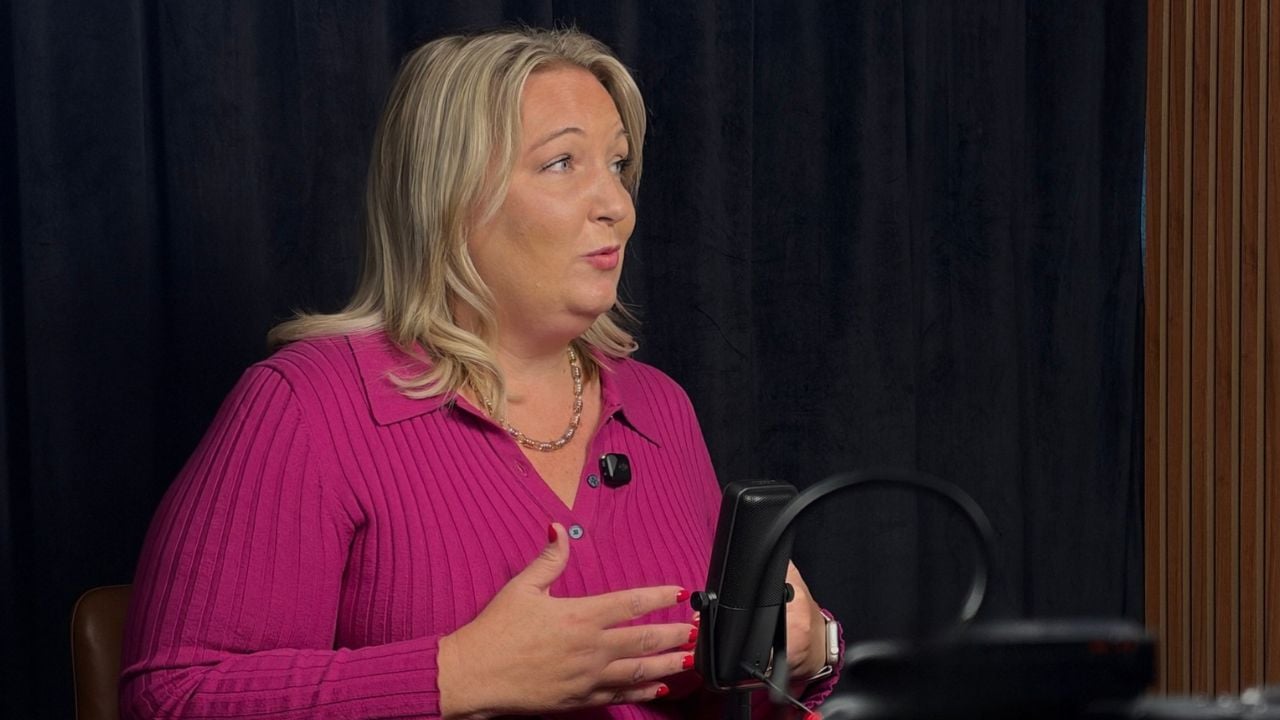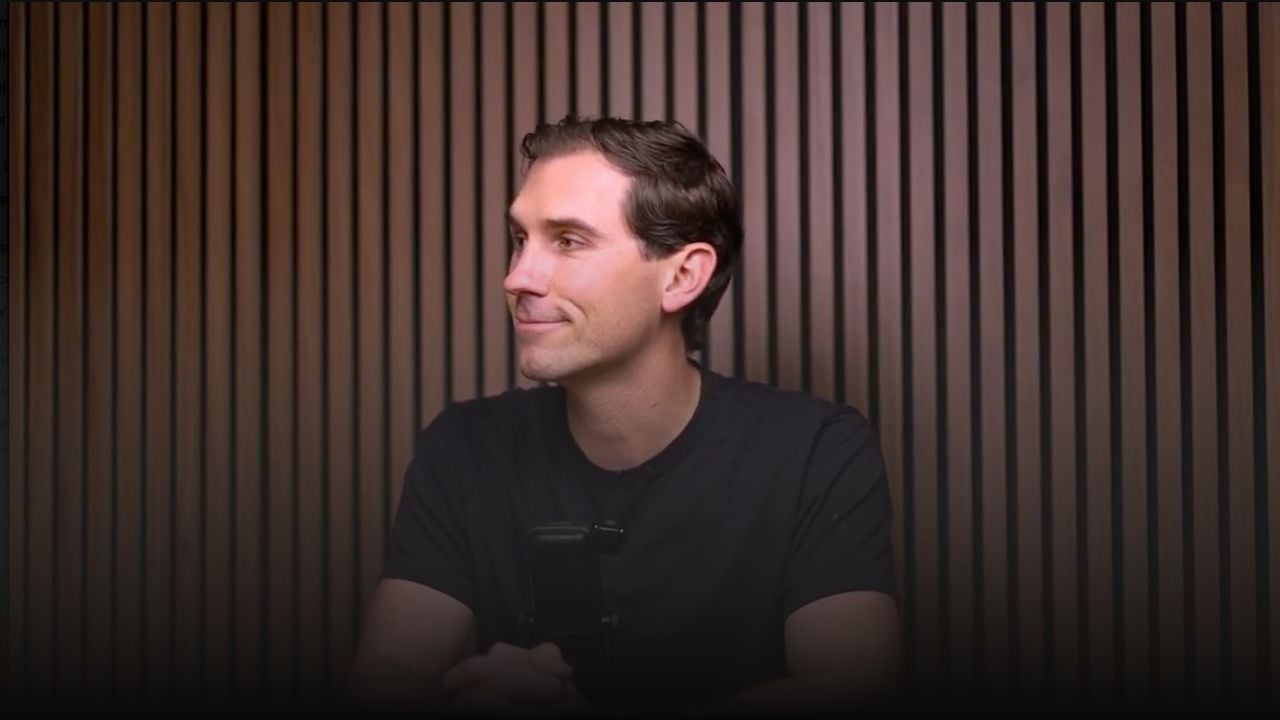
If you’d prefer to listen, you can stream the full episode on Spotify and Apple Podcasts or watch the video version here. For accessibility, we’ve included the full transcript below for anyone who prefers to read along or who is hearing impaired.
Justin Landis: I think across the board the biggest mistake agents make is being scared, is being scared of looking silly, of being embarrassed, of rejection, of not being successful. It's in our minds so much. The actual work of this business is not that complicated, but we make it complicated on ourselves because we're scared of something. And so if we can just be confident and trust in ourselves and go out and help people, I think agents at every level would do better if they could adopt that mindset. I think people in general would be.
Welcome to The Justin Landis Show, your real estate podcast about having conversations, building relationships, and creating freedom.
Justin Landis: Today I'm here with the mastermind behind the Justin Landis Show podcast, Suzie. Suzie, thanks for being here today.
Suzie Consoli: Oh, it's been great. I'm normally on the other side of this.
Justin Landis: I know. Well, and now I'm in the hot seat today because you've been compiling questions that real estate agents have asked us, and you're going to ask them to me, and I do not know what they are. So I'm going to do my best to answer them in real time.
Suzie Consoli: Even better. These are from our brokers. So these are from people who are talking to new agents every single day, and these are the questions that they're getting. So hopefully you'll be able to answer some of them, and we'll be able to share this on social media as well.
Justin Landis: All right, we'll see if I can answer some of them. Hit me up, what's the first one?
Suzie Consoli: What should I, as a new agent, be doing every single day to grow my business?
Justin Landis: Meet somebody face-to-face. I mean, I know I keep going back to this and it's kind of old school, but this is a relationship-based business. Meet somebody new face-to-face every single day, have a conversation, bring up real estate, and then follow up with them.
Suzie Consoli: Next question. Should I join a team or go solo?
Justin Landis: I personally think for most people, joining a team when you start out is the way to go. The team has a proven way to do business that has been successful. Why recreate the wheel when somebody else is already doing it in a successful way? You get the mentorship, the leadership, the systems, a lot of times the leads. I think for most people, joining a team is the way to go when you start out.
Suzie Consoli: Bonus, when should you go solo?
Justin Landis: I think you should go solo if you get to the point where you're like, hey, I think I could do this better. If you're at the point and you say, I feel like I could do this better than the team that I'm on, then you're probably at the point where you want to make it your own and you should go out and make your own path.
Suzie Consoli: Should I buy leads, or is there a better way to generate business?
Justin Landis: I don't think this is a yes or no answer. You can be very successful buying leads, you can also lose a ton of money. I have done both of these, been very successful and lost a ton of money buying leads. I think you have to ask yourself, how do I want to create this business, and figure out if leads are right for you. Leads are typically right for someone who has the capital to do it and has the follow-up and sales skills to actually work the leads the way that they need to be worked. These are not going to be people coming in who just want to go buy a two million dollar house this afternoon. You actually have to do sales to work the leads.
Suzie Consoli: Awesome. What matters more, commission split or training, when choosing a brokerage?
Justin Landis: Well, when you're first starting out, for sure it is training, because if you have zero sales, the split of a hundred on zero is zero. So the split is irrelevant until you get the training to know what you're doing. Once you get more experience, there are a lot of factors to consider, including the price of the brokerage, including the training, it's a much more complicated decision. But for new people, get the training, because if you don't sell anything, the split is irrelevant.
Suzie Consoli: Do I, as a newer agent, need to pick a niche, or does that come with time?
Justin Landis: I think as a newer agent, you need to pick a couple things to go deeper in. You don't have to only pick one thing, but if you try fifty things, you're not going to be great at any of them.
Suzie Consoli: Give me some examples of good niches that you've seen work really well for people.
Justin Landis: Yeah, I think the most common niche is relationship-based, and that is the people you know, generating conversations, meeting people, getting to know them. Another one that I love for people when they start out, especially if they have been in a neighborhood for a while and they're in a neighborhood where there's community, is your local neighborhood. That can be your niche, to become the neighborhood expert, to help people in the community. We've had guests on the show that have talked extensively about how to do that well.
Suzie Consoli: What is the biggest mistake you see agents make, either newer agents or even experienced agents?
Justin Landis: I think across the board the biggest mistake agents make is being scared, is being scared of looking silly, of being embarrassed, of rejection, of not being successful. It's in our minds so much. The actual work of this business is not that complicated, but we make it complicated on ourselves because we're scared of something. And so if we can just be confident and trust in ourselves and go out and help people, I think agents at every level would do better if they could adopt that mindset. I think people in general would be.
Suzie Consoli: We would all be.
Justin Landis: Yeah.
Suzie Consoli: What's one thing you think real estate training should have taught me, new agent, if I were an agent, but didn't?
Justin Landis: I think the economics of real estate. I mean, I had great training on lead generation, the broker job of that was very lead generation heavy, and I love that because you've got to have it, if you don't have any business, then you don't know it. But from the economic side of how do I create a profitable and sustainable business long term, I would have loved to have had more training on that early on.
Suzie Consoli: What's the best way to financially prepare for a career in real estate?
Justin Landis: Well, we had Khadeen on the podcast talking about how she prepared. She met with a financial advisor and had a one-year plan of what to do. She cut her expenses and knew how much margin she had and how much income she'd have to create. So, man, make a plan. If you were fortunate enough to have a financial advisor, I would do it with them. If not, use AI, use Google, use the resources you have there, but make yourself a plan, and you're going to be so much more likely to make it through that first year.
Suzie Consoli: Speaking of Khadeen, she also talked about getting rejected a lot. What is a normal number of no's before you get a yes? She gets lots of yeses now, but in the beginning she really dealt with that rejection.
Justin Landis: Well, let me just tell you the closing percentage of online leads. So Zillow leads are often seen as some of the best in the business, and they often close in the four to five percent range. So you're getting nineteen no's to every one closing, if you're doing well. Most online leads close in the one percent range, so you're getting ninety-nine no's. But I hear agents say all the time, the leads are bad, the leads are bad. No, the conversion rate of these is just one percent, that is the way that these leads work, that's just the math of the leads. The leads aren't bad, you just have to go through a lot of rejection to get that one yes.
Suzie Consoli: What makes for good comps when you're pricing a home?
Justin Landis: Yeah, so I think for comps, first of all, the location is most important. You can't be switching school districts, you can't be switching neighborhoods, you've got to be comparing apples to apples. And then after that, the more similar the better, right? If it's the same builder, that would be ideal, the closer they are to each other, even if they're on the same street, that would be ideal. If you're in an older neighborhood where there's a wide range, you've got to get the same age, you can't compare a 1980s house in Grant Park to a Victorian. So you've got to try to make them as similar as possible, and I would personally do that even going further back in time than I would a newer sale that isn't that similar.
Suzie Consoli: When you are writing an offer, what makes it actually competitive?
Justin Landis: Well, unfortunately the price is definitely one big factor. Let me rephrase that, other than price, what are some things you've used to make an offer really competitive, or some things you've seen in the last couple of years that have really pushed people over. Other than the price, the seller typically wants the most certainty, and so you want to make the offer as certain as possible that it's going to close. So the due diligence period is short, the earnest money is high. One of the things we've always been fortunate to work with a lender where we never use a financing contingency, so we don't have a financing contingency, that's awesome, because it's not going to fall through on financing in twenty-one days. So I think those are probably the biggest ones, let's shorten that due diligence but make sure our clients are protected, let's have a high earnest money but make sure they're protected from the due diligence period, and then there's no need for a financing contingency if you're working with a great lender.
Suzie Consoli: How can a buyer's agent help their buyer win in a competitive offer situation?
Justin Landis: I think the biggest thing for a buyer's agent to do is to build a relationship and actually talk to the listing agent. You'd be surprised, I kind of get fired up on this, but a lot of this is done via text now and they're not actually talking. Find out what's most important to the seller, find out what's most important to the agent, craft the offer in a way that it's going to be the best chance to get it. And I think that's the biggest thing that buyer's agents can do.
Suzie Consoli: Comes back to relationships.
Justin Landis: Surprise, it comes back to relationships.
Suzie Consoli: How does an agent know the best way to guide the seller through the listing process? I know Ashton's talked about this, but what are some of the things that you've seen really set people up for success in that way?
Justin Landis: I think the most important thing that the listing agent can do is to ask great questions initially and understand the seller's situation. Because you might be like, oh, someone's taking a cash offer, that's a terrible move, the price was low. Well, maybe that's what they needed, or maybe they wanted to bring the house to market as is, or maybe they need to completely renovate the house, or maybe it's ready to go. You've got to have great conversations with the seller and then shoot them straight, based on what their goals are, what their situation is. But you can't shoot them straight until you understand what their situation actually is.
Suzie Consoli: What is one habit that separates agents who build a lasting business versus ones who don't?
Justin Landis: I think the biggest thing is to have a consistent touch plan with the people you know, the people who already know you, like you, trust you. If you have a consistent marketing plan, touch plan, in-person plan with them, that's what creates sustainability long term, because every year business is coming in from that, and you know that you're not starting from zero every single year.
Suzie Consoli: When you think about taking that to the next level, becoming a top agent, what do you think separates the top agents from those who are just building a sustainable business?
Justin Landis: The top agents are continuing to push forward with that. So you've got that database, the relationship portfolio that's generating business every year, and they are pushing forward to create new business in addition to that. They don't get stagnant, like, oh, this is great, I'm getting ten to fifteen closings a year, I'm just going to stay here. No, they're still meeting new people, they're still meeting more people, they're still adding to it. And that way they can continue to grow that relationship portfolio, so that next year, instead of producing twelve clients out of it, it produces sixteen, then twenty, then twenty-four, then thirty, and it just keeps snowballing.
Suzie Consoli: How do you know when it's time to leave a brokerage?
Justin Landis: I think it's time to leave a brokerage when there are two things. One, you feel like, hey, there is a lack of relationship here, if I left, nobody would know, nobody would care, it doesn't matter. You don't have to be in that situation, you can be in a situation where you're doing this with other people and you're in relationship and in community. And I think the other one is if you feel like the brokerage doesn't have your back, if you feel like, hey, I need help, or I need someone to go to bat for me, and if the brokerage doesn't do that for you, then you need a partner to help you when you're in a tough situation. A brokerage should be that for you.
Suzie Consoli: Speaking of, what does a good broker-agent relationship look like?
Justin Landis: I think it's built on trust, first and foremost. The agent needs to trust, one, the broker's going to respond, two, the broker knows what they're doing, and three, the broker has my best interest in mind. And when you have that, that's when you really can walk together and you can get things done, your broker can help, and you can be confident that when you get into a tricky situation, you're going to get through it on the other side.
Suzie Consoli: All right, last question. When you are thinking about the future, which I know you love to do, what are you most excited about for Bolst?
Justin Landis: I am most excited about Bolst being all throughout Atlanta, being for Atlanta, and that everywhere you look, there's Bolst signs, there's Bolst agents. And then the impact that comes from that, the way that we'll be able to pour back into the city, make an impact in housing. I think that that is a really exciting future.
Suzie Consoli: Love it. Thanks for answering all of our questions.
Justin Landis: Thanks for having me today, Suzie. You're the host, not me, you can go ahead and wrap up.
Suzie Consoli: All right, everybody, thanks for listening to this Q&A. I hope there was something that was interesting in there for you. Make sure that you like and subscribe, and we will see you again next week.