If you’d prefer to listen, you can stream the full episode here or watch the video version here. For accessibility, we’ve included the full transcript below for anyone who prefers to read along or who is hearing impaired.
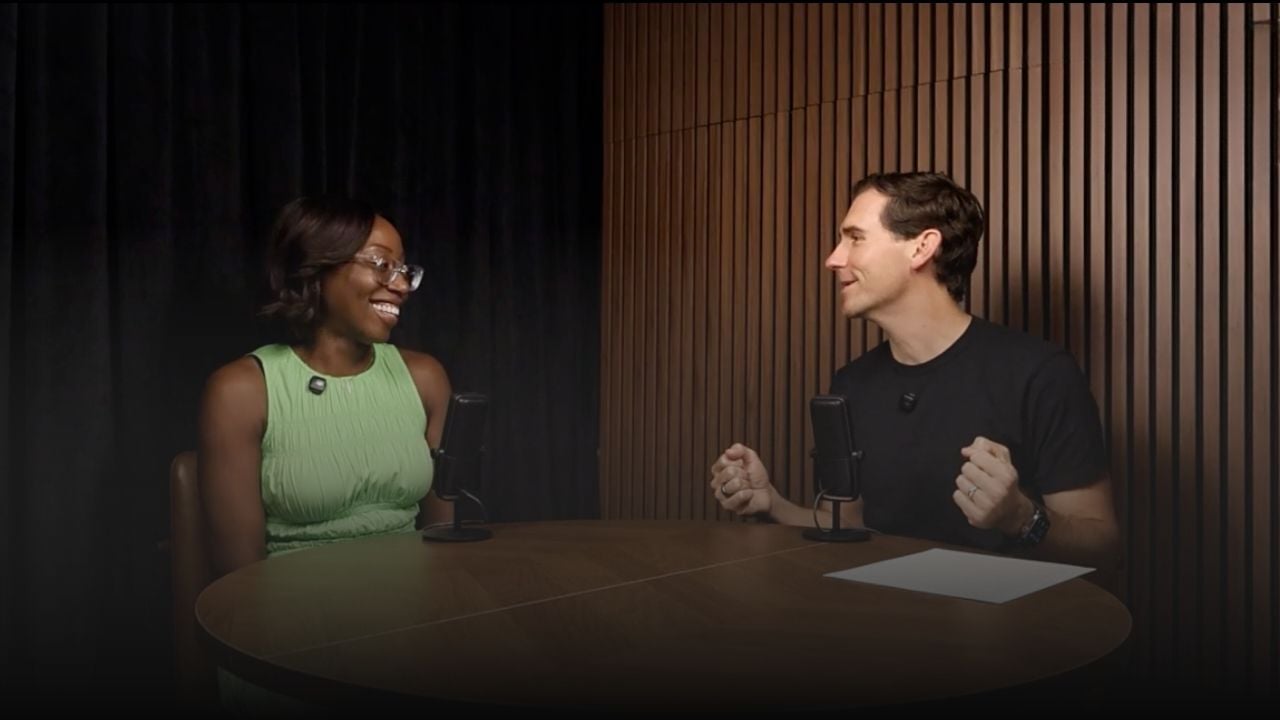
Justin Landis: Welcome to The Justin Landis Show, your real estate podcast about having conversations, building relationships, and creating freedom. Today I'm here with Ryan Jenkins. Ryan, thanks for being here.
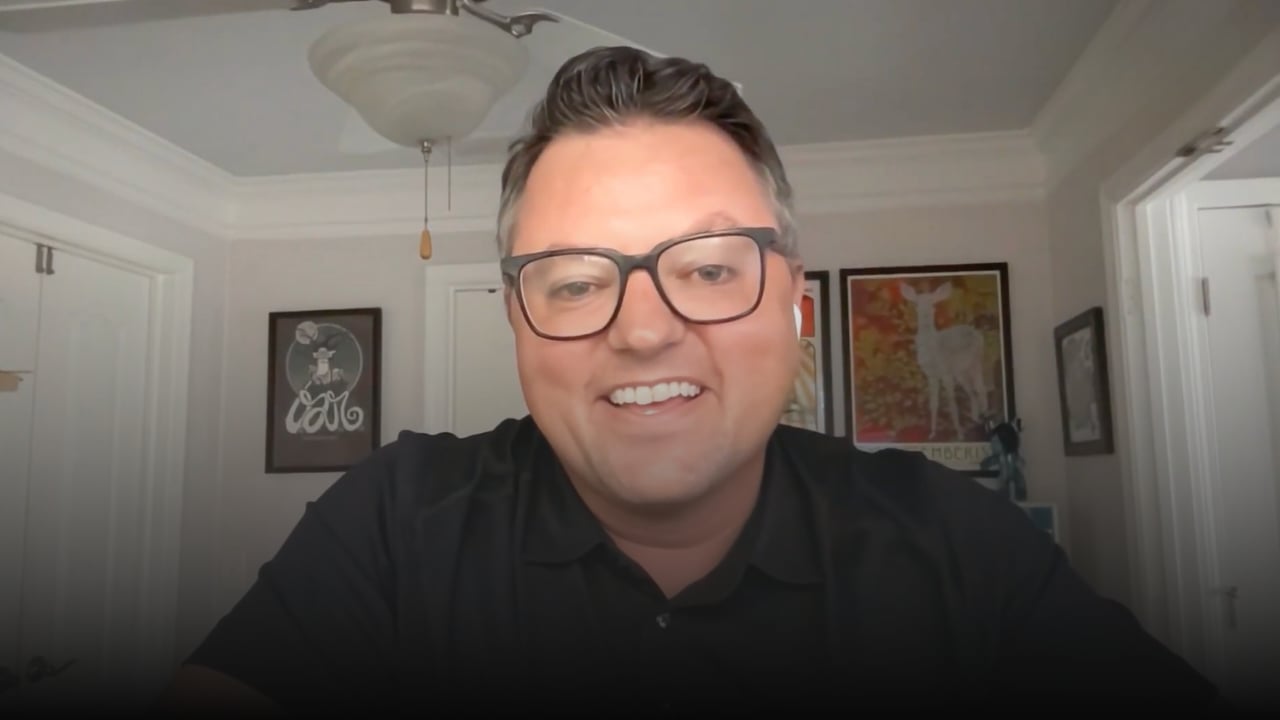
Ryan Jenkins: My pleasure, looking forward to this conversation.
Justin Landis: Ryan is a Wall Street Journal bestselling author, his book is Connectable, he's a keynote speaker, and I'd say if not the expert, one of the top experts on team building and multi-generational work inside teams. We're both in Atlanta, and this is now the second time I've had to record with someone local because our schedules just never lined up in person. We first connected when you were a keynote speaker at a real estate conference for a group I'm part of with top agents across the U.S. and Canada. Before we dig into the practical side, tell me about your background and how you got into this work.
Ryan Jenkins: I studied entrepreneurship in college, then landed a job in tech sales in Atlanta. I knew early on I wanted to speak professionally, I just didn't know my topic yet. At the time, the millennial conversation was red hot, and it wasn't a helpful conversation, everyone kept telling millennials to sit the bench and wait their turn. What I actually saw was that millennials were the signpost for the next wave of the digital workforce. So I started a podcast 15 years ago and just started interviewing anyone I could get. No one knew what a podcast even was yet, so Fortune 500 senior leaders would just say sure, I'll be on whatever that thing is.
Justin Landis: You were early to that.
Ryan Jenkins: So early, and it paid off enormously. The chief people officer at Chipotle was on the podcast, we're still close friends. It blossomed from there into writing and speaking, and here we are.
Justin Landis: Fifteen years is a long time, a lot's changed. What are the current trends people need to know right now about multi-generational work and team building?
Ryan Jenkins: One shift that's sneaky and accelerating, and I don't think most people have fully grasped it yet, is that generational spans are shrinking. Generations used to run 15 to 20 years, a natural pace tied to innovation, events, and trends unfolding over that span. But things are changing faster than ever. Go back to our ancestors on the plains, maybe four or five things influenced behavior, landscape, food and water sources, weather, your tribe. Today there's so much constant input that it's imprinting generations at a rate we've never seen. A 24/7 news cycle in your pocket means a coming-of-age generation can experience an event happening across the globe in real time. AI is another example, no technology has ever scaled and been adopted this fast, and it's reshaping how an entire generation buys, researches, communicates. That 15 to 20 year span is shrinking to 10, maybe even 5 years. If you're already feeling tension working, leading, or selling across generations, it's only going to intensify, because we're going to see new generational nuances more frequently than ever. This was never about flattening differences, there's real value in them, but we have to lean into learning about each other consistently to stay relevant in an increasingly multi-generational marketplace.
Justin Landis: I hadn't thought about that compression before, but it makes total sense given how fast things are moving. You've also seen that younger generations are facing a bigger isolation problem than historically, which feels almost counterintuitive given how connected we are.
Ryan Jenkins: Exactly. My work started in generational research broadly, and while writing a book specifically about Gen Z, the youngest generation entering the workforce, I kept running into research showing how isolated and lonely they were. Seventy three percent of Gen Z report feeling alone sometimes or always, the highest of any generation. That caught me off guard, this was pre-pandemic research. I started digging into how organizations could better connect with this emerging workforce, and found that while Gen Z is the most disconnected, every generation is experiencing more disconnection than ever. That research became my latest book, Connectable, about how we find connection at work, and why work is actually a great place to build it.
Justin Landis: Walk me through the key points in Connectable, and then let's tie it directly to real estate agents.
Ryan Jenkins: The core argument is that connection is the hidden driver of the most successful teams. Hidden because you can't see it, and because we tend to undervalue it and mentally separate it from work, we think connection happens with friends outside work. But the research is clear: eight out of ten people say they feel disconnected at work, and all eight of those want more connection. That's a real shift, past generations didn't go to work expecting connection, but now entire generations are looking to their colleagues, managers, and employers for it. What makes this tricky is that only two out of ten people will actually speak up if they're feeling disconnected. So we mislabel the symptom, burnout, languishing, whatever, without addressing the actual root cause, which is disconnection from the people we spend most of our waking hours with.
Justin Landis: Eight out of ten is basically everybody. That's nearly every person you're working with, whether they're a colleague or someone you're leading. That should be a massive priority for all of us.
Ryan Jenkins: You're spot on, the numbers really help people grasp the scale of it. There's a huge, unaddressed appetite here, and I think what keeps this problem lingering is what I call the connection illusion. The biggest single takeaway I hear from people is this: loneliness isn't the absence of people, it's the absence of connection. There's a great quote from Robin Williams: the worst thing in life isn't to end up alone, it's to end up around people who make you feel alone. That's what happens at work, we're surrounded by people, on calls constantly, and it feels like connection, but it often isn't.
Ryan Jenkins: Here's the strategy that I think helps most: there's a real difference between communication and connection. Communication is the exchange of information, and we process that in the front part of the brain. Connection is a feeling of understanding and ease between people, processed in the back of the brain. Think about texting I love you to a partner, that's wonderful, a great pro-social behavior, we should all probably do more of it. But it's only communication. The other person's brain only shifts it to connection if they hear your tone of voice, feel your embrace, or see your body language. Technology enables communication, not connection. A simple way to remember it: communication is dealt, connection is felt. If the goal is escaping the connection illusion, we have to be intentional about trading communication for connection.
Ryan Jenkins: One really simple tactic we teach clients is Connect Five. At the top of any team meeting, in person, hybrid, or virtual, one person spends five minutes sharing a single non-work-related photo. That's it. Watch what happens, the person sharing clearly loves that photo, and you'll see a side of them you haven't seen before, which draws everyone else in. After a few months of this practice, we consistently hear people say they can finally see the human behind the job.
Justin Landis: That's so good. I had an experience recently I'd love your take on. At the Justin Landis Group, we have a mid-year summit that's usually a straightforward business meeting, sell more houses, here's the plan for the second half. This year I felt like the top priority shouldn't be selling houses, it should be building community. So we completely pivoted, did sushi rolling at Nakato instead of an in-office meeting, kept the work intro small, and intentionally seated people who don't usually interact together with conversation prompts at the tables. The number of thank yous I got afterward blew away every previous mid-year meeting I've ever run. I think I was just scratching the surface of what you're describing. If you'd asked me before, is communication good at JLG, I'd have said yes, we're a productivity and efficiency-focused group. But communication isn't connection, exactly like you said.
Ryan Jenkins: Amazing, keep experimenting and see what happens. What spoke to me there is the idea of shared reality. Think about a team at an art museum, everyone looking at their phones in front of a painting, there's no shared reality there, heads are down in email or social media. But with devices away, taking in that same artwork together, suddenly there's a shared reality pulling everyone together. It's like being on a delayed flight, the whole plane gets chatty once there's a shared reality and a common inconvenience, the ice breaks fast. Small, new experiences tie people together, it doesn't take much, just intentionality.
Justin Landis: Let's get specific to real estate agents, both directions, since we've got agents as young as 18 and as old as 88. Let's start younger. The average age of homebuyers and sellers has moved up. I'll put you on the spot, what do you think the average age of a first-time homebuyer in the U.S. was last year?
Ryan Jenkins: I'll guess 41.
Justin Landis: You're right on, it crossed 40 for the first time. If you're 25, the average first-time buyer is 41, and the average buyer and seller overall skews even older. What can younger agents learn from your research to help them work with clients from generations ahead of them?
Ryan Jenkins: What gets us in trouble with generations is that every human has a generational bias, usually unconscious, subtly shaping decisions, actions, communication, how we approach an older buyer. We have to unearth that first. There's a study I show audiences, a paragraph where every single word is misspelled, and yet people can still read it fluently. Cambridge University did this research, the words don't even need to be in the right order for us to read it. When I ask why we can still read it, people usually guess it's because we're all texting sloppily now. That's part of it, but there's a specific brain process called chunking, a cognitive shortcut that helps the brain efficiently interpret and organize information using prior knowledge. The takeaway: your brain hates confusion and is constantly looking for shortcuts, making assumptions to move through the day efficiently, conserving energy in case, evolutionarily speaking, you need to run from a saber tooth tiger later. Great survival mechanism, but detrimental when interacting across generations, because your brain wants to jump straight to a conclusion about that 41-year-old buyer based on assumptions about their generation.
Ryan Jenkins: Abraham Lincoln has a great quote for this: I don't like that person, I must get to know them better. The problem is never that you have multiple generations on a team or that you're selling across generations, that's never actually the issue. The issue is a lack of connection between those generations. The crook of connection isn't difference, we have far more similarities than differences across generations, the crook of connection is distance. We don't take the time to actually get to know that buyer, or that baby boomer colleague. A simple tactic: trade certainty for curiosity. Spend more time actually getting to know your clients and colleagues, because your brain will want to jump to conclusions, but you have to push against that instinct and stay open-minded.
Justin Landis: What's one practical thing an agent could do this week to build that connection and lead with curiosity?
Ryan Jenkins: One thing I see leaders consistently misunderstand is what actually drives the emerging generation. Most point to compensation, purpose, or flexibility, and those matter to a degree. But according to the research and the neuroscience, the two biggest drivers for people roughly ages 10 to 25 are status and respect. Any parent listening with kids in that range, think about it, most friction or blow ups trace back to a struggle for status or respect. Young agents entering the workforce, whether they realize it or not, are looking for the same thing, because they don't have status yet, they see other team members who do, and they're chasing it.
Ryan Jenkins: One of the fastest ways to fast track status and respect, which also motivates the next generation and creates a great connective moment for the whole team, is showcasing competency in front of the group. If an agent had a great day reaching out to leads, put them in front of the team, ask them to walk everyone through what they did. That gives them status in the moment, and if the strategy is genuinely useful, it earns them respect from teammates too.
Justin Landis: I've thought about doing that before but never for the reasons you just gave, I mainly wanted people to share what was working so others could learn it. Now I can see how much it also impacted the person sharing, it gave them real status and respect. I can picture a specific example, an agent named Roy shared how prepared and scripted his initial call with a new lead was, and everyone wanted to start doing it his way. It genuinely earned him a lot of respect. I need to do that more, and I think everyone listening probably does too, it's powerful in both directions.
Ryan Jenkins: Sounds like I'm just handing you the data behind things you're already doing well.
Justin Landis: This is my podcast, I only share the wins. Kidding, I share plenty of failures too. But it's interesting, a few things I'd sort of stumbled into working, and now hearing you explain the mechanism, I realize why they actually worked, not the reason I originally assumed. It's affirming, I need to take this more seriously.
Justin Landis: Let's look ahead, because when I heard what you're working on next, team binding, not team building, team building isn't good enough anymore, I immediately wanted an early copy. Tell us what you're working on.
Ryan Jenkins: Sounds like you just volunteered to be a beta reader, I'm writing that down.
Justin Landis: I didn't even know that was a thing, but if it is, send it over, happy to read it.
Ryan Jenkins: Let me tell a quick story that sets this up. Researchers studied two villages in southeastern Brazil. One was on a lake, and everyone there was distrustful, unfriendly, just an unhealthy village overall. Forty miles down the road, another village, on paper it should have looked identical, but this one was on the ocean and thriving in every measurable way. Researchers tried to figure out the difference, maybe nutrients in the fish, maybe something in the climate, they spent weeks stuck. Want to guess the answer, Justin?
Justin Landis: It's got to be something about the team, that's my guess, but I really don't know.
Ryan Jenkins: The boats. In the lake village, boats were single-person operated, so every day people went out alone and became distrustful and competitive over the best fishing spots. The ocean is much harsher, so those boats required a full team working together to bring back a good catch. That's a perfect metaphor for how work has shifted. It might feel like we're part of a team, but a lot of us are really just operating in group chats with deadlines, using great technology to execute work, slacking or emailing it in, and going about our day, feeling more isolated in the process.
Ryan Jenkins: Where we're headed now is team binding, constantly building connection between people rather than assuming it exists because the work gets done. And to be clear, it's not about remote versus in-person, you can have or lack connection in any setup, it's about how you actually work together. I've started calling this the erosion of teams: communication without connection, silos instead of collaboration, meetings without meaning, contact without cohesion. It erodes silently, and like any erosion, it eventually collapses, and people are left wondering what happened when they thought they were doing all the right things.
Ryan Jenkins: Here's the other analogy: think of a brick wall without mortar. All the bricks are stacked neatly, everyone's doing their job, it looks strong. But apply any pressure and it crumbles. That's a team without connection. A brick wall with mortar is strong, resilient, formidable. Team building is like the wall without mortar, assembling occasionally, strength assumed, creating isolated moments. Team binding is about strengthening continuously, strength assured, creating actual resilience. We need to build more connection into the day to day, not just check a box with an offsite and a round of trust falls and call the team built.
Justin Landis: If people want to follow along and know exactly when the book comes out, how should they connect with you?
Ryan Jenkins: Thanks for asking. I've got a free resource, go to Connection Vault, like a bank vault, connectionvault.com. You can download our Team Connection Kit, four simple interactive PDFs with tools to kick off meetings and daily practices that take two to five minutes, for leaders or non-leaders, to build more connection inside your organization. Use them consistently to work toward that team binding effect we've been talking about, and once you're on that list, you'll be notified the moment the book comes out.
Justin Landis: Everybody, that's connectionvault.com. Ryan, I like how you worked bolster into that sentence, intentional or not, it's very close to Bolst, so I'll take it. I really appreciate you being here today, this has been invaluable, and I know real estate agents are going to walk away more connected because of what you shared. Thanks so much.
Justin Landis: Everybody, thanks for listening. Make sure you like or subscribe so you don't miss a single episode, and we'll see you again next time.