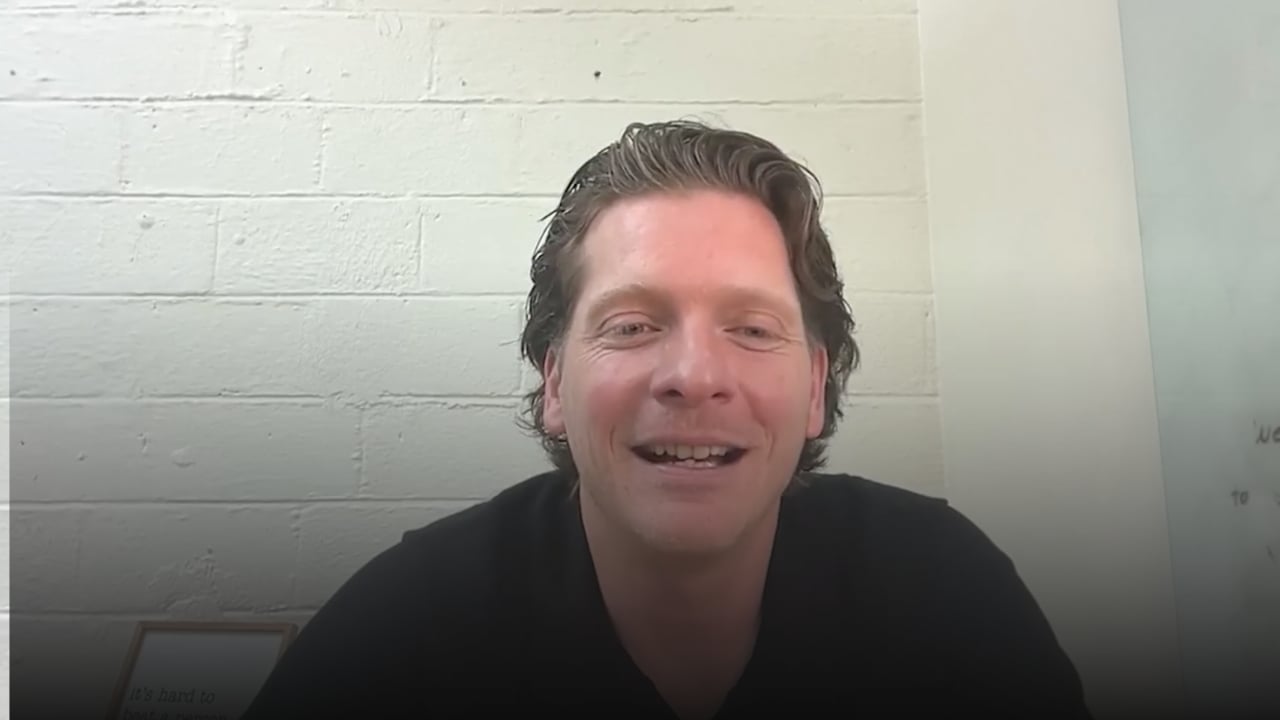
If you’d prefer to listen, you can stream the full episode here or watch the video version here. For accessibility, we’ve included the full transcript below for anyone who prefers to read along or who is hearing impaired.
Justin Landis: Welcome to The Justin Landis Show, your real estate podcast about having conversations, building relationships, and creating freedom. Today I'm here with one of my business partners, Thomas Warren, managing partner at JLG Charlottesville, Virginia. Thomas, thanks for being here.
Thomas Warren: Thanks for having me, I'm looking forward to it.
Justin Landis: I always like to start with how someone made the transition into real estate, since people get in so many different ways. Give us the backstory.
Thomas Warren: The origin story personally comes from buying and then selling my first house. But I also had some good models, I have two sisters who are real estate agents, one of whom was on JLG. If we get my brother to join, we'd have to start a reality show.
Thomas Warren: The other part is that I was a teacher before, for 13 years, an English teacher, a couple years in Georgia and then a decade in Charlottesville. I also coached varsity soccer for the girls teams at two high schools. I started teaching at 21, and I needed structure at the time, I'd thought I was going to be some kind of renaissance man for a job, but I didn't really know what that meant. Getting up and doing something good, building relationships with kids, that felt positive. As I grew as a professional though, that structure started feeling more and more like a cage.
Thomas Warren: Looking back, I can see how entrepreneurial the whole thing actually was. I built the entire ninth grade curriculum for the county, led writing workshops teaching other teachers new methods, and the soccer program I coached went from 18 girls trying out my first year to 70 two seasons later, to the point I had to cut a big chunk of them. I was department chair, literary magazine sponsor, building teams and leading real initiatives, but all of it for the school, all of it for the students. That's where I started running into a wall, I'd have a great idea, see it working, and then hit a ceiling the moment I wanted to take it further.
Thomas Warren: I knew I wanted out of teaching, but couldn't quite figure out the path. Then in year seven of thirteen, we sold our first house. We'd bought it three years earlier as a fixer upper, did a great renovation, and had our first daughter. As she got older and started learning to open doors, our street, which was technically a neighborhood road but functioned as a cut-through, had people flying down it every evening around five. She opened the front door once while running, and that was the moment everything shifted, is this really the house anymore?
Thomas Warren: We decided to sell. The day we closed, the check for the profit and equity was more than my entire teaching career's earnings, in one day.
Justin Landis: That is impactful. That's a real statement on teaching, honestly.
Thomas Warren: A light bulb went off, this really does change people's lives. It completely changed the trajectory of our family, we were able to go buy a horse farm afterward, which had been my wife's dream. That's when I really internalized that the American dream basically runs through home ownership.
Thomas Warren: The other part was watching my sister Jeanette, seven years younger than me, grow in her career, and how much ownership she had over her time. I want to be specific, it's not that real estate is flexible, it's that you own the decision. You can choose to work now or not, there are costs either way, but you're the one making that call. That was completely different from teaching, where I had to be on at 8:30, in front of a hundred kids, every day until 3:50, then twenty minutes to reset before two more hours coaching soccer. There was no wiggle room. My other sister Caitlin became a realtor a few years after Jeanette too, up in Alexandria, and had a similar realization watching Jeanette.
Thomas Warren: After the horse farm, I realized I'm not a farmer, that was clear pretty quickly. So we moved to Atlanta, I fully left teaching and joined JLG. Jeanette was actually still on the team at that point, and she left ten days before I officially joined.
Justin Landis: Bad timing on that one, though she's doing great. The joke I make is that JLG was upgrading.
Justin Landis: Your start at JLG was really different from Jeanette's, you were coming into a brand new place, building a business without existing relationships, versus one where you had them. What was it like when you got to Atlanta?
Thomas Warren: I'd lived in Atlanta a decade earlier, went to high school there, so I had old connections, but I hadn't kept up with that group at all. Charlottesville had become my actual community. Moving back to Atlanta was really about being close to our parents, having another kid, and figuring out the business would come later. I knew I just had to be out there meeting as many people as possible, constantly, going to everything and anything. It was scattershot, honestly, no real plan beyond doing it all and hoping it worked.
Thomas Warren: I actually asked our team to pull my first five transactions recently, out of curiosity. Only one was a true referral, my wife knew the person and introduced us. Everything else came from lukewarm relationships I built up from nothing. My favorite is probably the AT&T salesman I sold a house to. He came to install fiber internet at my new house, and it took him three hours to get it running. I was working on my porch, so I just sat with him, answering questions while doing email. He found out I was a realtor, mentioned he and his wife had always talked about owning a house, and six months later I sold him one.
Justin Landis: Do you remember how long it took for things to really start rolling?
Thomas Warren: My first transaction took eight months, with a lot of near misses along the way that fell apart for one reason or another. Right after that first one closed, it became almost one a month for the rest of my time there.
Justin Landis: Eight months in the middle of it feels like a long time, even if it's not long for a career. Then you get it rolling and you can finally see the future. Then you told Jared and me some news we were all pretty bummed about at the time.
Thomas Warren: Right, eighteen months in, I went to Jared and then to you and said Atlanta wasn't turning out to be what we thought it would be for our family, and we wanted to move back to Charlottesville. At that point, all the work I'd been doing had finally started paying off. I'd door knocked all 251 houses in my neighborhood, three separate times, and had one closing plus four more in the pipeline. Walking away from that felt absurd, given how hard I'd worked and how much I could see it building.
Justin Landis: I remember that feeling, this drop in my chest. On one hand, your business was clearly exploding. On the other, I was genuinely bummed you were leaving. But I was happy for your family, since that's obviously the higher priority. We eventually got to, what would it take to start over together? You'd learned a lot building the first business that you carried into launching JLG Charlottesville. Tell everyone the difference between doing it the first time and the second.
Thomas Warren: I was way more targeted the second time, about what I was doing and why. As a brand new agent, you're still figuring out your purpose and your value. The second time, I already knew those things. I could come in and say, here's my value, I have an incredible team that guarantees premier level service and great communication, and I have the capacity to learn this new market fast since I'd lived there ten years already. I didn't have to figure out my marketing, I could focus on figuring out the market.
Thomas Warren: With the actual marketing, I thought hard about my pillars. I wasn't going to door knock everything, mail everything, and make a thousand calls all at once. I picked one big focus and called it social events. Every related calendar entry starts with SE.
Justin Landis: We've had guests whose whole thing was ten calls a day, or five coffees a week. Yours was social events.
Thomas Warren: Right, and I made it an umbrella term because my real goal was FaceTime. Some of that is one-on-one coffee, some is lunch, some is a group setting, trivia night, hanging out at the table. A big piece of it was getting back on my adult soccer team, showing up every week, back in people's lives.
Justin Landis: Who do you think this works well for? Some people hear five social events a week and think that sounds exhausting.
Thomas Warren: This was my third business, technically, I'd also run a coaching side business while teaching. By this point I knew my mission and purpose, but the bigger thing was knowing myself as a person, not as a teacher or a coach. I genuinely love an audience. That's part of why I was a good teacher, I don't need to be the center of every room, but when it's my moment, I show up for it. So being in front of people builds a much stronger relationship base for me than a cold call or a stranger door knock ever could.
Thomas Warren: The social events framework turned into a three tiered structure I now use for every relationship, not just business. One, can we hang out, no agenda, just enjoy time together. Two, can I help you. Three, can you help me. That third one has been incredibly powerful, and honestly, I couldn't do it for the first fifteen years of my adult life. As a teacher I just ground through everything and figured it out myself. Learning to actually ask for help as an adult transformed how I build relationships, and I think that's also the real power of working on a team, we're genuinely helping each other succeed.
Justin Landis: That's a great framework: can we hang out, can I help you, can you help me. And you found that asking people to help you actually deepens the relationship.
Thomas Warren: It's genuine too, it's never just, do you know anyone buying or selling a house. A real example: I have a former colleague, older than me, with kids around my age, and I was building a webinar around how parents 55 and up can help their kids under 35 buy a house. I texted him, asked if I could come over for coffee and get his honest feedback. He immediately loved it, said he was having that exact conversation with his own kids, and knew five other people who probably needed it too. He gave me great input, including something about medical bills I hadn't considered. Two weeks later, completely unprompted, he referred me to his neighbor.
Justin Landis: I love that story. Another thing that's really applicable here, you had a lot of relationships back in Charlottesville, but people knew you as a teacher and a coach, not as their real estate advisor. How did you make that transition?
Thomas Warren: Let me go off script for a second, because I've been chewing on this since a coffee I had earlier this week. All of my business in Virginia has been referral based, friend of a friend. But I've been thinking about how that actually happens. Someone recently used the word change in a conversation, and I don't love that word, so here's my version: I've worked hard to build webs of goodwill, overlapping and consistent. Looking at my referral business, I can genuinely see three webs starting to overlap, and the longer I'm here, the more connected they become.
Thomas Warren: The biggest one is my soccer community. I wasn't a realtor here for thirteen years, I played in adult leagues and coached girls soccer. I built real relationships with players, teammates, and parents, because I've always been relationship first, that's what made me successful as a teacher and coach. One of my former players watches my kids on Mondays, another player's parents are basically our pseudo grandparents here, we go to their house monthly. From that one web alone, I've had five closings and two actives in the last twelve months.
Thomas Warren: The second web is networking I've actively built. My advice to a brand new agent: follow the chain of referrals, even when it has nothing to do with real estate, just follow the introduction. I met a woman named Cheryl, a local property manager, sitting next to her at a code of ethics event a month after getting my license. I didn't have a property manager, so we grabbed coffee. From that single conversation, I've probably met 200 people following that web of introductions, with two closed or active and five in the pipeline. In that same conversation, I mentioned I'd served on a nonprofit board in Atlanta, and she introduced me to a guy named Keith who runs a networking group connecting nonprofit leaders with business leaders. Through that, I met the lender I trust most, we've now done six transactions together and he's referred me business too.
Thomas Warren: The third web is my former teaching network. Kids I taught at fourteen are 27 now. I was at an event at a local brewery recently and ran into two former students at the same table, one of whom I wrote a college recommendation for. It's proof that relationships genuinely last if you pour into them without expecting anything back.
Justin Landis: Final thing, and this ties into everything else, talk about being a local celebrity. Not billboard famous, but available to any agent in their own market.
Thomas Warren: This is very Charlottesville specific compared to Atlanta. I'm confident I'm one person away from knowing everyone in this city between 25 and 55, just because of the size of the town and how many people I've met living here. Before real estate, I was a teacher, a very forward facing job, I met all those kids, their parents multiple times over, plus everyone from coaching both school and travel soccer. For years, I couldn't go anywhere without running into people I knew.
Thomas Warren: The real question was how to translate that into people thinking of me as a trusted real estate resource, not just their old teacher or coach. One of the biggest things we did early on was host a grand opening for JLG Charlottesville and invite 60 people from my sphere. The real reason I wanted it was that all these people knew me as a soccer coach or teacher, I'd gone and built my real estate skills in Atlanta, and I'd never really shown that to them. It's different to self-promote versus having someone already in the industry vouch for you. I specifically asked you to come and basically say, out of a twenty year career, there are only a few agents you'd actually choose to partner with. Getting that stamp of approval in front of my own sphere was exactly what I needed for people to start paying attention when I talk about real estate.
Justin Landis: That was such a great night, I'll never forget it, the respect and admiration everyone had for you was obvious. Looking at everything, the social events, the webs of goodwill, the intentionality, I'd be hard pressed to find an agent who's launched a quicker level of success than you have. And for anyone listening in a bigger city thinking, this only works in a small town like Charlottesville, that's not true. Pick your neighborhood, Grant Park, Ormewood Park, East Hampton, wherever you are, and build it the same way. You're not going to be successful across all of metro Atlanta in a year, but you can absolutely build real momentum in a focused area doing five social events a week, exactly like you did here.
Thomas Warren: One more example I haven't told you yet. Through that same introduction from Cheryl, I ended up on the Ronald McDonald House board, which is where I put a lot of my time now. Two weeks ago, our OSA Kate texted me a lead, a woman with a daughter in the NICU at UVA who needed to buy a house closer by. I got on the call and, before my usual pitch, asked if she'd heard of the Ronald McDonald House, since they could stay there while her daughter was in the NICU without needing to buy anything right away. She said she'd actually been staying there for six months already. I told her I was on the board, my picture is literally on the wall where she's staying. That credibility multiplied instantly, and I've been helping her and her husband figure out their situation as they navigate regular trips to UVA.
Justin Landis: What a story, and what a great way to wrap up how those webs have come together over your first year in Charlottesville. This is only year one, we'll definitely have you back to hear what years two, three, and four sound like. Thanks for sharing all this today.
Thomas Warren: I appreciate it, thanks for having me.
Justin Landis: It's been so great to partner with Thomas at JLG, and now JLG Charlottesville. If you're listening and thinking you want to work with people like Thomas, join a team, build real relationships, and accelerate your career, reach out. We'd love to have a conversation about whether JLG would be a good fit. Send us a message and we'll set up a call. For everyone else, thanks for listening, make sure you like and subscribe so you don't miss a single episode, and we'll see you again next week.