If you’d prefer to listen, you can stream the full episode here or watch the video version here. For accessibility, we’ve included the full transcript below for anyone who prefers to read along or who is hearing impaired.
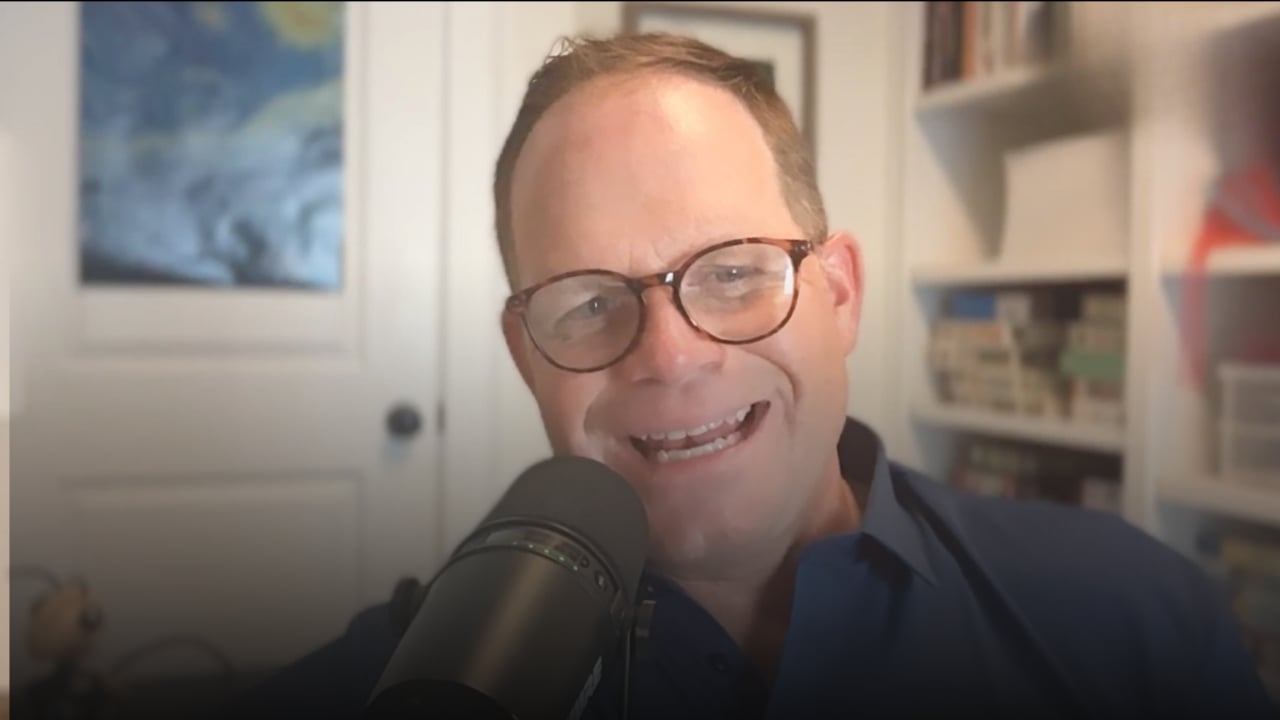
Justin Landis: Welcome to the Justin Landis show, your real estate podcast about having conversations, building relationships and creating freedom. And today I've got a special guest with me, Eric Bramlett. Eric is the founder and CEO of Bramlett Partners, one of the fastest growing independent brokerages in Texas. Eric, thanks for being here today.
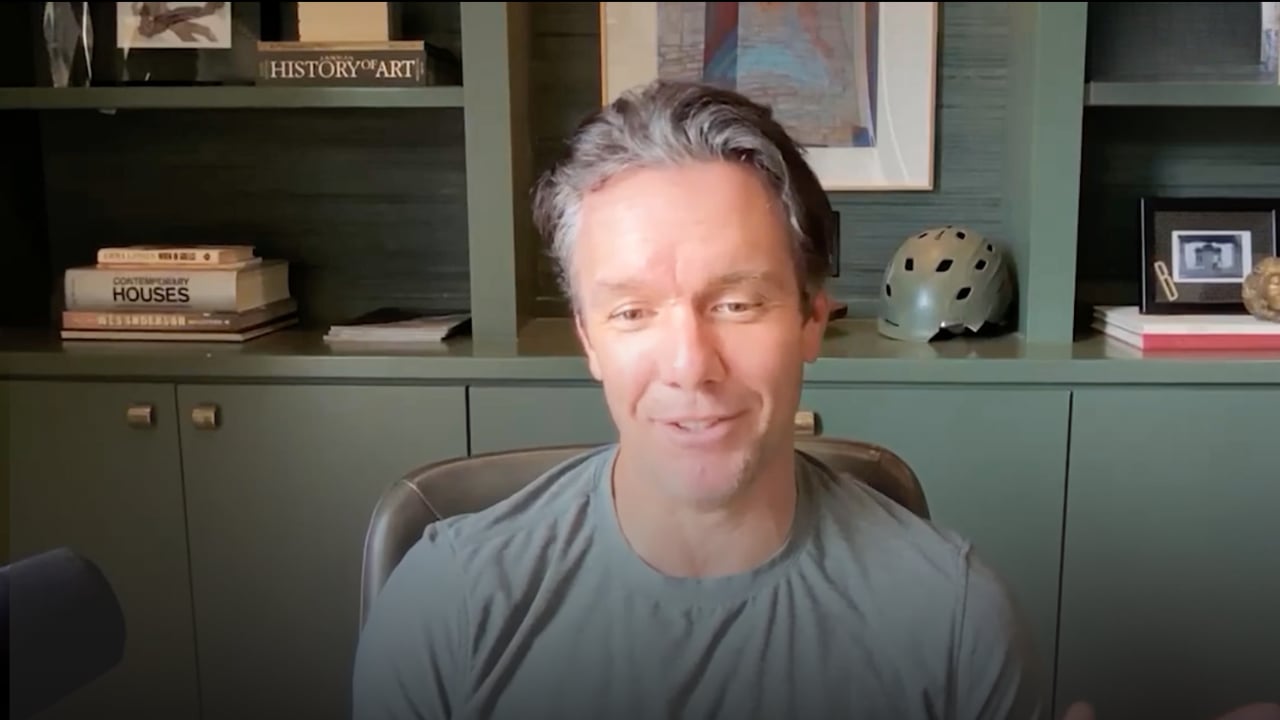
Eric Bramlett: Justin, thanks for having me. I'm very excited to be on the show.
Justin Landis: Yeah, man. We got a chance to meet at a couple conferences and meetings recently. And I've just loved getting to know you here in your story. And I'm excited for you to be able to share today. So for the audience, why don't you start a little bit with what led you to real estate and to do Bramlett Partners and kind of bring them up to date to where you are.
Eric Bramlett: Yeah, thanks, Justin. And absolutely have enjoyed getting to know you and excited to know you for a long time. Watching your success is inspirational and I feel like we have a lot in common. So I'll try to be brief on the history. I sort of fell into real estate in 2003. I was pretty young. I joked that I didn't get serious about it for eight or nine years and kind of decided this is my career and went all in, call it 2011, 2012. I founded Bramlett Partners in 2012. The entire goal was, look, I feel like real estate is very lucrative. I want to just sell as many homes as I possibly can. And I always focused on the number of five-star reviews that I could get. It was sort of my scoreboard and didn't really look at the sales volume. It was really like, how many folks can I help make sure that I'm providing an amazing experience? And in retrospect, that was a great business plan and things began. It just worked. When you focus on that, the money sort of comes. We grew. I think we had one agent besides me within a year. And then I think we had two agents besides me two years later. So obviously very slow growth. We grew into a small team, then a mid-sized team. We ended up becoming the number one team in Austin for a while in our size category. And then in 2020, I remember it very distinctly because I was on a ski trip with a good friend. And I said, yeah, I think I'm going to scale this. We had around 20 agents at the time. And I thought, hey, since we have these great systems, we can open the doors and start recruiting in some agents. At the time I was like, look, if I can just hire a manager, it'll make my life easier and things will work. And a good friend of mine, kind of a mentor, he said, well, how long do you think it's going to take you? And I was like, I don't know, man, four or five years. That was obviously six years ago. You kind of learn along the way that it's a little bit more involved than just, hey, let's recruit in 20 or 30 agents and hire a manager and everything just goes. But we did learn a lot as we went. We have built a lot of systems. And then what I say is that in call it 2023, 2024, we built a reputation that agents started finding us. And so we went from 20 agents in 2020 to I think we were 70 agents in 2024. And now we're 156 agents. And what differentiates us is that we have pretty high standards. We will only hire agents who've done at least 5 million in production in the previous 12 months or the year before. I'm not saying that's the only business model, but it works really well for us. And that's kind of where we are.
Justin Landis: Dude, I want to dig into working with experienced agents only. But first, I think there's just so much to learn from the story because it's easy to hear all Eric Bramlett's coming on here, fastest growing independent brokerage in Texas. But it's a 15 year journey that led to that, right? You're like, hey, there's one agent and then there's two and then there's 20. And it takes a little bit of time. It's the same thing for real estate agent business, right? Because you come into the real estate agent business like, yeah, I'm gonna sell a hundred houses a year. And then in that first year, you're like, I sold four. But that doesn't mean you're a failure. It's just hard to go from zero to a hundred in two years. There's a progression to it.
Eric Bramlett: I could strongly argue that it's very hard to go from zero to 10 in a year, right? And one of my mentors, Russell Shaw, who's an amazing human being, he's out of Phoenix, and what he always says is that success, you improve on a gradient and don't beat yourself up for not being the number one agent next year. You started and if you did five homes in 2025, if you do eight or nine in 2026, that's a pretty big improvement. Great. You do eight or nine in 2026, let's get to 15 the following year. These are steps that are achievable. Goals should be aspirational, certainly, but they also need to be achievable. I don't think it's super achievable to say, well, I'm a brand new agent and I'm going to sell 50 homes next year. It's probably not going to happen.
Justin Landis: Yeah, I mean to go from five to nine is 80% growth. What businesses, you know, if you grow your business at 80%, people are like, that is amazing. It is amazing to do.
Eric Bramlett: Yeah. Well, it's funny too, because it's super fun to talk about percentages whenever you're growing and the numbers are small. And then at some point you stop talking about percentages because it's hard to go from, you know, 50 to 60 doesn't sound super amazing, like, we had 20% growth. Actually that is pretty dang good. But you have to really celebrate the wins, and not to beat a dead horse on this, but the second part of this is a quote that I love to share with our agents, it's from Bill Gates. And he says that everyone overestimates what they can achieve in one year and they underestimate what they can achieve in 10. So if you think, Justin, about where you were 10 years ago, you've had phenomenal growth and made a lot of gains in that amount of time. Almost unbelievable, right? But if you look at where were we a year ago or the year before that, just not as impressive. So flip it the other way and you say, great, where do I want to be in 10 years? And you set your big goals that far out, that's going to help you then figure out where you want to be in five. And then you use those two points as a trajectory on where we need to be a year from now, three years from now. And that's how you can put together goals that are very meaningful in my opinion.
Justin Landis: Yeah, I was actually working with a group of agents on what is their five year ideal future, like ideally things you stack five great years together. And from a frame of perspective, Bolst didn't exist five years ago, I had never said the word Bolst five years ago. And there's 310, 320 agents here now. And who even knew it was going to exist. So my point is, like you can have things happen that didn't even exist, and in five years you can make it into a reality. So, well Eric, another thing that I want to get into with you today, and I want to spend a lot of our time on this because of all the brokerage owners I have met, you have got to be in the one tenth of one percent of AI usage. So AI, lot of talk about it. What is it? What are the different types of AI? Tell a little bit to the audience about what you are working on, what you're using AI for in your brokerage and for your agents. And let's get into what that could mean for the future of real estate agents and brokerages.
Eric Bramlett: Yeah, it's one of my favorite subjects. I always like to start and I'll borrow from Mike Delpretti because I think he's done a really good job of defining this. We're in the early internet phase of AI right now. It's very exciting technology. It's a truth that this is going to revolutionize a lot of things, but we don't really know where it's going to go necessarily. In 1993, 1995, whatever you want to call it, we just knew that the internet was exciting. Nobody knew that the internet was going to upend the music industry. And then I still remember freshman year in college when Napster came out, I was like, wow, music is free now. It turned out it wasn't super legal, but regardless.
Justin Landis: Yeah, at Georgia Tech, we were downloading every piece of music ever made. I was right in that same era with you, for sure.
Eric Bramlett: A hundred percent. But you go back to 93, 95 and it's like, encyclopedias are probably out of business, right? But you never would have thought this thing called streaming, which didn't even exist, is going to come in and just revolutionize the music industry. And so that's where we are right now. A couple of years ago we knew it was going to upend search, like Google needed to play some defense there. Probably didn't see agentic coding coming along, probably didn't see how much it has revolutionized the legal industry and what it can do for medicine, things like that. Anyways, but I can be long-winded. The second piece to this is that anybody that tells you that they have it figured out is either selling you something or they just want to sound important. You have to go into this with a lot of humility. You have to go into this with, hey, this is my best guess, this is what I think, I could be wrong and I'm open to other interpretations. So anybody out there who feels a bit confused, that's totally fine. It's a very confusing subject. There's a lot to learn, and just stay away from the folks that tell you that they have it figured out. They're selling you something or they just want to feel important. One of the two.
Justin Landis: Yeah, you were a speaker at the Further conference a couple weeks ago and I attended it and one of my takeaways was there are so many things that people are doing and any one of them could end up being the thing. But at this point you just don't know. So that's why Mike named it that way. But it's like we've got to go further. We know we need to do something, so we got to go further on what we're doing. And tell a little bit about what you've been doing because you have been going further, especially over the last six months, a year.
Eric Bramlett: Yeah, definitely. So I started using AI pretty heavily in 2020, like early 2022, I think maybe in 2021. And when I started using it, it was simply because a guy that I look up to a whole lot in the tech space, we were on a trip and he would not get off ChatGPT, and he kept telling me how amazing it was. And he was showing these goofy pictures he was making. I mean, we had six fingers in them, three eyes, things like that. But it was really impressive. And so I said, oh cool, well I should probably start using this. And I love to learn by having fun. So I like hip hop a lot and so does my son. So we started writing hip hop songs on ChatGPT. And then my wife couldn't find her yoga pants one morning, so of course we wrote a hip hop song about Ali's missing yoga pants and she gets annoyed.
Justin Landis: Man, I wish I'd heard that one. I love it.
Eric Bramlett: I'll find it and send it to you. So yeah, just a lot of play. And then along the way, well, you know, it's like, wow, property descriptions are super annoying. And we used to have our VAs write them in a very formulaic way. So you find these really basic applications for it. Anyways, you're asking me about the new stuff, which all of this is boring, but to give you kind of a background, I've always played around with AI. A year ago or so I heard about vibe coding, and we call it agentic coding. If you call developers vibe coders, it's like a slur in their world. But I downloaded Replit, which if anybody wants to get into vibe coding, I think Replit's a really great place to start. So is Lovable.
Justin Landis: Give a quick description of what is vibe coding for the person that is like, I've heard this term, but I honestly don't know what it is. What is vibe coding?
Eric Bramlett: Yeah, so anybody out there, if you can describe what you want to build, you can code it now. What it's done is it's disrupted the application development industry. Coders, their skill is no longer as uniquely valuable because AI can just do it. Now they have a lot of very valuable skills and it's very applicable and those guys are not going anywhere. But I'll give you an example. We were on vacation and my son wanted to rent a golf cart. He's 11 at the time, it was a year ago. No way is that going to happen, like my wife's not going to let him drive a golf cart in Mexico. It's just not going to happen. So we're back at the condo, and I sat down with him and we create a golf cart simulator, and we just start telling it what to build and it builds it. And we create a game that you're on an island and you have to drive this golf cart around and your mom is sitting next to you. And every time you hit a tourist or a dog, you lose points. And if you hit too many of them, then the mom screams game over, you lose the golf cart. And we did that in about an hour and it was super fun. And he thought it was amazing and it was great. So I'm learning through play again. So we get back and I start working on prototypes that are actually useful for the firm. Every contract that comes in, we have to audit it for marketing compliance. Like where did this come from? And we're looking at all these different data sources, CallRail, Follow Up Boss, my email. We were able to bring all of that into one place. And then I put an AI overlay on top of it where we had an AI determine what's the result, where's the marketing. And that was over a year ago that we built that. It was in use until about two months ago when we rebuilt it into our current stack. I won't bore you with all the other prototypes that we put into production with our staff to help them save time. Fast forward to February of this year and Claude Opus 4.6 was released, and it's on 4.7 now, but it was 4.6 then. And it was such a leap forward that you had to move over to Claude Code if you were serious about it. Today I would tell anybody that wants to get into vibe coding, don't start with Claude Code. Start with Replit or start with Lovable. Start with something that's going to be less intimidating. See what you can do. And then if you get really into it, then you can consider maybe I should go over to Claude Code. But where we are with it now is we're pretty far along. And I've always wanted a management dashboard for our staff and we never had it because the priority has always been for the agents and the consumer. And we've spent a lot of money on a proprietary portal that is consumer facing that the agents use, but the staff were on like 15 different dashboards. So in February I was able to consolidate them all into one. So these are things like when they need to review a disbursement, authorize it, I think they call them commission disbursement authorizations everywhere else. Or if we need to look at when's the last time we reached out to a certain agent, well there's CRM features that do that. We have marketing compliance there now. We have actual contract compliance there now. We have lead compliance. When a lead comes in, was it entered into the CRM? How did the call go? There's call review. It's so big, I don't want to bore you with all the details, but that's what I built.
Justin Landis: You built this, you, not a coder, not a professional software developer, built it.
Eric Bramlett: No, we have a team of devs, but I don't touch their stuff, they don't touch mine. And I don't want to get too technical necessarily, but the problem with vibe coding is that one person can develop at about 10 to 15 times the speed of a developer, and obviously it's somebody who's non-technical that can do it. Somebody that just has a bit of grit and tenacity. Now whenever you try to collaborate with others and you try to build together, that's when it gets very problematic. And so that's what our developers are working on right now, is a system that hopefully in three months time, we'll have a system that makes sure that everybody's context is shared and make sure that the QA process is good. And that should take our portal, make it AI first, is what it's called. And then we can develop AI first. And I'm not expecting 15x in terms of development, but I'm expecting somewhere between five and 10x the development speed.
Justin Landis: Man, I mean absolutely amazing what you have done in such a small amount of time. How do you think this is going to impact the agents? As you think, so this is obviously revolutionized your backend of your staff, but as you look forward for agents over the next year or two, how do you think the agent experience is going to change?
Eric Bramlett: So that's a great question because, okay, cool, you like to vibe code and you're building neat stuff, like why do the agents care at all? And it's a great question. So it's going to make tech in general much, much better. I think that it's fair to say that for the past 20 years tech has helped us but it hasn't been great. Do you know anybody that loves their CRM?
Justin Landis: Man, yeah, think of all the real estate tools. I bet if we had people, and how many do we have, 10 or 15? But if people had to rate them on a scale of one to 10, how many do you think would get a 10 out of 10? Maybe one out of 15 or something like that. I mean, or maybe none, but not many.
Eric Bramlett: I would guess zero of them would. I think that we've used it, I think their best case is like a C plus product for the most part, but they do help. Anytime you have to remind somebody, hey, you really should be using the CRM, that's not a good app. People should use it because they want to and it's easy. So what's going to happen is that you're going to see things just get a lot better. That is by way of looking at what Pritesh did at Real, where they're processing thousands of disbursement authorizations a day and they're doing it with a lean staff. Well, why does the agent care about a lean staff? They don't at all. What they do care about is they care about the fact that those DAs are processed correctly and quickly. So a bad experience is you submit for a DA, and I was with Keller Williams back in the day 20 years ago, and you would submit a paper package and then you would hear back five days later and it'd be marked up. And that's a really bad experience. The other flip side is you upload it, and then within 30 seconds it shows you, you missing anything? And it helps you just become more efficient, better. So that's a pretty obvious one. But I'm not minimizing it at all, it's just one. You say, okay, great, so compliance is going to be better. Well, CRM will likely get much, much better. CRM is really helpful whenever the user updates it. Here's their time frame, here's all the profile of their family, here's their price range, things like that. Most people don't do that. I would say the minority, maybe 10% of agents are pretty consistent about updating it. Well, what you'll see is that AI is going to be able to run in the background. This is where it gets into agentic AI, where an AI agent will be able to scan all of your communication, will be able to auto update your CRM. Just take it a step further. Once that's all been auto updated, what's the job of CRM? CRM is supposed to tell you who do I call today, full stop. And it's really confusing, you have to go log in. But once it has all this data, an AI agent can deliver you, hey, here's who you need to call today. And that's the direction it's going in my opinion. Again, could be wrong. But in my very strong opinion, you're just going to see tech get a lot better really, really quickly.
Justin Landis: What do you think this means for, I think you actually shared an example and I can think of a lot of examples. Agents have been in business for years and they're doing awesome. They never even logged into a CRM. They don't have a CRM. They're keeping track of their contacts in their head. Is that still going to be available? Is that still going to work in this industry, or is the power of the CRM going to get so strong that it's going to be a huge disadvantage to operate the way so many people have operated for years?
Eric Bramlett: I don't think those agents are going anywhere because we're in a relationship business and relationships are the most important thing. They certainly have an opportunity to operate more efficiently and either get more time back or sell more homes. But no, I don't think this is going to displace them. When you hear things like AI is not going to take the job of agents, agents who use AI will replace those who don't, I don't fully agree with that. I had lunch with one of our team leads and her team a couple days ago, hugely successful, Carol's not going anywhere. She has such strong ties to the community and people love her, and that's just going to stay the way it is. But hopefully if the tech becomes so much better that it kind of runs in the background and it's not burdensome for her, then maybe she adopts it. Maybe less things fall through the cracks. That's what I think happens on the flip side. You have an agent who is newer to the business and trying to build their business, they're hungry. That agent using AI is going to vastly outperform any agent who is not using AI. So it's very exciting for those that want to leverage it from the get go, or for those that are just obsessive about organization and they really want to have a business and great systems and they just haven't been able to put it together because it's really hard to spin all of the plates that we're always spinning.
Justin Landis: Yep. I think one of the challenges for agents right now is where we are, we're still figuring things out and what works and what doesn't, is that you can find the line of it is a huge efficiency gain and it's also a time suck. It can be if you're not using it for the right things, because just like on a lot of, just like you're scrolling on Instagram or Facebook, it always asks me questions at the end, do you want me to do this, do you want me to do this, and it's like a lot of stay on here and just talk to it forever. So how do you help agents figure out what are the best uses, or where do I start, where do I start with this if I want to be an AI powered agent but I'm not sure what to do yet? What advice would you give to people when they come to you with that?
Eric Bramlett: Yeah, so that's another really great question, right? Like how do you make it approachable and adjustable? And the very actual advice I would say is that use projects. If you're not using projects yet, and this is in chat, so it's in the base chat feature, it's in Claude, it's in ChatGPT, has a projects feature, I think that Perplexity does, I'm not sure. Most of them do. But if you start using projects, you'll leverage it in a good way. And a great way for an agent to use projects is to literally title a project that's like your business. And then in that project, every chat, think of it as a folder. So you have a new client that comes in, you've signed a listing agreement, upload the listing agreement. Okay, great, now you have the pictures, you've got the tax profile of the property uploaded, it's all there. And then when you do that in your five, 10, 15 clients that you're working with, you now have individual chats for all of them. It's perfect memory. And this is a great tip that I personally do and I would recommend everybody do it. When you meet with people and you're going to have a meaningful discussion, record it. Record it with Otter or whatever your favorite app is and you upload it. Now you can go ask Claude or ChatGPT, hey, tell me about this. When you're in the project, you can actually have a separate chat that says, tell me, what should I do with all of my sellers right now? What are the priorities? And since you have it all in this one project, it's going to reference all that information, it's going to help you. At worst, if you're just going to have everything really, really well organized, but that's a great way to get started with projects.
Justin Landis: Man, I love that. Eric, I was talking with an agent at Bolst this week and she is using, I think it's called Plaud, to record all of her conversations. She's got a wearable, and so that way when she goes on the listing appointment or she has the conversations, she has all that transcript so that she can then put it in. And even from the original basics of summarizing a listing appointment or conversation, but over time, she's going to have hundreds of listing appointments that she's done in there and she's going to have hundreds of amendments to address concerns where she's negotiated the inspection. And if you put the inspections in there and you put the quotes in there, it's going to have all that. I'm like, man, if I had the last 5,000 contracts that we did and the 5,000 inspections and all of that, think how valuable in the future that's going to be to make the job, make you so much better at the job.
Eric Bramlett: You nailed it, right? It can do a lot. If you, from start to finish, if you put all that information in there, so like at the listing appointment or the buyer consult, for example, you're going to learn a lot about them. And one thing that I've always lived by is that the client's priorities and expectations are arguably the most important thing to know whenever you're helping strategize the sale or the purchase. And that's going to live in that transcript. Now, fast forward and you're negotiating a repair inspection. Well, if you need help strategizing, how do we respond to this, you can ask it those questions. The key is, there's an old episode of The Office, the Steve Carell episode, where he drives his car into the lake because the nav tells him to drive his car into the lake. Don't do that. But if it gives you some advice, give it some feedback.
Justin Landis: I love that one. So good. That is so good. Don't do that.
Eric Bramlett: And then it can draft emails for you or whatnot. But what happens is over time, as you give it feedback, it learns about you. And the next time it gives you advice, it learns what your priorities are as an advisor, and it'll only get better and better and better. So yes, 100%, it's a great way for agents to use it.
Justin Landis: Awesome. Eric, last thing I want to hit on is we both have local independent brokerages. I've made the case many times for it. I'd love for you to make the case for why you are local and independent and what do you think that means in the brokerage world?
Eric Bramlett: Why am I a local independent? Because I don't want to have a boss. No, I mean, the main thing is I like to be able to move quickly. I like to be lean and agile, I guess you could say. I don't want to have to get something approved by New York. I don't want to have to really think about that stuff. But I think another important question to answer is why should agents care about that and why should the consumer care about that? I think agents should care about it because innovation generally happens in smaller organizations. And we're in this sort of consolidation phase, not just in real estate but in the economy in general, usually happens when the economy starts contracting. And a lot of these companies are just getting gobbled up. Whole Foods, for example, started in Austin and it was awesome. I know exactly where the first location was, I rode my bike by it. And they really built something that was really cool and different. And now it's Amazon, like quite literally it's Amazon, and they really don't care about the food, if it's healthy or not, things like that. Something needs to come along and be kind of the next Whole Foods. And that's going to be something local and independent. Same thing with real estate. You're not going to see real innovation from one of these big corporations because they just move too slowly. They're too conservative. All they care about is the stock price. That's their job. Their job is to maximize investor return. That's what they want to do. Another reason, going along on those lines, is that we can truly say, like, we're people first. We care about the consumer and we care about the agent, right? And here's why. And I think whenever you look at some of the bigger guys, it's hard to defend some of those decisions. So for an agent and for the consumer, they're really close to leadership. They know me, they know what makes me tick. And I think that's why it's important. It's also really cool. Do you want to work for Walmart or do you want to work for the local kind of edgier company? And me personally, just for my personality and attitude, I'd always go for the local guy. So what about you? Why are you independent? Why are you not a franchise brand or anything like that? Why do you love it?
Justin Landis: Yeah, well, when we started Bolst, we wanted to have a business that was doing good business and doing good. And back to the control standpoint, we felt like, hey, if we were able to control that, we could do more good by being able to make our own decisions, to be able to move quickly and to be here for the city. We always say we are for Atlanta. My vision for Bolst is that it is the Atlanta brokerage. And you're like, hey, what's the local Atlanta brand? It's Bolst. Bolst is for this city. Bolst is for the community. Bolst has the best agents. And I think that, to your point, I don't think you can do that in a big national brand, be the brokerage that is the most for Atlanta. We've got to be local to Atlanta.
Eric Bramlett: What's your tax status? I didn't want to screw it up. What's the tax status you guys got?
Justin Landis: Yeah, so Bolst is actually a benefit corporation. That's the actual corporate structure. So it's taxed and governed like a C Corp, but it has an actual benefit listed in the corporate founding to decrease homelessness and increase homeownership in underserved communities. And I wanted to make sure, back to your point on shareholder value in the C Corp, you've got to maximize shareholder value, and I wanted to make sure that those reasons that we started this company never got pushed below the top in an effort to try to increase shareholder value.
Eric Bramlett: I try to pitch that to shareholders. Hey, we're going to give back, that's our number one goal. That's not going to happen, just period, that's not going to happen. So I think that you really embody creativity, different, there's, I know a lot of broker owners around the country, I don't know anybody that has put their money where their mouth is and got this B-Corp status that you have. Congratulations. That's a perfect reason why people should care about local and independent, because we get to sort of stretch the boundaries.
Justin Landis: Man, Eric, I have so enjoyed this and at the speed you are doing things and the speed AI is developing, I'd love to have you back on later this year so we can see where you've taken it and what's happened and we can update this, because I truly believe you're one of the foremost pioneers and authorities on real estate AI right now. And it's already paying off for you, but I know that's going to pay off big time. So I appreciate you taking the time today.
Eric Bramlett: Thanks, man. Well, I'd love to have you on our podcast again. I'd love to talk with you about it. I want to hear more about giving back to the community. We're philanthropic, but it's something that we need to lean into a little bit more, and you are an inspiration whenever it comes to that. So thank you for that.
Justin Landis: Thanks man, you know I'd love to do it. And everybody, thanks for listening. We really appreciate you being here today. Make sure to like or subscribe and we will see you again next week.