If you’d prefer to listen, you can stream the full episode here or watch the video version here. For accessibility, we’ve included the full transcript below for anyone who prefers to read along or who is hearing impaired.
Kyle Marshall: I don't think I realized until I got in it how much I would enjoy the thrill of meeting a new person, getting them to hopefully want to go with me, and helping them find a house. And the challenge, sometimes it's really hard to find the right house. And so you're looking, and you can view that in a negative, or you can view it as this is fun. Like we're gonna almost gamify it and we're gonna keep pushing and keep pushing.
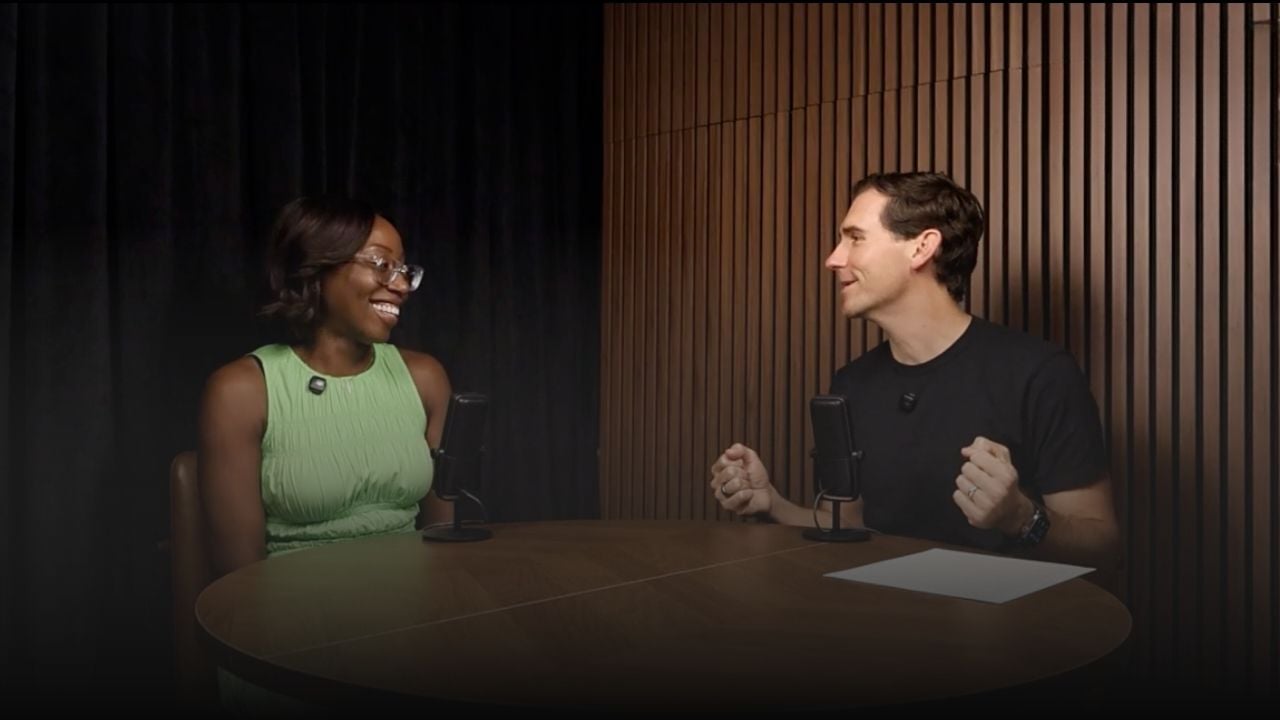
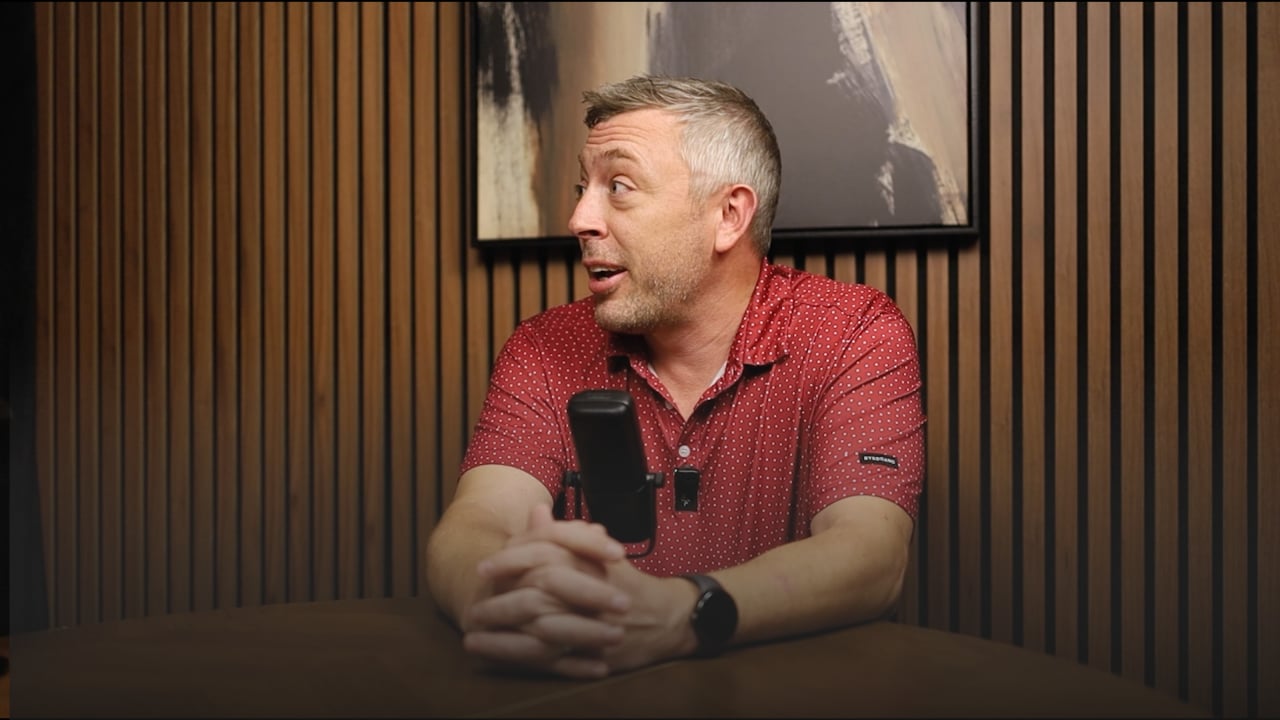
Justin Landis: Welcome to The Justin Landis Show, your real estate podcast about having conversations, building relationships, and creating freedom. And today I'm here with Kyle Marshall, one of the awesome agents at JLG. Kyle, thanks for being here.
Kyle Marshall: Thanks for having me.
Justin Landis: Kyle, your career started in ministry. Two decades of ministry before you transitioned into real estate. Tell us about that and what led to you making this transition.
Kyle Marshall: Yeah, so did ministry like you said for twenty years. Got into it out of high school and really out of college, but went to college to do ministry. My wife and I the last ten years ran a campus ministry at Emory University. Loved it, had a great time. And then you know the last few years of my time at Emory I could just tell it was time to do something new. And that's kind of a weird thing. I've got a master's in theology and twenty years of ministry. When you've gotten your ten thousand hours, you know. So we were trying to figure out what's next, and you're like, I have no idea what's next, because of just unknowns. And so trying to figure that out, I spent about eighteen months trying to figure out that question.
Justin Landis: That's a long time. What was that like?
Kyle Marshall: It was scary. It was weird. People kept asking me what was next and I was like, have no idea. And seriously considered becoming a teacher. I knew I could teach, I had done a lot of that sort of thing over the years, to the point where I started, I ordered some books on history and started studying to become a history teacher. But never felt great about it. It was like something I could do but I didn't think I wanted to do that. And then one day my wife and I were thinking about moving and we had used Justin and the group here and Ashton had sold our last home. And so Ashton actually took us out to Roswell to look at a house. We ended up changing her mind, not wanting to move. But on the way home from that showing, I told my wife I was like, I wonder if real estate could be an option. And she's super supportive and I was like, yeah go for it. So and then we had a conversation and we sat down.
Justin Landis: Yeah, what do you remember from that conversation that we had?
Kyle Marshall: I remember feeling like, am I crazy? Is this even possible? You're such a nice person that I was like, is he gonna tell me even if I'd be terrible at this? I was like, is this a huge mistake? But what I really felt like coming out of that was you were so encouraging of the fact that the people side of what I had learned in ministry would apply to this. And so I was like, if I can learn the business side, I think we can be successful.
Justin Landis: I think a lot of people might be surprised with that but to me the people side is the hardest part of this business. Now you gotta learn all the other stuff too, but the people side, if you have it, you have it.
Kyle Marshall: Yeah. And I don't think I did. I met with Jared and we did one of the personality tests, I think it was DISC, and he was like, you're the most extroverted person I've ever seen from this. And I was like, oh okay. I just didn't realize that. But watching other people and kind of learning the business over the last year, there's just things that I have realized, like skills that were formed over time working with people in the ministry side, that I did not realize how naturally that came and how it might not come to other people. So it's been really helpful.
Justin Landis: Kyle, I've talked to a lot of people about making the transition into real estate and of all the people, you have one of the most specific frameworks which I really love and I think would be helpful. You have four questions that you evaluated to decide whether making the move into real estate was right for you. Will you walk everybody through those four questions?
Kyle Marshall: So the first one was what am I good at? If I'm gonna do a new career, I need to find something that I'm good at. Second was what do I enjoy? I didn't want to, if I was gonna make a major shift in life, it had to be something I would enjoy doing for the next twenty, forty, eighty years, however long we are working. And then the third one was, is there a financial future in it? It could be I enjoy it and I'm good at it but there's no money, then gotta figure out something else. And then the last one for me personally was, does it put me around people? I needed, because I am a people person, I am an extrovert to the max. And so I needed to be working with people. And that's part of what I loved about ministry and I knew that that was something that I needed for me personally. So if I could find something that hit all four of those, then it was like, yeah, let's give that a shot.
Justin Landis: I love it. Will I enjoy it, will I be good at it, will there be a financial future, and is it around people. That is a pretty awesome framework to evaluate it. Was it still hard though? Did it feel like a sunk cost or was it hard to move from all you had invested?
Kyle Marshall: It was hard. It was hard to let go of that. I felt like I was stepping into a field where I knew very little and that was really humbling, coming out of a field where I felt very much like I knew what I was doing. And the sunk cost was like, alright, I did, I still have student loans for my master's program. But I knew I had my church world that I was already involved in, so I had spaces for that part of my life to still exist. And being in this, I needed something new. I'd seen where the last few years I knew that it was time. And so I needed to try something new and realize like it's okay to let go of that, because this is the direction I feel like I should go.
Justin Landis: What would you say to somebody who's right on that cusp, they might be struggling to give up something in the past and take a step towards the future?
Kyle Marshall: Yeah, I mean, don't be afraid to take chances. Obviously there's, you gotta pay your bills, gotta pay your mortgage, like there's things that you have to think about when you're making big shifts. But for me personally, I knew that I could not go twenty, thirty more years doing something that I was not super thrilled with. And so why not take a chance, and within reason, make sure it's something that you feel like you could be successful in, but take that risk and just see. And if it doesn't work out, try something else new. But you only get one life, so like why not do something that brings you joy and brings you excitement versus sort of rotting away.
Justin Landis: I mean, I think the within reason is a great qualifier because it is a risk to start a new career. And this is a hundred percent commission business where a lot of people fail. But I was not just telling you what you wanted to hear when we talked. Kyle's going to be good at this. You know, I always try when someone comes to me to make sure they know how much of the business is lead generation and how you gotta create your own business and you know, like you've gotta have structure and it's tough without having a boss and all the different things that are challenges. But also just from knowing you and in the conversation I was like, I feel like this is a pretty low risk for you personally because of those skills that you already brought that are so transferable.
Kyle Marshall: Yeah. I think I did not realize how valuable those relationships that I'd formed outside of real estate would be. And very quickly, I mean I think I was licensed for about two weeks and I was already showing houses to a friend of my wife's. And it flowed very naturally. And it's constantly surprising, people that I wasn't even that close to that are reaching out and saying hey, can you show me a house, I'm looking to sell my house.
Justin Landis: Because you've only been doing this how long at this point?
Kyle Marshall: A little over a year now.
Justin Landis: Right, a year. And you've helped how many clients?
Kyle Marshall: Seventeen.
Justin Landis: Yeah. In one year. And you know, the sales cycle is like three or four months. I mean, seventeen in one year starting from zero is just so awesome. Tell everybody a little bit about what you started to do because you do have to make a transition from, I know Kyle, I like Kyle, I trust Kyle, Kyle's a great guy, to Kyle is my go-to real estate agent. What did you do to start to make that transition so people could trust you not just as a person but with their real estate?
Kyle Marshall: I think joining the team was the best thing I could have done. And I'm not just saying that because you're here. But the team has a lot of cache. It's known. I have friends that had worked with JLG before and so to be able to lean on that and say yeah, obviously I'm new, there's no hiding that, but I have this wealth of experience behind me that I can lean into. And so you're getting that when you hire me, which helped. And then I mean there's certainly some fake it till you make it a little bit in the beginning. A lot of let me check on that when people would ask questions that I didn't know the answer to. I'm like, let me find that out for you. That's something I learned in ministry: people are always asking questions and you're not gonna know all the answers. Only bad ministers just always have the answers, right? And so that skill was like, okay, I can say I don't know but I can find out for you. And usually that was fine. So that helps a lot.
Justin Landis: I'll never forget my first client. It was my wife's best friend. I was showing houses a week in and she said, I'm gonna trust your expertise here. And I thought, I have no expertise, I've been licensed a week. But what she was really saying was the team's expertise. And so that really helped me during those early times where I felt like I just did not know what I was doing. Because when you get licensed you have to take an exam, you have to go through a class, but I don't think it really prepares you to do this job until you're out doing it. And so helping people around you that knew, my first ten offers I probably sent to three different people on the team to read over because I was terrified that I was gonna make a mistake.
Justin Landis: Back to the starting out, whether it's JLG or any team, I mean starting out with a team and a mentor, I'm just such a believer in that. You've gotta have that mentor, that support structure there for you. I learned a lot about easements but not as much about how to do this job.
Kyle Marshall: Right. And so no, I was shocked at how much I still had to learn after I'd gotten through that. And it is surprising to me that I've met a lot of agents over the last year, a lot of them start out solo, and I just don't know how you do it. Because you've gotta learn a lot and there's a lot of, every single deal is unique, there's unique struggles, there's unique things that you have to figure out. And so not having people around you to lean into when you don't know the answer would be hard.
Justin Landis: Yeah. You mentioned helping your wife's friend and you've helped other people in your network and relationships, but how did people view it like when you first started to tell them what was the general reaction from the people you knew?
Kyle Marshall: I feel like there were a lot of they're being nice because they're my friends but there's like a layer of anxiety underneath it. And there's probably still a little bit of that you know underneath the surface. But I think having success for the last year it's like, alright, now I start to feel like people are like, oh he's actually doing this, not just like, alright, is this just a midlife crisis sort of type of thing where you're gonna burn out in three months and go get another job.
Justin Landis: So well you definitely haven't done that. And you have had a lot of people trust you in your relationships in your sphere, but you've generated a lot of other business as well. What else has been helpful to do all of those transactions in the first year in addition to having a strong relationship and network?
Kyle Marshall: I think you start with the people in your sphere, finding ways to market yourself to that next sphere. I've fundraised for a long time in ministry and one of the things we always said was you're never gonna get fully funded just from the people that you know, you're just gonna run out of people really quickly. And so learning to ask, can you introduce me to more people? And so similar in real estate, learning to say, hey, who do you know that's just gotten married? Who do you know that's having a baby? Who do you know that needs to sell because they need to downsize? Those sorts of questions, people start thinking. I remember early on asking the worst question that every real estate agent asks, which is are you looking or do you know anybody who's looking to buy or sell a home? Which no one does, or they're not gonna tell you. No one's walking around telling their friends I'm looking to buy or sell my home. It doesn't come up naturally. So learning better questions I think is really helpful.
Justin Landis: What are some of your favorite questions?
Kyle Marshall: The question around, do you know anybody that has just gone through a job change? Do you know anybody that has been renting for a while that might be looking to finally buy? Do you know anybody that, I mentioned the baby, those sorts of milestones in life where people might be looking to make a move. Because it triggers an actual person in your head. If I'm like, hey, who do you know that you've been over to their house and their kids are sharing a room, there is stuff everywhere, it looks like the house is about to burst. Yeah, I think that's been awesome.
Justin Landis: So you've done that but you also have taken advantage of other opportunities too. I do this exercise where I'll ask agents, hey, look at your schedule the next week and go through how many hours you have available that you want to work. Because you're not gonna work twenty-four hours a day, right? How many hours do you have that you wanna work and how many do you already have booked and how many are left? The answer is almost always around twenty. My point of that is not that you have to lead generate twenty-five hours out of twenty-five available. But if you lead generate five or ten of the twenty-five you could really do something. And you answered something like forty-two hours available or something and I was like whoa.
Kyle Marshall: It was a slow week.
Justin Landis: Well but I think a lot of the people who are answering the question didn't want to work forty-two hours in total. And so my point on this is you really have jumped all into it. The speed at which you respond to things, your willingness to say yes, the amount of time you're working, also has contributed to that. Do you agree with that?
Kyle Marshall: I think so. I mean, think if I was gonna do this I had to go all in and so treat it like a full time job, not as a side project where I just hope to sell a few houses. I've got a mortgage to pay right. And so that element of sort of scarcity where it's like you've gotta do this, so if you don't do this you've gotta find another job that you probably aren't gonna like. So you gotta do it and treat it like a real job. And I enjoy the challenge of it. There's something, I don't think I realized until I got in it how much I would enjoy the thrill of meeting a new person, getting them to hopefully want to go with me, and helping them find a house. And the challenge, sometimes it's really hard to find the right house. And so you're looking, and you can view that in a negative, or you can view it as this is fun. Like we're gonna almost gamify it and we're gonna keep pushing and keep pushing until we find them.
Justin Landis: It's so funny that you mentioned fun because I was just about to say it seems like you're having fun. I think the last two Saturdays you have texted me about a listing appointment and I got it, you know, and like all excited about it which like gets me all excited and like jazzed up. I think for being in a team environment it's good for you to enjoy and push forward. And I think that having fun at what you're doing and being thankful that you're doing it also goes a long way to having success.
Kyle Marshall: Yeah. I think you know when you are, for me personally, doing one career for a long period of time, you had this sort of deep down wonder, could you do anything else? Are you just good at this one thing? Right? And I think a lot of people probably feel that way. And so making this shift for me it's been really exciting to have success. Obviously financials is great, to get paid, but more so it's, I can do a different thing and be good at it and work hard and see results and that's really exciting. And so you know there's challenges, there's times where it's not as exciting, but in general that kind of propels some of that, I've got forty-two hours, I can do forty-two hours. My wife's a consultant, she works all the time, if I can't work forty-two hours then something's wrong.
Justin Landis: Man, so I love that you're having all this fun but you're also finding meaning in what you're doing and in working with the clients.
Kyle Marshall: Yeah. I don't think I realized I would get that as much. Obviously coming out of the ministry that significance was like the main draw for why people do ministry. And I was concerned about that getting into this. But early on I'll never forget I think it was my third client. We found them a house, it's going great, they're super easygoing, we get through into the due diligence, we have the inspection. The inspection report has some things but it's not that concerning. Now I'm new so maybe I'm missing things. But I felt like the reaction from that report was not warranted. It was very anxious. They threw a lot of money at different things to get tested and I was like, this is weird. And we are at the end of due diligence and she opens up to me and says, this is the first house I've bought since my mom died. And we used to have this saying in ministry: it was that life is hard, people are complex, and seldom is the issue the issue. When you were dealing with people in ministry that were acting what you felt like irrational, it's like you always knew there was something else going on. And to not take it personally and to have that helps with empathy I think when you're dealing with people in difficult situations. And driving home that saying came back to my mind and I thought, oh, like, people are people. It doesn't matter if it's ministry or in real estate. People are going through things that we often don't even know anything about. Sometimes we do, in this business we see people in really hard situations, death and divorce and those sorts of things. But also people are dealing with things that you'll never know about. But it's important to keep that in mind that life is hard, people are complex, and usually what you are seeing is not really what's going on. There's more things going on beneath the surface.
Justin Landis: Seldom is the issue the issue. I think so much wisdom in there.
Kyle Marshall: Yeah. I didn't come up with it, it was a professor who taught us that years ago. But it's been true my whole life and it's been interesting to see how that comes out. Because every deal is stressful, people are making a huge purchase, and they're scared, they're afraid they're making a mistake. And so learning to take some of those things that I learned over the years in the ministry and apply it to this has really helped. At least helped me not get so frustrated when people are acting what can feel like irrational sometimes.
Justin Landis: Definitely. Before we wrap up, so you're one year in, headed into year two. What are you excited about moving forward in this career?
Kyle Marshall: I think I'm most excited that I just feel like I've still got a lot to learn, but I don't feel like a newbie anymore. I've seen a lot of different things. I've seen a lot of the ways things can go wrong and how to address them. And so just the confidence. I think last year there was a lot of like we're doing this, I'm a little bit scared, and I'm asking a lot of questions. And so going into this next year feeling like I have a sense of how to do this job, but also how to lead gen, how to broaden your network, that kind of thing. I'm a lot more confident now than I was a year ago that this could be my career.
Justin Landis: I think you are well on your way for this to be your career. So thanks for sharing all this with us today. This was so helpful and there's so much here for agents to learn from.
Kyle Marshall: Thanks for having me.
Justin Landis: Thanks for being with us today. Make sure to like and subscribe so you don't miss a single episode and we will see you again next week.