If you’d prefer to listen, you can stream the full episode here or watch the video version here. For accessibility, we’ve included the full transcript below for anyone who prefers to read along or who is hearing impaired.
Casey Dellinger: A common theme is that there's so many different types of people in this world. And I mean, even here, right? Two people, very different. And so if you think about all the people we interact with on a daily basis, clients, lenders, other agents, you have to be able to read the room and do what's best for those people. So if a client is very driven, then you have to be able to follow that suit. If they are very laid back, if they want all the data, if they just want to go with the flow, you have to read the room and be able to work with what's best for them.
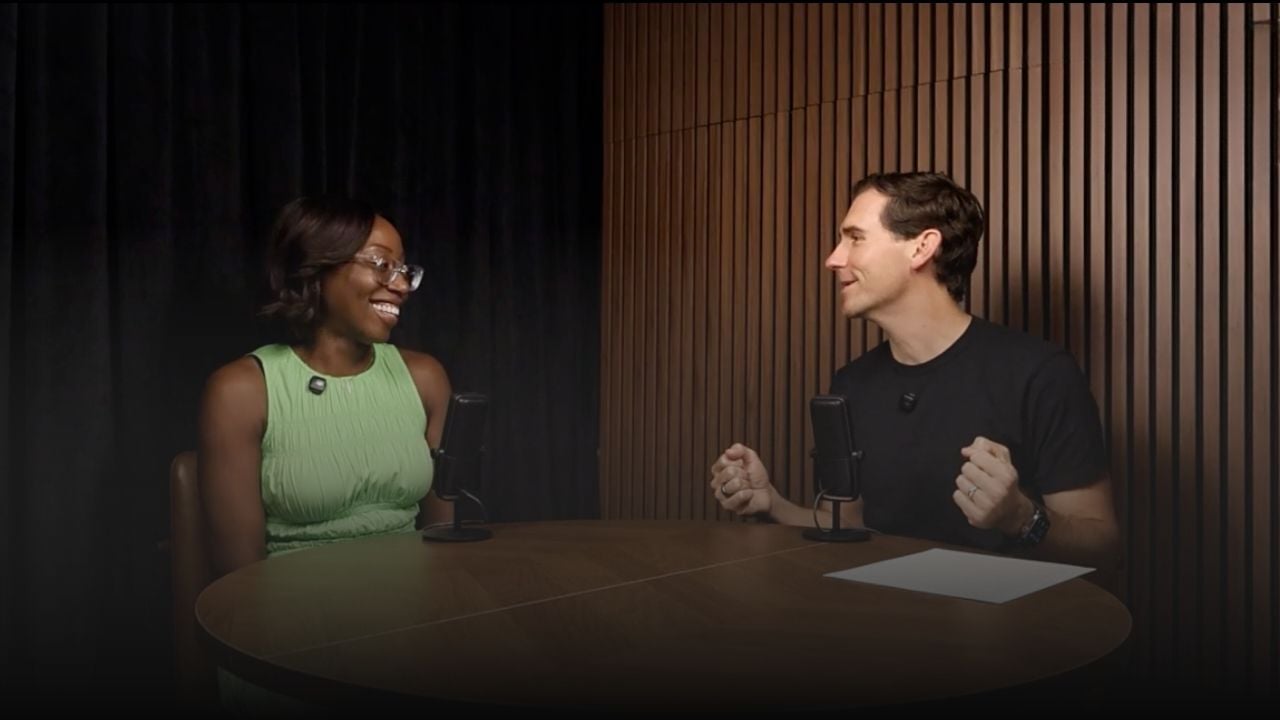
Justin Landis: Welcome to The Justin Landis Show, your real estate podcast about having conversations, building relationships, and creating freedom. And today I'm here with Casey Dellinger, one of my partners at The Justin Landis Group. Casey, thanks for being here.
Casey Dellinger: Thanks for having me.
Justin Landis: So Casey, tell us about your journey from being in sales to becoming a real estate salesperson.
Casey Dellinger: Yeah, it came from a background in sales, but it was a very different type of sales. So I started in software sales fresh out of college and got into inside sales and did that for about 12 years.
Justin Landis: I bet you were really good at it.
Casey Dellinger: Not at the beginning. You know, I was 22 when I started. I was a little too young for that, but I grew into it. I learned a lot and spent 12 years in it. So by the end, I would say that I was doing pretty well. It wasn't fulfilling for me. It was kind of soul-sucking to me.
Justin Landis: And so how did you start to think real estate might be the right fit for you?
Casey Dellinger: So interestingly enough, I didn't. I didn't know what I wanted to do, honestly. The options were open. And for me, I was just going to stay in software sales. That's what I knew. It was comfortable. It paid the bills. And my husband at the time was like, please don't. You're miserable and you're bringing that home and I don't want you to be miserable all the time. And so he was like, why don't you take some time and figure out what you want to do?
Justin Landis: Was it hard to trust him with that?
Casey Dellinger: Yes. Looking back, it was the best decision I ever made. But it's hard to leave something that you know, that has worked for you for 12 years. And so he was like, take some time and let's figure out what it is.
Justin Landis: What'd you do during that time?
Casey Dellinger: It was only a couple months because I'm not good at not doing anything. A couple months is still something. Yeah. Yeah. So it was pretty quickly, actually, that I thought about real estate and then it kind of came into fruition. And I don't know if you know this, but Billy has his master's in real estate.
Justin Landis: I didn't know that.
Casey Dellinger: Yes. Yeah. He got his master's in real estate at Georgia State. And so he's always been really kind of nerds out on real estate. We would walk the neighborhood and look at all the houses and go to see open houses. And I had bought and sold a couple of houses by then personally and had always kind of been a little too interested maybe for my agent's liking in the process and asked a lot of questions. And so he was like, I think you would be good at real estate. Have you ever thought about that? And it just kind of took off from there.
Justin Landis: And to even get your license, once you decide you're doing it, you're going to let nothing, geography included, stop you from getting your license and getting started. You drove all the way to Savannah, didn't you?
Casey Dellinger: When I make up my mind on something I want to do, we're doing it. And so I went to the full-time class. So I spent two weeks, eight hours a day in the classroom, going to school. I had the best teacher. She really made it fun. And when I graduated that class, you have to take your state and get the license. I was nervous. Everyone says, you know, it's hard. It's a really hard test and people fail all the time. And so I wanted to take it quickly and there was nothing available in the Atlanta area for like three or four months. And that was way too far out for me. Savannah had a spot. So I drove four hours down and on the way down there, I was like, if I have to drive four hours back, knowing I have to do this all over again, it's going to be awful. But I passed. And so I got to drive home with excitement.
Justin Landis: And for somebody listening, if they're listening to this and they want to be a real estate agent, you did it in less than a month, a matter of weeks.
Casey Dellinger: Yes, absolutely. It can be done. I mean, it's a lot of work and it's a lot of studying and it's a lot of focus and dedication. But just like anything, if you put your mind to it, you can do it.
Justin Landis: Yep. And so then you started out your career at JLG on the team during a very interesting time. You joined JLG in 2020.
Casey Dellinger: Yeah. COVID years. So all of a sudden it was a lot different.
Justin Landis: What was that first year like for you?
Casey Dellinger: It was interesting. Started in January. So before we knew what was going to happen for the year. So it's kind of normal. I mean, that month was a normal month. Full of excitement. Full of terror. All the things when you're starting a new career. And my husband had also started a new career, January 2020. Then when COVID started to happen and things started to slow down, it was terrifying because maybe this was the wrong timing and I didn't know it. How would you know? And so I just kind of settled in and took what the team gave me and really trusted the process. And we pivoted as a team and we took on everything that we needed to go with what was happening with the market and to really make buyers and sellers feel comfortable with what was going on as much as we could. And so I just rode that wave with you guys and trusted the process.
Justin Landis: And despite that being that year, no history in this industry, you had one of the best years of any agent who has ever had a first year on JLG. What would you attribute that initial success to?
Casey Dellinger: I think that's just my personality, is that I'm a go-getter and I'm very type A and I want to make things work and very driven. But I also think that I was a yes girl. So I said yes to everything. I said yes to stuff in the city, stuff in the suburbs. I said yes to renters, sellers, buyers, whatever it was. I was there because I wanted to get as much practice as I could to learn as much as I could and just involve myself in real estate.
Justin Landis: What did your previous sales career teach you? How much of that was transferable to real estate sales now that you look back on it?
Casey Dellinger: A lot. A lot. I mean, it was very different sales cycles and people that I was selling to. A common theme is that there's so many different types of people in this world. And I mean, even here, right? Two people, very different. And so if you think about all the people we interact with on a daily basis, clients, lenders, other agents, you have to be able to read the room and do what's best for those people. So if a client is very driven, then you have to be able to follow that suit. If they are very laid back, if they want all the data, if they just want to go with the flow, you have to read the room and be able to work with what's best for them.
Justin Landis: You have to be adaptable.
Casey Dellinger: Absolutely. Yeah. And so if someone's listening to this that has a sales background and is wondering if it's going to translate, your advice would be generally positive to them?
Justin Landis: Oh, absolutely. Yeah, it does translate. I mean, you have to learn the skill of what you're selling, right? Software and houses are different, but all of the background skills that are necessary for sales are the same.
Justin Landis: Awesome. So you mentioned earlier that your husband, Billy, also started a business at the same time. Tell us a little bit about that journey of starting both of these things together, and then we'll get to where that journey has led you now. But at the beginning, what was it like from a personal life standpoint that first year of y'all both taking on these new adventures?
Casey Dellinger: Hard. Let me just summarize this in one word. No, but we knew that going into it. And we knew that that was what was going to happen. And that is going to be necessary for both of us to kind of hold each other and uplift each other and walk each other through the times, the unknown times, because there was going to be a lot of that starting new careers and new paths. And I helped him. He helped me. I would ask him real estate questions. He would ask me to work events for him. And we learned we don't work well together in that sense. It was tough, but it helped us actually get closer because we learned a lot about each other in those tough times and how to work together better.
Justin Landis: So it actually helped improve your relationship.
Casey Dellinger: Oh, absolutely. Yes. And in the midst of it, it didn't feel like it. But looking back now, absolutely.
Justin Landis: What advice would you give to somebody that is running the dual entrepreneurship path?
Casey Dellinger: Patience, believing in each other and trusting each other that you're making the right decisions and that you're doing what you need to do together.
Justin Landis: So you just mentioned saying yes. And I know Billy was also saying yes to everything at the beginning. So you're saying yes and it's working. But then did there come a point that saying yes to everything didn't work as well? Talk a little bit about that.
Casey Dellinger: Yeah. I don't regret saying yes. And I said yes probably for the first four and a half, five years of my career here. And it taught me everything, or not everything, I'm still learning, but it taught me a lot of what I needed to know. It got me to where I am. I don't regret any of that. But at some point, you have to set boundaries. And I was turning down social events. I was working until 10 p.m., waking up at 7 a.m. I was yes, yes, yes to everything. And at some point, you start to have diminishing returns personally. And when you have that, you can't give yourself fully to your personal relationships, to your work clients, to anything. And so there was a time that it was just like, okay, we have to look back and what boundaries can we set?
Justin Landis: So how can you, if you're used to doing the same thing for so many years and it has led to a lot of success, how do you start to shift that?
Casey Dellinger: That's a great question. And I'm still working on it now, to be honest with you. I think it's going to be forever you're working on that because it'll look different depending on where you're at in your career, who you are, what you want out of life. But I think that just knowing what you need as a person to recharge yourself, whether that be a little extra time in the morning or to work out during the middle of the day or whatever it may be for you, knowing what that is and just being transparent with the people in your life, whether it's your clients, your husband, whoever.
Justin Landis: One of the things that I've been really impressed that y'all have been able to do, both running businesses, is you have a January routine. That is pretty unique for real estate. Tell everybody what you do in January.
Casey Dellinger: Yeah. So every January we go to the Florida Keys for the month. It started as a 10 day trip. And as of last year, it was, I think, a 45 day trip. And we take our dogs in the RV and we pack up and we just go somewhere warm. We still work. But what we do is we work from a better view, a better environment for us for that time of year. And we take the first half of every day until lunch, we work proactively. And the second half of the day, we do something fun while still working, but it's more of a reactive work. And we can only do that because that is the slowest time of year for both of our businesses.
Justin Landis: But it's 45 days. It's so amazing. I want you to dig a little bit deeper into that because I'm sure someone listening is thinking, I could never do that, I bet she's not doing that much business. How many houses did you sell last year?
Casey Dellinger: 48.
Justin Landis: 48 houses. She sold 48 houses and she's taking 45 days out of town. What kind of prep work does it take? What's happening here on the ground?
Casey Dellinger: Yeah. So for me, I have leverage that's here that helps me. And so I set that up before I go. And I look at all of my business that I have going on at the end of the year and what I'm expecting at the beginning of the year. And I sit down with, I have somebody that's helping me with admin stuff and somebody that's helping me with showing or running stuff. And we sit down and we just talk about what to expect. Now it's real estate. So you never know exactly what to expect, but at least we have that groundwork. And so we just kind of go through it and we have constant communication. I mean, daily we're checking in, we're talking and things change, but we at least kind of know what that path looks like.
Justin Landis: But don't all your clients fire you because you're not here?
Casey Dellinger: No. I'm joking about that because that's a common belief in this business, right? I'm sure that I have lost one or two along the way in six and a half years because I wasn't here and they just didn't tell me that was the reason or whatever it may be. But I'm still working while I'm there. I'm still present. I'm still leading and guiding my clients the best that I can. And so they still want to work with me because they know that I'm still doing that.
Justin Landis: Yeah. I mean, I think that is just such a huge lesson for what really matters to the clients. You're guiding them and leading them. And you don't have to be the one to do every single thing because you're still doing the most important thing. Helping them.
Justin Landis: So you take the 45 days and then you come back. How is it different for you? How do you come back after being gone?
Casey Dellinger: I'm coming back refreshed. Because I've had that time for myself to be in a better environment for me, whatever that's different for everybody. And I've had that time for me to just kind of breathe a little bit. Again, it's also because it's the slowest time of year. But I think that again, it kind of boils back to on a daily basis, what are your boundaries? Because you need that time for you to be the best that you can for everybody else. I think on the time of year, there is definitely, this is a seasonal business, right? I mean, no matter how much you want to sell as many houses in November as you're selling in May, it just doesn't really work that way. And if it does, it's complete luck.
Justin Landis: I have always had a strategy when I was in production. I would do no vacation before June because I felt like if I put time in at the beginning of the year, I could basically set my year, make the majority of my income, and then take a lot of time off in the second half of the year if I wanted to. In January, easier to be gone. It would cost you more to be gone in May.
Casey Dellinger: Oh, yes. Once we get back in January, we don't leave again until June. We're here the rest of the spring for both of us because that is the busier time. And I do want to be here for the most part with my clients.
Justin Landis: The final thing I want to wrap up with, and we've kind of hit on this, but I think this is such a key to this business. It sounds like that you and Billy are really supportive of each other in your business. How do you think that's helped you with this to have the support of your partner?
Casey Dellinger: Yeah, I mean, I think it's a little different for us because we're both entrepreneurs in a way. And so we both realize that it can be an any time thing. And so when we're on vacation, if I have to stop and make a call or make a text, he understands because he might have to the next day. But it's just understanding what it is that your partner or whoever has to put in to be the best they can be at their career or whatever it is. And if that's fulfilling for them, then you support that.
Justin Landis: So is the support you have for each other, is that something that just naturally happened because of your path? Or is it something that you've worked on and been intentional about to create over time?
Casey Dellinger: Yeah, I think we've worked on it and been intentional. At the beginning, it was definitely a source of contention for us. We were both new in this journey of being entrepreneurs. And so we didn't know what that looked like. And it was very hard sometimes to be at dinner and me to be like, hey, I have to write this offer. I have to talk to this client. And he's like, we're having dinner. Can't you just sit down? And again, I've set boundaries now. So I don't do that as much. I've learned along the way. But at the beginning, it was tough. And then we kind of realized, okay, what's important, what's not? And when is that true time where we do not take calls or we do not answer emails or whatever it is.
Justin Landis: Do you have rules or boundaries around that? What is your off time?
Casey Dellinger: I try not to work past 8 p.m. Same for him and not before 9 a.m. So we have evenings and mornings together.
Justin Landis: I love it. That's awesome. I mean, I found that the people you're with prefer a shorter amount of real focus time, then a longer amount of I'm not actually here or present or paying attention, other than my body is physically in this room type thing. So I think that's really great.
Justin Landis: So you and Billy both started your businesses about the same time. Tell everybody what your husband, Billy, does.
Casey Dellinger: Okay. It's a little all over the place, but he owns a mobile bar and coffee catering company. So he brings vintage vehicles from Europe, brings them to Atlanta, gives them a facelift. And then for private events like weddings and corporate events, he does coffee and bars. And those require being on site. This is not a virtual business. This is an in-person, we're here doing the event business that has a real timeline.
Justin Landis: He's managing that. You're managing 20 or 30 clients. There's a lot happening every week.
Casey Dellinger: There's a lot going on. Yep. So that's when you have to set the boundaries because you need your time, you need your time with your partner, whatever it may be. But you can handle it. You can manage it.
Justin Landis: All right. So you were saying yes to everything. You decided you needed to pull back and started to say no to more things. Tell us specifically, what did you start to do to say no? And was there fear there?
Casey Dellinger: Fear is a good word. And I'm still working through that now because the what if, what if that was the client that's going to refer me to 12 more people? What if that was the one, you know, what if, what if, what if. But you get to a point where you just can't take any more on and you realize that you're not working for your clients as the best you can and you're not doing the things in your life that best you can. And so you realize, okay, what am I good at? Which particular clients can I help the best? What is worth my time? And you start to focus on those. And those are also the things usually that bring you joy and that you like doing. And so I think that what if fear on the clients, what if I don't take this or what if I don't show up here or do this, I'm not going to get any more. How can you get past that in your mind so you can pass on that so that you can serve somebody else better?
Justin Landis: Yeah. I mean, I think if you're doing the things that you need to do, there is always business to be had. And Atlanta is a big city. There's a lot of business here. And so if you're doing the things that you need to do to lead gen, to be in front of people, to whatever it is that you're doing to build your business, then the next thing will come. And it always does. So you can be confident because you're doing the right things. You're having the conversations, you're building the relationships, whatever it is, that to pass on something that isn't a great fit for you, it's okay because there's more coming from the work that you're doing. And if you do work on the thing that's not a great fit, you might have to pass on the other things because you don't have time. And those are the things that are going to make you happier. Those are the things that are going to bring you joy. Those are the things you're going to like doing. And you don't want to miss out on those.
Casey Dellinger: Definitely.
Justin Landis: Thanks for listening today. And Casey, thanks for being here. Make sure that you like or subscribe so you don't miss a single episode and we will see you again next week.