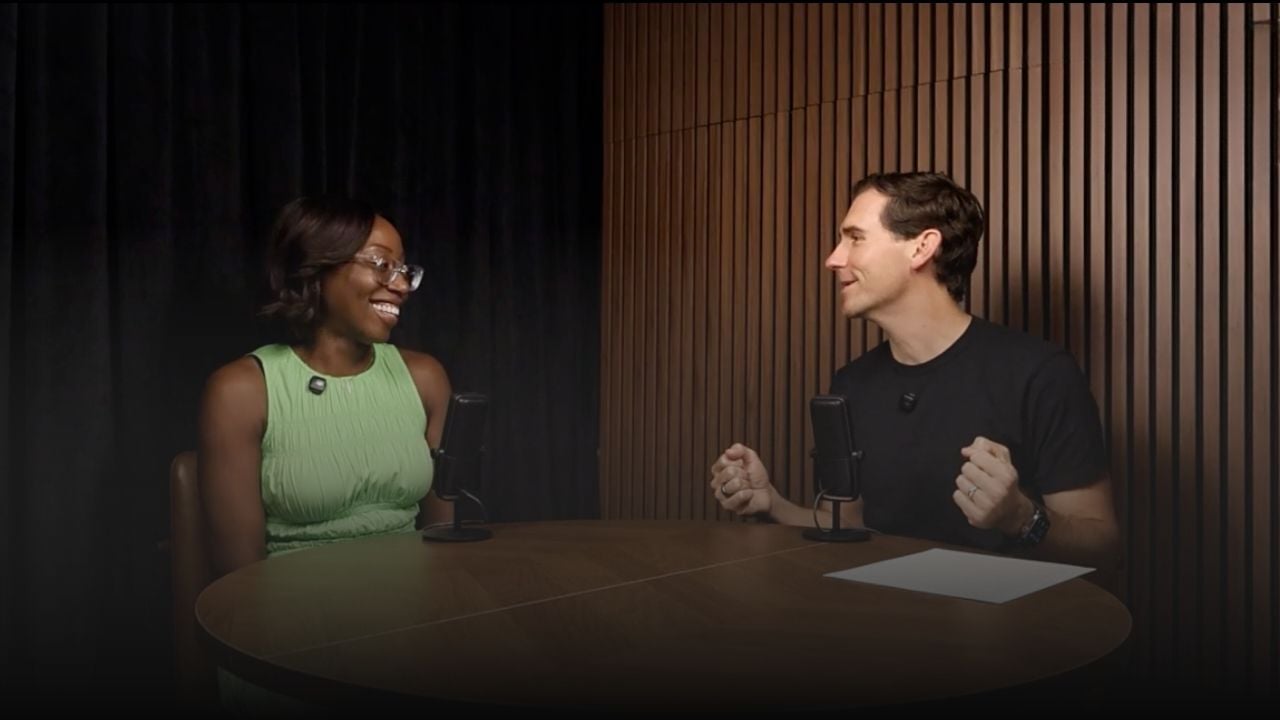
If you’d prefer to listen, you can stream the full episode here or watch the video version here. For accessibility, we’ve included the full transcript below for anyone who prefers to read along or who is hearing impaired.
Daniel Dorfman: Location is very important and we could probably feel pretty good about nailing that. This other piece that no one really talks about that's extremely important to real estate are the people. The people living in the building are the answer and they are the solution, right? If that renter is paying on time, renewing, and telling you when there are small problems you can fix today that would have been big problems later, your asset's going to perform. And we saw that time and time again in our past book of business. And so we said, all right, well, we have a unique opportunity where we can actually have these renters who live with us be incentivized to have this asset perform better.
Justin Landis: Welcome to the Justin Landis Show, your real estate podcast about having conversations, building relationships, and creating freedom. And today I'm here with the founder of Invest With Roots, Daniel Dorfman. Daniel, thanks for being here, man.
Daniel Dorfman: Yeah, thanks for having me, Justin.
Justin Landis: Awesome. So I'm so excited for you to share your story because when we first met, you were a real estate agent. You're doing real estate, kind of the same that I was, but you've taken a different path from there. Tell us kind of what changed to make you change directions.
Daniel Dorfman: Yeah, will do. One quick nod to Justin, who actually took a meeting with me at a coffee shop, I think, probably 15 years ago. So appreciate that.
Justin Landis: Yeah, I am. I don't think I'd even sold a house when we did that. I mean, if you remember that. It has been, I mean, I'm glad that we did and it's turned into an awesome relationship.
Daniel Dorfman: Yeah. But yeah, so, you know, got to cut my teeth in this real estate industry, got to invest, got to do a little bit of everything from property management to relationship management after. Because you're investing yourself.
Justin Landis: That's right.
Daniel Dorfman: Yep. So my wife and I started investing ourselves. She got her license. Then I followed suit. And, you know, I think when we started to kind of realize that we needed to take a little bit of a turn was really like leading up into COVID. And we were managing a lot of properties at that point. And I'd really put on the investor hat and really been deep focused on how do I create as much wealth as I can from this asset class? And the reality is it's an amazing asset class. I mean, it is one of the best wealth creation vehicles we have. The problem was that every day I would lay down to go to bed and be like, all right, well, this is impacting me tremendously. I'm very excited about it. We're in a good spot because we've been able to do this. And the renters in our buildings are getting further and further away from being able to capture this opportunity. Because it's not easy to do.
Justin Landis: No. No, it's not. Tell everybody a little about the hurdles of becoming a real estate owner, being in this asset class if you're not already in it.
Daniel Dorfman: Yeah. So, I mean, if you think about it, right, like we always focus on homeownership and that is a huge obstacle, right? It's massive. But when you go buy your first house, there are programs that can get you in at, you know, 3%, 3.5% and up. If you want to be a real estate investor, meaning you go and get another house, your automatic hurdle is 20%. And so when you think about the moat that that creates, right? So it's one thing, first renter to homeownership, really challenging. And then the system, in my opinion, is kind of broken because it then creates this hurdle that's even more than the first one in the 20% down rule for your first investment property. And so you think about who can really put 20% down in general. And then you have to do things. It's not just having, I mean, having it is a hurdle, but there's a lot of other things to do too. I mean, then you got to get good at, man, I hope that underwriting was good. And please, please, please do not let that AC go out because that just wipes the cashflow for that single asset probably for the year. And so I think it looks amazing on the outside looking in. It also is an incredible vehicle for wealth creation. But if you don't do it right, if you don't underwrite it correctly, and if you don't have the means, you're never getting in there. And then I think, you know, we've got this very unique opportunity in real estate that is not another assets where you can go like tax deferred pretty much forever. If you do it right, right. You just sell it and you 1031 it. And those properties never leave those families, really. And I'm not against that. I just am trying to craft ways for more people to be able to participate.
Justin Landis: Yeah. So you saw this problem. How did you start to solve it? When did you start to think, like, maybe I could do something about this problem? Because it's a big problem.
Daniel Dorfman: Luckily, I had a thing called COVID at the end. You had a lot of time. Yeah, shining light. I always wake up early and no one was there to talk to me. And so we got a lot of time with the whiteboard, a lot of time with thinking through like, you know, what's going on right now? And if you really like were taking like a breath and learning at that point, you would have seen that Robinhood, crypto, anything in that fractional investing space was just taking off. And then you would also realize that there weren't any of them that are allowing you to do that in what I would consider a more conservative, steady Eddie type of asset. And that's where the gap was is, you know, hey, can we make real estate investing as easy as these apps like Robinhood, Acorns, all those have made equity investing. And then because we had time, we got to go deeper and say like, hey, right, like who's this for? And what is this really doing other than giving people a hundred bucks to invest? It's like, well, we're kind of opening, reopening that path to the American dream and really giving people that participation. What those apps did, right? It's really interesting, the confidence that you get, even if it's just a small investment, by saying I'm invested, right? Like, you know, $100 in real estate in our fund, not going to change your life forever. But walking around a little bit more confidence, understanding how the asset works, being able to kind of say, like, I own real estate. While renting, I'm building wealth, putting towards that asset class is pretty cool.
Justin Landis: And that is such a cool question. You're like, hey, people can own a part of $100,000 Bitcoin. They don't have to own the whole $100,000 to buy one. Why can't they do it in real estate? What an amazing question to ask. And you can, I mean, you just kind of laid out like why that matters there, but how did you start to solve it? So you're like, all right, we want to solve this. What did you do to actually like do that?
Daniel Dorfman: Yeah. So we first, we said, all right, there's this problem. We want a community where no matter how much you made, no matter where you lived in the United States, you could be and grab a little piece of that American dream. And so we started there and then we mimicked like, all right, well, this is a structure that we like. We like what this more like Acorns approach of like more, you know, friendly, I guess, from a brand standpoint and a community standpoint. And then we started kind of thinking about it and we got to a point where we're like, all right, how do we do this? How do we even offer this? Why don't people do this? Right. And so what was the answer? Why weren't people already doing it? Because it's really expensive. And, you know, I would say I spent almost six months as I started really like understanding and wanting to give everybody participation because you have to do what's called, you can do a few different ways. But really, the way to do it is you have to do like a public offering, actually go public, which is very challenging and expensive, or you do what we did, which is almost as much money, but it's called a Reg A fund, which allows for non-accredited and accredited people to be involved. And so when we started looking at that, the numbers are crazy. I mean, just to start that process you're in, go all the way through it, it's close to 400 grand. And then there's continuous upkeep on it. And so where I think a lot of people probably, and I probably should have, I just was, I got more frustrated I think. But it's like a lot of people I think get to that point and they put pencils down because if you look at it and you're just saying hey this is a re-investment product, the number, the margins are very challenging to hit because you have to overcome that hurdle. And it's really challenging. So we kind of got creative in terms of like what we thought the business model was and crafted a tech company that we could privately get funding into and offering that we could offset a little bit with each other. And I think the big thing was like when we started bringing this to our people and like the investors and everything, a lot of people told us to stop, right? Like it's like you're, oh well, I'll never be able to do that. But I think that's where we got more excited was, you know, like this is why we're not giving people this opportunity. That's why everybody doesn't have the opportunity because it's easy to just say hey we're just going to service that top 10% who are accredited in the country.
Justin Landis: Tell people, what's the difference between accredited? Because this is a really big deal and it's a really big part of your story.
Daniel Dorfman: It is. So, basically, the SEC, the systems that be, classify someone who's accredited as someone who's made over $250,000 for two years in a row or has a net asset value of over a million dollars, not including their home. And there's some specialty categories, but that's really about it. So that's a really high upper percentile of people in the United States. That is what passes the don't need this many regulations, don't need this many disclosure type fold. And to do deals for those folks, pretty affordable. To bring in the rest of the 90% of the country, which is who you're really trying to bring in, it gets really expensive because they have to do like all the checks and balances. And in one way, I totally understand it because you don't want a ton of like schemes out there that are ripping people off. For sure. But on the other hand, I was sitting, you know, driving around with no traffic in Atlanta, and you would still see lines lining up to do scratch-off lottery and all these other pieces where we're promoting people to go spend their money on something that they have very little chance to win. No regulation there. You could literally have zero. There's zero regulation on lottery. And I'd only say that to say that was the motivator. It's like we're promoting so many things across this country that get people to put their money in places that are probably not the best. And to make it so difficult and so expensive for us to be able to offer it was just even more frustrating.
Justin Landis: So you went ahead, pushed through, made Invest With Roots available to everybody. And then tell everybody, give like a clear breakdown of how Invest With Roots works and what's different about this versus another real estate investment.
Daniel Dorfman: Yeah. So one of the cool things that happened actually too because of the cost structure. So when we started realizing how much it was going to cost, we realized like, all right, part of this is going to be a technology play, but part of this has to be that we are better operators than the other people because if we're not, that's where we can get the margin, right? We can cover this if we're great operators. Because real estate is only a good investment if it is actually a good investment. And so when we started unraveling like past deals, what we really understood is like the location is very important and we could probably feel pretty good about nailing that. This other piece that no one really talks about that's extremely important to real estate are the people. The people living in the building are the answer, and they are the solution. If that renter is paying on time, renewing, and telling you when there are small problems you can fix today that would have been big problems later, your asset's going to perform. And we saw that time and time again in our past book of business. And so we said, all right, well, we have a unique opportunity where we can actually have these renters who live with us be incentivized to have this asset perform better. And we can create a program. And so we built a program called Live In It Like You Own It, where the renters in our buildings have the opportunity to earn rewards that can be invested into the fund just for paying rent on time, just for giving us a little video once a quarter that shows us if there's something going on and for renewing. And what we learned is very similar to what all these big corporations have learned. Happy renters equal happy returns. And so what made us different and made the program different is our fund is really, well, I'm going to say the only still because I haven't seen any other, but the first and only fund that helps renters who live in the buildings build wealth side by side with all the investors who are in the buildings. And we've just seen the win-win model work for five years now. Because as the renters do those things, pay on time, take the videos, take care of the property, they are then getting ownership in the fund. So they're actually owning the asset that they're taking care of and living in.
Justin Landis: When I first heard this, I was like, this is amazing. I mean, this is like such a, because you use the term win-win, it does seem like it is an actual win-win.
Daniel Dorfman: It is. And that's our, where I thought I had a lot of fun before of like doing these deals and like working. I've never had more fun than being able to talk to our renters. We have renters who've been with us for three years who started with less than maybe $500 total in savings, and they have $3,500, $4,000.
Justin Landis: Would you mind to break down the economics of just pick a number of an average renter, and what would it look like for somebody who they lived there for three years, and how would the economics of it work?
Daniel Dorfman: Yeah, so essentially something astonishing, our average renter in the United States today has less than $700 in savings. And so that's tough, right? That's a medical bill away from really having some problems. And so with our renters, if you come into Roots, the first thing you'll be asked is if you want to transfer your security deposit, if you want us to hold it in like an escrow account like we normally would, totally up to the person. Or they have this opportunity to go put that, you know, $1,200, whatever it is, into an investment under their name that grows. Well, sorry, no guarantees. It has grown. It's invested. And essentially, they can be a part of that journey from day one. And then what we do is every time they pay rent every month, if they pay rent on time, they get a $10 reward. That reward can go right to their investment account if they want to, or they can just store it. On a 90-day cadence, they get this opportunity to kind of take a video, do a challenge for us that would be helpful around the asset. And all of that accumulation of like points and rewards, they have about usually between $650 and $800 in just rewards that they can earn each year. So whether the fund grows or not, they've got a pretty solid return. And that is all based on this idea that as an owner, I am going to spend that money. It's either going to be rolling a truck for changing filters, like HVAC filter changing people. That's, you know, a hundred bucks easy right there every time they go to your property. And, you know, I don't know if you know this or experienced this, but like when people go to your property or service providers, they tend to find other things to work on while they're there. And so if you're an asset manager, you know the bill. It's like, oh, okay. So it kind of cuts down on all that cost. It just puts it in the hands of the person who's living there. And so yeah, over three years you start day one, you earn all your rewards, you go from like $1,200 to somewhere probably close to $4,000 by the end of that three-year run. And then our hope is, and we've seen this happen, our hope is that they say, all right, great, now I have enough to go buy a house. That's our mission. We just did a big partnership with Movement Mortgage, who now if you're a renter with Roots or if you're a part of the organization, you can actually get $1,000 closing credit with them. Just, you're at that three or four grand you've got there, get another grand, and there you're there on that three percent, three and a half percent down.
Justin Landis: Man, that is awesome. And as you've seen it's really grown. It's grown a lot, right? I mean, how many properties do you even know how many properties you have now?
Daniel Dorfman: We do. So we've, in the last five years we started with zero and now the REIT itself owns roughly 700 and we've got another close to 600 doors under contract or that will come in.
Justin Landis: Yes. And that is partially because this model has really worked. I mean, we talked about how it just worked for the tenants, but it's also really worked for the investors. Yeah. You know, the investors, all of our investors in REIT, we have a target of 12% to 15% annual returns. We've been able to hit those every year, which is pretty good in this market.
Daniel Dorfman: For sure. And, you know, I think the cool part about our community is that they are excited about the win-win, right? Everybody loves a return, but everybody is on board with helping people get to that goal. If you didn't do good while you're doing business, man, that'd be something. That's what it's all about. Why not do good and do business at the same time?
Justin Landis: That's amazing. What is you looking for where you are now? Where do you see the future of Invest With Roots? Where do you want to take it from here?
Daniel Dorfman: Yeah, so we've been able to, there's about, we've gone from zero to 150,000 people on platform in the last five years. And I don't know, probably 140,000 of those people came in the last two years. A million people by 28 has always been our goal.
Justin Landis: Man, that's amazing. So Daniel, as it's growing, you've got all these properties. Tell us a real story of an actual person who has gone through the program and what it's done for them.
Daniel Dorfman: Yeah, absolutely. So we have a, maybe they're a listener, who knows? We have a resident named Daryl who's lived with us. They came in, I guess they moved in around three years ago. At the time, they were a little bit of a credit risk from like an operator standpoint. We have a tendency to be like, we take the meeting, I guess is the word, right? Like we don't have like a cutoff for credit and things like that because at the end of the day, you know, credit's just a score. You really need to understand the person. And so we took a little bit of a risk on Daryl. I think he had a 520 credit score when he came in. We have part of the program we didn't talk about is we have on-time rent reporting reported to credit so that they get credit when they pay their rent. We also have monitoring services and all these learning education modules that you can take and like really, they're about financial foundations, not about like, you know, quick hits. It's about like, hey, what can I do to really like better myself and be able to take that next step? And so between using the credit monitoring, between using everything else and doing the thing, he basically went from a $520 to a $750 in two years. He went from $1,700 in his bank account to a little over $5,500. And he is now shopping for a house. And so it's just insanely rewarding to watch it happen. I mean, if it only happened once, we would be ecstatic. But hopefully we can make it happen many more times.
Justin Landis: Oh, man, I know you are. And I appreciate you bringing that up. I didn't ask you about that because it's not just the investment in the fund that you're investing into the tenants. It's financial education, like you mentioned, which is super robust. The credit reporting helping them get it up. So it's a bigger program than just, which is a lot, but it's a whole comprehensive program.
Daniel Dorfman: Yeah, and I think one important note is we've got today, out of all our investor base, we only have a few of them that live with us. The programs are available for anybody across the country can take advantage of all the knowledge-based stuff, all of the reporting mechanisms, all their monitoring. And so it's a really good place to go wherever you're renting, right? If you're renting anywhere and not in a Roots house, in a Roots house, it's a great place because you can start programming for yourself and start to build wealth while you rent.
Justin Landis: Man. So tell us, we've got a lot of real estate agents who listen to this. Tell us how real estate agents can interact with Invest With Roots. I'm sure they're hearing this like, wow, this is awesome. What can I do? How can I personally be involved or my clients can be involved? Tell us how real estate agents would best work with you.
Daniel Dorfman: So we would love any real estate agents listening who want to get involved or chat with us can go to investwithroots.com backslash partners. And I think there's three interesting places. One is, we're always buying properties. So if you've got properties for sale and you want to understand our buy box and things like that, we'd love to work with you. Two, we have affiliate partner structures and ways that you can introduce this programming to clients or to people on your nurture funnel. It's a really unique platform because you can basically introduce them to a platform that helps them become better buyers. Better buyers equal more commissions at the end of the day, usually, right? And I think it's a really unique tool to present and say, hey, look, you're not quite there yet. Maybe you're looking to buy in two years. It's a great nurturing area that you get credit for and they maybe have a better credit score, a little bit more wealth. They have Daryl's story at the end, right? And so I think that's a really fun one. We've gotten excited about it because like Justin, like you said, I was an agent. Every tool I have as an agent is usually just a nurture email. It's usually just, you know, here's my map. Here's your search. I never really had a tool to say, hey, this one's free for six months or whatever. Try this and you might be a better buyer.
Justin Landis: It's a whole new level of value that they're providing for sure. So that's kind of cool. And then for those that are in the nonprofit space, we do have a nonprofit foundation called freerent.org. That's a pretty exciting mission as well. Tell everybody about that.
Daniel Dorfman: It is exciting. Yeah. So what we do is we help folks get back on their feet that have hit speed bumps, not car crashes is, I guess, the best word. And we work with people on helping them fund their need for rent relief or medical, whatever it might be. And we work on a month, three months, or a year. And it's really about helping people get a little space to breathe when they've had smaller incidents. There's a ton of organizations that do amazing work after you're homeless or after you've had big, really bad incidents. This is we're more about like helping people that are in that middle that are that usually have struggled.
Justin Landis: Yeah, but you're further upstream. It's more preventative.
Daniel Dorfman: Yeah.
Justin Landis: Man, that's awesome. You didn't mention one other way real estate agents can go. They can invest because everyone can invest.
Daniel Dorfman: Yes, everybody can invest. We'd love to have you as an investor as well.
Justin Landis: Yeah, great. From someone who has been a longtime investor in Invest With Roots, I mean, to see the performance each quarter, to see the returns, I mean, I think from a real estate agent, if you're not already in this investment space, it's a great way for a real estate agent to learn and see as well because you share the properties that you bought, the returns you're getting, all that sort of stuff, the appreciation. And so I do think that, yeah, that's something we want to make sure agents know that it's open to them just like everybody else.
Daniel Dorfman: Yeah, absolutely. We'd love to have everybody listen, join us. It's a minimum of a hundred bucks and you can kind of get started and learn what Invest With Roots is.
Justin Landis: Man, Daniel, you are changing the way that real estate and this asset class is working in the United States. And it is so exciting to hear you tell this story and to see, I mean, the exponential growth you've had, it is not by accident, right? You don't have 140 of the 150,000 people come in the last two years just by accident if something's not working. I mean, obviously, there's been a huge need and demand for this. And you're well on your way to a million. And I'm excited to see you do it.
Daniel Dorfman: Yeah, we're excited. I think, you know, it's not just me. It's a bunch of people working. Just me only got to that very small chunk. The rest of the team brought all these other people, so super excited.
Justin Landis: Yeah, real estate is a people business no matter what. I mean, we talked about that when we very first got here today. But yeah, you are helping a lot of people and I really appreciate you sharing your story today.
Daniel Dorfman: You too, man. Thanks for taking that meeting 15 years ago and having me on the show.
Justin Landis: Glad that I did. All right. All right, everybody. Thanks for listening today. And if you want to learn more, you can go to investwithroots.com and make sure you hit the like and subscribe so you don't miss any episodes. We'll see you again next week.