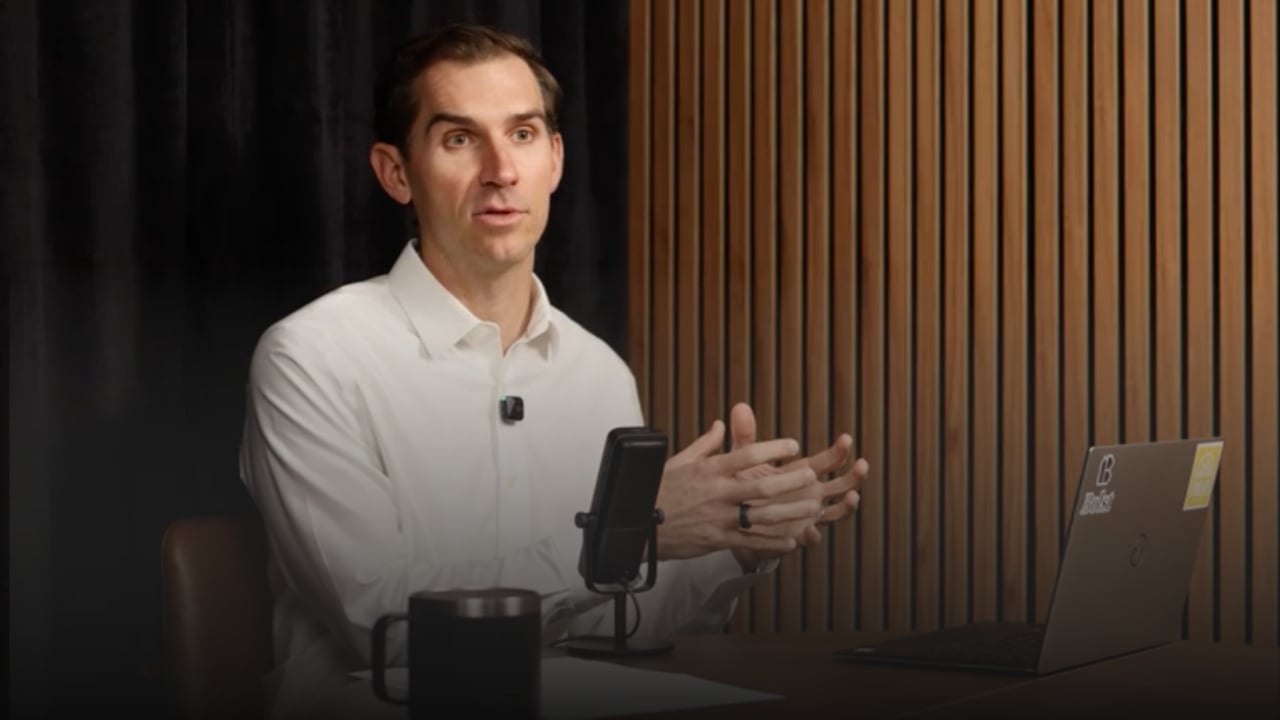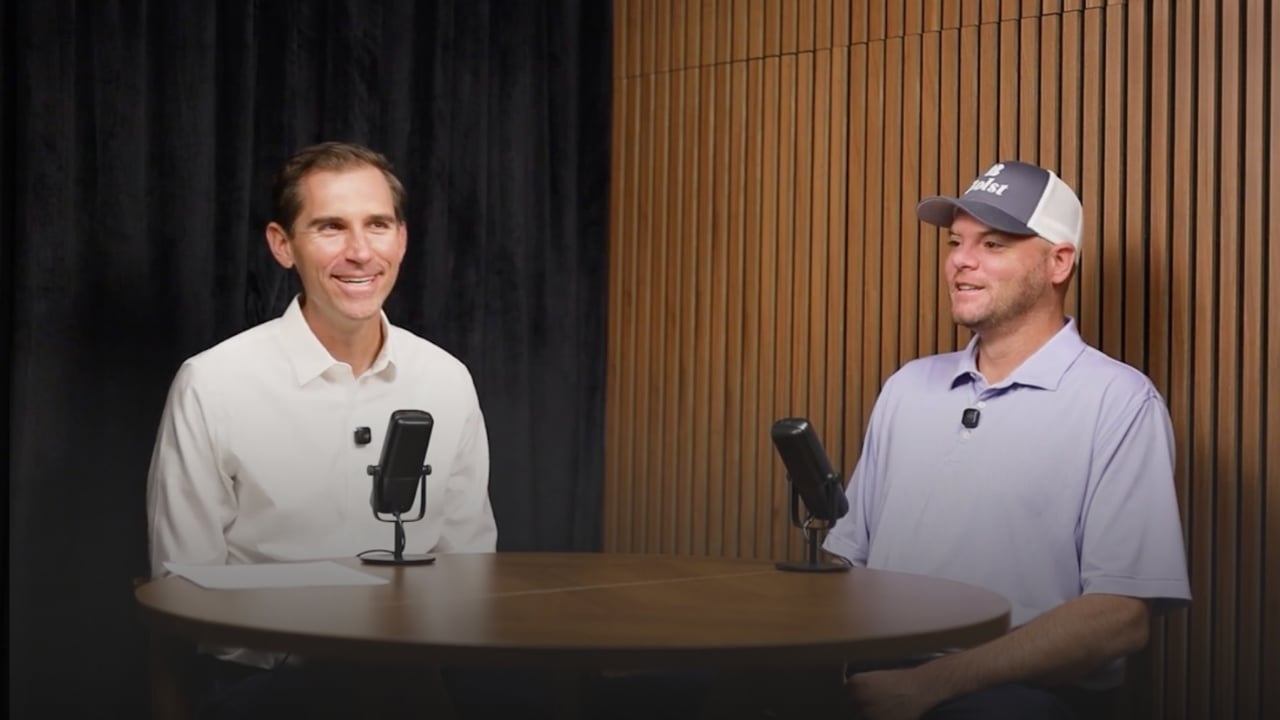
Matt Simonds: Pick Two Things and Go All In
Matt Simonds got his first real estate client because his college best friend had no choice. He worked hard for him anyway, since that one client was, for a while, his entire business. His first full year, he closed five sales. Not the kind of number that gets celebrated on a stage, but exactly the kind of number that comes from building something for the long term rather than chasing quick wins.
Eight years later, Matt is one of Bolst's top agents. He gets invited to private broker previews other agents never hear about. He drove to this interview straight from a pre-market house under contract that he would never have known about without a relationship with the listing agent. He markets almost entirely on LinkedIn while barely touching Instagram. And when asked what made the difference, his answer is consistent: relationships, and a refusal to chase every shiny strategy that crosses his feed.
The Slow Build
Before real estate, Matt worked a transactional sales job where neither side had time for relationships. When he made the switch, he decided to build the opposite kind of business. You cannot shop for a house with someone, he says, without getting into what actually matters to them: their values, their dreams, their goals for their family. That kind of conversation cannot happen in a transactional frame.
So early on, Matt went to lunch with everyone. Not with a sales agenda attached, but because he genuinely wanted to catch up with people he had lost touch with. People respond to that more than they respond to being sold to. It took about a year and a half before that approach started generating real traction. Justin had a nearly identical experience his own first year: one face-to-face meeting a day, 250 different people, real estate brought up casually, very little business closed. The payoff came in year two, once the relationships had time to mature and referrals started compounding.
The Capped Commission Math
Matt and Justin met through their kids' school. At the time, Matt was at a well-known luxury brokerage in Atlanta with a business built mostly around first-time and second-time homebuyers. The brand name had very little to do with why clients hired him. They were hiring him for him. Unless you are working at a very high luxury price point, the brokerage name on the sign makes only a marginal difference. What matters more is whether the client knows you, trusts you, and believes you will service them well throughout the process.
The move to Bolst came down to three things: the financial structure, the benefit corporation model and its built-in giving, and the chance to build real community within a brokerage. On the financial side, the math is direct. On roughly four and a half million dollars in production, Matt estimates he would have paid fifteen to twenty thousand dollars in brokerage fees at his previous shop. At Bolst's capped model, he pays a few hundred dollars total once he hits the cap and keeps the rest. That difference covers school tuition and family vacations. It is not a marginal swing. It is a structural one.
The Mastermind and the Daily Text Thread
Matt is part of a small group of Bolst agents, about six or seven of them, who push each other rather than compete in the usual sense. Several are chasing the same buyers and sellers in overlapping markets, and Matt describes being genuinely happy for their wins. That kind of camaraderie is rare in an industry that can otherwise feel isolating. Real estate agents deal with other people's problems all day. Having someone to call and vent to, someone who actually understands the specific stress of the job, matters more than most people outside the industry would assume.
The group keeps a near-daily group text and meets formally once a month as a mastermind, working through strategy, sharing what is working in different target markets, and cross-pollinating ideas. They started this year with an overnight retreat at a lake to set goals together. Justin joined, though he did not have to. His read on the group's growth: the value was not some piece of secret coaching advice. It was the community itself, the daily accountability and shared problem-solving that comes from people genuinely invested in each other's success.
Getting Access Other Agents Do Not Have
For a year or two, Matt was intentional about attending as many broker previews, sneak peeks, and price evaluation opens as he possibly could, particularly in his target neighborhoods. Most of these events are open to any agent who wants to show up. The relationships built there are what eventually unlock the more exclusive, invite-only versions: early looks, off-market inventory, and properties that never make it to public listing at all.
Matt is explicit that this only works if you treat it as a genuine relationship rather than a transaction. Go to the broker open. Have the actual conversation. Learn about the agent's life rather than taking a photo for your Instagram story and leaving. And when you are in a deal with that agent, negotiate from a place of respect, fair to both sides, never rude, regardless of which side of the table you are on. That posture, sustained over years, is what gets you on the short list for the previews that are not open to everyone.
The payoff goes both directions. Matt's loyalty to attending other agents' broker opens means those same agents show up to his, which gives sellers something genuinely valuable: real market feedback from twenty agents who actually understand pricing in that neighborhood, rather than three random attendees who showed up for a free bottle of wine. In a low-inventory market where comps are hard to pin down, that organic feedback loop can be the difference between a seller pricing correctly the first time or sitting on the market too long.
Why His Listings Are All Over Instagram Even Though He Is Not
Matt has never been a social media user personally. He did not have accounts before getting into real estate. But his listings show up on Instagram constantly, because he leverages the people who do post. When he has a well-decorated listing in a desirable neighborhood, he runs a broker open and reposts everything other agents share from it. Their networks then see it too, often a more valuable audience than his own would have been.
One listing last spring got reposted enough times that a buyer who was not even shopping that neighborhood, originally focused on Buckhead, ended up touring the Sandy Springs listing and becoming the eventual buyer purely because the property kept appearing in their feed. Sellers notice this too. Matt has had more than one seller mention that their friends recognized the house from social media before the seller even told them it was listed.
LinkedIn Instead of Instagram, On Purpose
When Matt looked at who actually hires him, the pattern was clear: largely data-driven men, many of whom do not have an Instagram account at all but are active on LinkedIn. Very few residential agents market there. He decided to test it specifically because it matched where his actual audience already was, rather than chasing the platform with the most general attention.
The clearest validation came from an unplanned phone call. A close friend's brother-in-law in Nashville, shopping for a house outside Matt's market, called him simply because Matt was the only real estate agent marketing to him on LinkedIn. The man runs a bank and told Matt he might need to start doing the same thing. The lesson: know specifically who your audience is, and put your energy where they already are, rather than spreading thin across every platform hoping something lands.
Pick Two Things
Matt's closing advice, something Justin has said in different words for years: there are probably thirty different strategies that could work for growing a real estate business. Door knocking, cold calling, TikTok, broker previews, lunches, LinkedIn, none of them are inherently wrong. But no single agent can do all thirty well, and trying usually means doing all of them poorly.
The actual skill is not the specific tactic. It is repetition within a lane that genuinely fits who you are. Matt picked relationships, internally at his brokerage, externally across the agent community, and within his own sphere, and he has stayed in that lane for eight years without getting pulled toward whatever tactic happened to be trending that quarter.
Listen to the Justin Landis Show
Every week, Justin brings in experts from across the real estate industry, including agents, brokers, investors, and leaders, to share what actually works. Expect real stories, real strategies, and no fluff.
Subscribe wherever you listen to podcasts so you don't miss an episode.
Ready to explore what's possible in Atlanta real estate?
🏡 Buy or sell with Justin Landis Group: justinlandisgroup.com
🌟 Join or learn about Bolst: bolst.homes
Justin Landis is the founder of Justin Landis Group and Bolst, two of Atlanta's leading real estate companies. He lives in Atlanta with his wife and three daughters and has been selling Atlanta real estate since 2008.