Ryan Jenkins: Communication Is Dealt, Connection Is Felt
What real estate agents can learn about building stronger relationships, working across generations, and creating teams that are actually connected.
Ryan Jenkins has spent 15 years studying generational shifts in the workforce, long enough to watch the way we communicate change dramatically. He started with a podcast back when almost no one knew what a podcast was, eventually becoming a Wall Street Journal bestselling author and one of the leading voices on multi-generational teams and workplace connection. His latest book, Connectable, grew out of a problem he kept finding in his research: despite having more ways to communicate with each other than ever before, people are feeling increasingly disconnected.
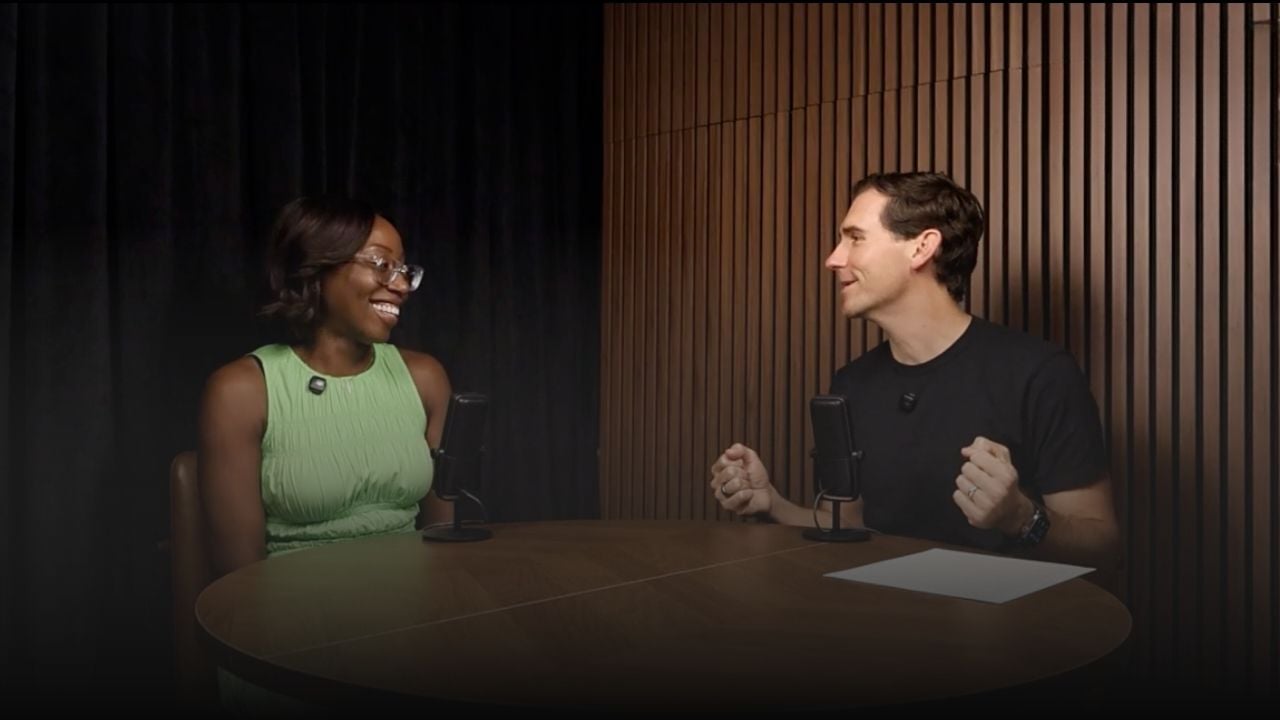
In this week's episode of The Justin Landis Show, Ryan and Justin dig into why that disconnect matters far beyond workplace culture. For real estate agents, whose businesses depend on building trust with clients, working alongside people of different generations, and creating relationships that last, understanding the difference between simply communicating and actually connecting has become increasingly important.
Generations Are Compressing
One of the biggest shifts Ryan is watching is something most people probably haven't considered yet: generations themselves are getting shorter. Historically, a generation might span 15 to 20 years, shaped by the major innovations, events, and cultural trends people experienced while coming of age. But the world simply doesn't change at that pace anymore. A 24/7 news cycle puts global events in everyone's pocket in real time, and technologies like AI are reaching widespread adoption faster than anything we've seen before.
Ryan believes that acceleration could shrink meaningful generational spans toward ten or even five years. For anyone already feeling the challenge of managing, working, or selling across generations, that means the nuances are only going to become more pronounced. The solution isn't trying to flatten those differences or memorize a list of characteristics for every generation. It's recognizing that the marketplace is becoming increasingly multi-generational and learning how to stay curious about people whose experiences may be very different from your own.
That becomes particularly relevant in real estate. Agents can enter the business at 18 and continue working well into their eighties, while the average first-time homebuyer has now crossed 40. An agent may regularly work with clients and colleagues decades older or younger than they are, making the ability to connect across those differences an actual business skill.
Communication and Connection Are Not the Same Thing
Ryan's interest in connection began while researching Gen Z, when he found that 73 percent reported feeling alone sometimes or always. But the more he studied the issue, the clearer it became that this wasn't exclusively a Gen Z problem. Every generation was experiencing more disconnection. Today, eight out of ten people report feeling disconnected at work, and all eight want more connection. The surprising part is that only two out of ten will actually say so.
That creates what Ryan calls the connection illusion. We're surrounded by people, sitting in meetings, responding to messages, exchanging emails, and talking in group chats all day long. From the outside, it looks like constant interaction. But proximity and communication aren't necessarily creating the feeling of being understood that people are actually looking for.
Ryan draws a clear distinction between the two: communication is the exchange of information, while connection is a feeling of understanding and ease between people. Technology has become exceptionally good at the first. It doesn't automatically create the second. You can text someone "I love you," for example, and communicate something meaningful, but hearing their voice, seeing their expression, or feeling their embrace changes the experience entirely.
His shorthand for remembering the difference is simple: communication is dealt, connection is felt.
For real estate agents, that distinction is especially important. A text can communicate that an offer was accepted. An email can communicate showing feedback. A CRM can remind you to follow up, and a social media post can remind hundreds of people that you're in real estate. All of those things have value, but none of them guarantee that the person on the other side actually feels known, understood, or connected to you. In a business built largely on relationships and trust, that gap matters.
Creating Connection Doesn't Have to Be Complicated
The encouraging part of Ryan's research is that creating more connection doesn't necessarily require elaborate team retreats or hours of forced bonding. One of the simplest practices he recommends is something he calls Connect Five. At the beginning of a team meeting, one person spends five minutes sharing a single non-work-related photo. Over time, those small glimpses into people's lives allow coworkers to begin seeing the human behind the job rather than only the role they play on the team.
Justin had recently experienced something similar with the Justin Landis Group. Rather than holding the team's typical mid-year business meeting focused primarily on production and plans for the second half of the year, the group went to Nakato for a sushi-rolling experience. The business portion was intentionally small, people who didn't normally interact were seated together, and conversation prompts encouraged them to actually get to know one another. Justin received more thank-you messages afterward than he had from any previous mid-year meeting.
Ryan connected that experience to the idea of shared reality, one of the fastest ways people form genuine connection. Think about a delayed flight: strangers who haven't acknowledged each other suddenly begin talking because they're all experiencing the same inconvenience. The same thing happens when a group experiences something new together. It doesn't have to be profound. What matters is that everyone is actually present for the same moment rather than occupying the same space while remaining absorbed in their own devices and responsibilities.
Trade Certainty for Curiosity
That same principle applies when agents are trying to connect with clients from different generations. Ryan explains that every person carries some degree of generational bias, usually unconsciously. Our brains are constantly using previous experiences to interpret new information quickly, which is incredibly useful until those shortcuts cause us to make assumptions about another person before we've actually gotten to know them.
A younger agent may walk into a consultation assuming an older buyer wants to communicate a certain way. An experienced agent may make assumptions about what a Gen Z client values or how seriously they're approaching the process. Neither person necessarily intends to stereotype anyone; the brain is simply trying to fill in information it doesn't yet have.
Ryan's practical advice is to trade certainty for curiosity. Instead of assuming you know how someone wants to communicate, ask. Instead of deciding what matters to them based on their age, learn what matters to that individual. The issue isn't that different generations exist in the same workplace or marketplace. Ryan argues that the real obstacle to connection isn't difference at all—it's distance.
For agents, that's an important distinction. You don't need to become an expert on every generation before working with someone older or younger than you. You need to be curious enough to learn about the person sitting across from you. Asking better questions, listening longer, and resisting the urge to jump to conclusions can do more for the relationship than perfectly memorizing a generational profile ever could.
What Actually Motivates Younger Agents
Ryan also challenges some common assumptions about younger people entering the workforce. Compensation, purpose, and flexibility certainly matter, but his research points to status and respect as two particularly strong drivers for people roughly between the ages of 10 and 25. Younger professionals enter environments where more experienced colleagues already have established reputations and credibility, while they're still trying to prove what they can contribute.
One of the simplest ways a leader can help is by publicly showcasing competency. If a newer agent has a great lead-conversion call, for example, ask them to walk the team through exactly what they did. They gain status because they're being given the floor, and they gain respect when their teammates realize the strategy they're sharing is genuinely useful.
Justin immediately recognized that dynamic from his own team. An agent named Roy had once shared how prepared and scripted he was when making an initial call to a new lead. Other agents saw how effective his approach was and wanted to start doing it themselves. Justin had originally thought of the exercise simply as a way for everyone else to learn something useful. Ryan's research helped explain what it was also doing for Roy: giving him an opportunity to demonstrate competency and earn genuine respect from his peers.
From Team Building to Team Binding
Ryan's next area of research takes the idea of connection beyond individual interactions and into the structure of teams themselves. He's calling it team binding, and he illustrated the idea through research on two villages in southeastern Brazil. The villages were only about 40 miles apart and seemingly similar, yet one was distrustful and fiercely competitive while the other was thriving. Researchers eventually discovered that the difference wasn't the climate, the food, or the people. It was the boats.
In the village on the lake, each fishing boat was operated by one person. Everyone went out alone and competed for the best fishing spots. In the ocean village, conditions were harsher and the boats required entire groups of people to work together to bring back a successful catch. Their environment created a structural need for cooperation, and over time that changed the relationships within the community.
Ryan sees a parallel in the modern workplace. Plenty of people technically belong to teams while spending most of their days operating alone. They complete their tasks, send their emails, update the group chat, hit their deadlines, and move on. Everyone may be performing their individual job well, but that doesn't necessarily mean they're functioning as a genuinely connected team.
He compares it to a brick wall without mortar. Every brick can be stacked neatly and the wall can look strong, but the moment pressure is applied, it crumbles. Connection is the mortar. Traditional team building often creates isolated moments—a retreat, an outing, an occasional event—while team binding is about continually strengthening the relationships between people as part of how the team actually operates.
That distinction matters because teams don't discover how connected they are when everything is easy. They discover it when the market changes, business gets difficult, someone needs help, or pressure is applied. The goal isn't simply to assemble talented people and assume they'll become a strong team. It's to intentionally create the connections that allow those people to rely on one another when it matters.
Connection Still Takes Intention
For all of Ryan's research into generations, neuroscience, workplace dynamics, and team structure, one of the biggest takeaways from the conversation is surprisingly simple: get curious about people.
Get curious about the client whose life experience looks nothing like yours. Get curious about the newer agent who approaches the business differently. Get curious about the coworker you've exchanged a hundred messages with but barely know outside of work. And recognize that being in frequent contact with someone doesn't necessarily mean you've built a meaningful relationship with them.
Technology has made communication almost effortless. Connection still requires something more.
And in a business like real estate, where trust, relationships, referrals, and conversations are at the center of almost everything we do, knowing the difference is worth paying attention to.
Hear Ryan's full conversation with Justin on this week's episode of The Justin Landis Show.
Ryan also offers a free Team Connection Kit with four short, interactive tools designed to help teams create more connection in just a few minutes at a time through Connection Vault.