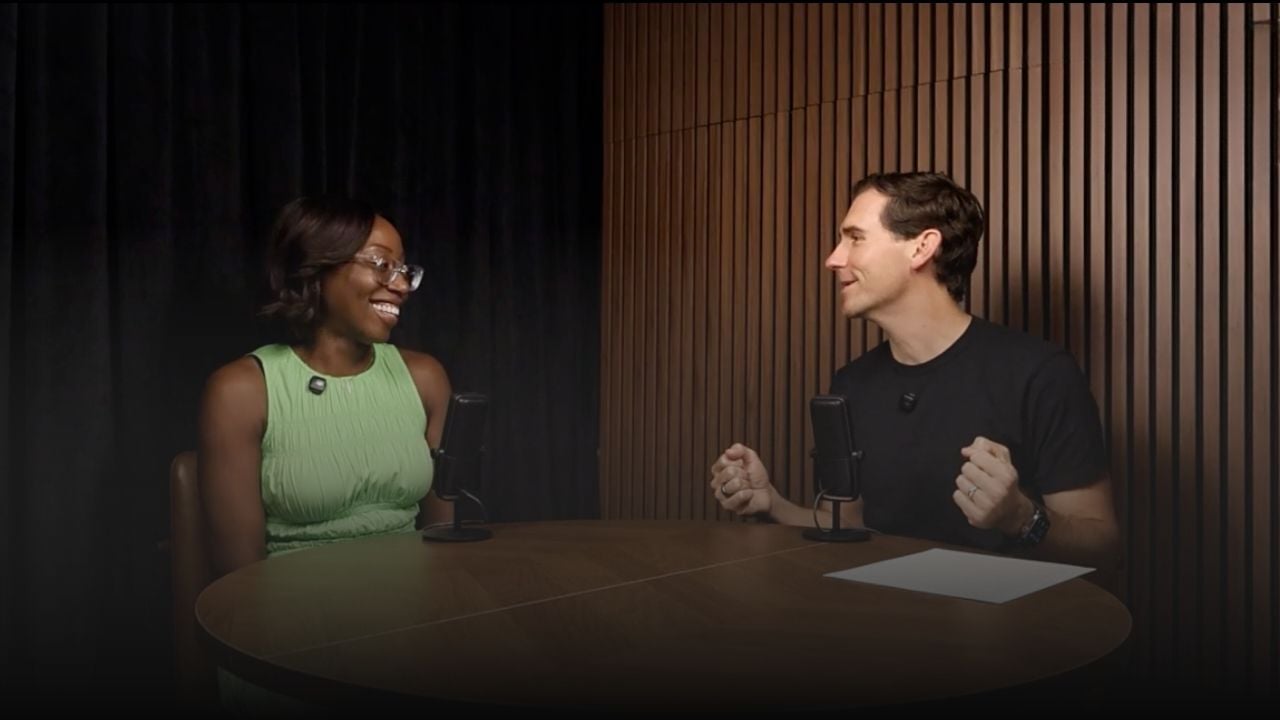
If you’d prefer to listen, you can stream the full episode here or watch the video version here. For accessibility, we’ve included the full transcript below for anyone who prefers to read along or who is hearing impaired.
Justin Landis: Welcome to The Justin Landis Show, your real estate podcast about having conversations, building relationships, and creating freedom. And today I am here with Kris Willis, one of the top Bolst agents and an awesome guy. Kris, thanks for being here.
Kris Willis: Hey, I appreciate it for having me.
Justin Landis: All right, Kris, we gotta start at the beginning. You had, I'd say, an unconventional path to real estate. You were all over the Pacific and Asia, and then next thing you know you're selling houses. How did that happen?
Kris Willis: Yeah, I guess it's all about people and relationships. I think we might hear that theme today.
Justin Landis: Yeah, that would definitely be a theme. That's my through line for everything in life.
Kris Willis: Yeah, I was in sales, worked for a Japanese company for a while, worked for a tech startup, and I was in Asia Pacific all the time. And there were aspects of that that I loved, the relationships, the people, kind of like the building of that. I didn't necessarily love the, you know, kind of what have you done for me lately. Had a great quarter? Let's up your quota. And we're gonna cut your territory in half. Yeah, that's not like the best feeling. And so having hit that ceiling a number of times in a row, I was actually cordially invited to pick my last day at the last role that I had prior to real estate that was full time. I was manager of a small sales team and I just said I need to do something different. This hasn't been working, I'm feeling burnt out. And I've been doing photography for about ten years at that point, kind of on the side, doing weddings and portraits and whatnot, just kind of like a creative outlet.
Justin Landis: And that was your original connection to real estate was through photography.
Kris Willis: That was my connection, yeah. So a buddy of mine introduced me to Rich Richardson, who had been in the business for a number of years at that point. He said maybe you can do his listing photos if nothing else, he's just a good guy to connect with. And so Rich and I sat down, grabbed lunch, and Rich is extremely relational. We just started talking about life and he said, you know, have you ever been interested in real estate? And in my mind I was like, well yeah, I mean everybody has. I never really had an impetus to get in the business. And he was looking to grow his team and that was really the initial connection that kicked all that off, back in I guess that was like November of 2015.
Justin Landis: What was it for you that gave you the confidence or let you know, like hey, I should take this step into real estate?
Kris Willis: Yeah, I mean at that time again I decided to do photography full time while I was figuring things out, whether that meant stick with that or I was actually looking at other career opportunities and changes. And I was like two or three interviews in actually at that time. It was a men's kind of fashion thing, I'm into fashion and whatnot. That was interesting. Said let me try that out. And after meeting with Rich and I was looking at what the life of real estate looked like, I said I think this makes more sense for what I want my life to look like. And so I decided to go after my license the beginning of the following year. But really what made me interested in it was seeing how Rich was living his life, and him being an extremely relational person. And we had that first lunch and he said let's reconnect in a couple of weeks, and he calls me maybe like a few days before we're supposed to meet up again. He said, hey Kris, I'm here in Breckenridge, the snow is really good in Tahoe, I think I'm gonna like extend the trip for three or four days. And I'm like, man, he's doing something right. I know he's successful in real estate, I know he's living his life well, treating the people around him well. That was really intriguing to me that he was able to balance all those things.
Justin Landis: So that was kind of like, okay, that's a version of this business that I want to emulate. Let's go further down that because I also had the opportunity for Rich to be a mentor of mine and to see how he ran his business. As you started to see more of it and started to do it, what was it about Rich's business that really stood out for you, like this is a great way to do it?
Kris Willis: Yeah, Rich is one of the most relational and authentic people that I know. And so I would see the way that he would treat clients. If he's in the neighborhood, then he would give them a call. It wasn't ever salesy. And that spoke a lot to me because I never wanted to be the person that when they saw my name pop up on the phone it was like, oh, you know that feeling when somebody calls you they haven't reached out in five years and like, oh, that person wants something from me. And what I saw was the opposite of that. I saw the way that people genuinely reached out to him for advice, and when they had a real estate need or otherwise, they would reach out. He was just a great resource and advisor. And that really aligned with the past things in past sales roles that I did enjoy. That was my favorite part.
Justin Landis: Did you start to make that your own? Because each person is unique. I mean there's nobody like Rich, right? So we both had to see it and make it our own. How do you start to make that relational, taking care of people business into the business that worked for you?
Kris Willis: Yeah, I think at least for the way that I kind of view things, I have to observe and I have to talk to as many people that are in the business so that I can kind of get a picture, this is a spectrum of how you can run it. And then once I see certain things that I resonate with, it's like okay, I can take a bit of that and I can take a bit of this and then I'm gonna bring in my own kind of sauce to the pot. And after a while you kind of realize, okay, this is kind of the way that I'm doing it and this is working, or I need to tweak something here. There's always an evolution.
Justin Landis: So what were the one or two things you took from Rich and then the one or two things that were your special sauce that you put together in that pot? What would you say those things are?
Kris Willis: Yeah, Rich did such a great job, and still does, of putting people at ease and establishing trust really early on. So I would watch him do listing presentations and he's got it all up here, he's done all of his research on the front side, but he's not bringing notes, he's bringing himself. So he knows his numbers, knows the market and all those things, but really it's connecting with the person. Because you are in that person's home. This is their life. This is the biggest thing that's going on for them at that moment. So I've seen him do that on one side. And I saw, we went out doing a showing one time and we pull up in the driveway and he says, you know, Kris, what do you think about the home? And I'm like, well, we haven't even gotten out of the car yet. And he already has like five or six things to talk about. And I'm like, okay, this starts before you even get here. This is, we're turning into the neighborhood. So again, I see like he's on way before I was even thinking of really engaging. And so that's something that I bring in. On my special sauce side, I'm a mix of an extrovert and an introvert, maybe a sixty-two on that scale if a hundred is full on extrovert. Initially that was really the chief way that I would build my business, is if there's a birthday party, if there's a hangout, if there's a kickback, if there's whatever, my answer is going to be yes unless it's a no. And I'm not one to ever bring up, hey, I'm in real estate, this is what I'm doing. Just being genuine with people. And I've had a number of conversations where afterwards somebody would say to me, man, we had such a good time, and I only asked like five things, they were talking ninety percent of the time. People want to feel like you're interested in what they have going on in their lives and eventually they'll ask, how's the market? And so I would just kind of marry whatever my interests were, whether it was dance and music, whether it was like hey there's a bourbon tasting, I would just go to have a good time and I would invite a couple friends to come along with me. Whether I got business or not, I had a good time. But I think when you're doing the things that you're already interested in, people are attracted to that. There's a different energy going on.
Justin Landis: Awesome. And so you were with Rich for a pretty long time and then you decided to go out on your own and became one of the top individual agents at Bolst. What was it that made you decide, hey, now it's time for me to do it myself?
Kris Willis: Yeah, that was a conversation we'd been having throughout, and from day one Rich always said whenever you feel you want to go out on your own, you've got my full blessing. Which I really appreciated. Rich is a man of his word. It was a mix of things, but a big part of that was wanting to test myself. It's fantastic having the covering of a team and having those resources and camaraderie. I wanted to build something. And it wasn't about having my name on it per se, but I always wanted to make sure that I'm building into what was already there. And that was just time for me to kind of spread my wings.
Justin Landis: And how did the day to day change immediately?
Kris Willis: Yeah, it was almost you could expect that a lot of things would change and in one sense not a lot did. Whether you're on a team or not, you are still accountable for your business. You still have to meet people, still have to make your calls and have your conversations, you still have to take the deal from beginning to end. What I did feel changed was, it's already a business of accountability, that just increases. Now really you are managing everything. You're managing all the marketing, you're managing your own mental and emotional bandwidth. This is a business where you can succeed on your own. But you can get burnt out even easier and even quicker when you're on your own because you can just be on an island. And so that was a thing I had to be very intentional about.
Justin Landis: Which is something that you weren't as intentional about before going out on your own. So how did you realize there is a risk of being on an island? What did you do about that?
Kris Willis: Yeah, for me it was making the choice. I'm already one to show up to our brokerage-wide meetings because that's really important, I get a lot out of those. But taking that a step further and not just having the casual rubbing elbows conversations with other agents in the office, but let's take that a step further. We have a mastermind, we've got a couple group chats that I'm on. For a while I would meet with a couple other agents at the brokerage an hour or two before we had the monthly sales meetings, just to hey, what's going on with your business, how can we help each other, what are resources that we can share. Also, you can feel crazy when you're on your own, but hey, seven other people that are also producing are going through the same thing. This is a business where different parts of town, things can be different, different neighborhoods. So let's look at our data points and see what's the same and see what's not.
Justin Landis: I think that's such a great point because it can be really lonely in this business, which is odd because it's a people business. And a reason a lot of people get into it is they're extroverted. They're like, oh, it's a people business. And then you feel like you're alone and on an island. So for anybody listening who feels that way, you just rattled off a lot of things. What would be the first couple of steps you would advise somebody if they feel like they're on an island and they want that community with other agents?
Kris Willis: Yeah, the easiest thing is just to come to the office. If you've got a place like a market center, so many good conversations happen that I didn't plan on happening, but just because people are here. Rachel Smith is another agent, a great agent at the office. I bumped into her on Wednesday, I just happened to be here, and had an hour-long conversation. You know, you see people that run their businesses similar to you and that run their businesses differently than you do, and both of those are good encounters. Because one, it could be reaffirming, hey, I'm doing the right things. And on the other side, it's, oh, I don't even think I could do that. You're constantly learning. But that will help. Otherwise the people that don't ever show up, I think you can be successful, but you're just making it more difficult for yourself.
Justin Landis: Yeah, man, I so agree. What about an agent who is newer and they might be nervous, like I've got nothing to share with Kris, I'm only learning. I want to learn from him or I want to be around him, but I don't have anything to offer. What advice would you give that person?
Kris Willis: Yeah, man, reach out. I'm an open book, whether it's learn from my mistakes, learn from my pain, or here's what I've done that has worked for me. I love sharing those things. Part of that's because I've had great mentors in my life, both in real estate and out. And I really get a high energy, like an energy boost, from when people call and it's like, hey, man, where you at? Just share whatever's going on. If I can help, again, open book. If not, I'll try to connect you with somebody that can.
Justin Landis: Man, I know that's so true about you. And it's true about a lot of real estate agents. In my observation, a lot of the best real estate agents, you might think like oh this is the sales killer, like the competition. But usually it's people that want to help people. And so the helping also comes with that newer agent or somebody that's reaching out.
Kris Willis: Yeah, I mean, I found that to be true in a lot of cases. I also thought, getting into the business, that it would be very catty or like, oh, I don't want to share my secrets. My experience has been the complete opposite. And I was a little apprehensive about reaching out to people. Some of that's internal, like, oh, I don't want anybody to know that I don't know something. But one, people know if you don't know, you're new, you shouldn't know everything coming in. You're better off not knowing and finding out. Look, I'd rather look silly around other agents that are experienced than be out in a deal and not know. Because now it's real life. So do it behind closed doors where it's a safe space and people are just here willing to help.
Justin Landis: Kris, that actually reminds me of a story. Early on I had an agent who was dealing with a multiple offer situation and I checked in with him and he was about to completely botch it up. The client wasn't going to get as much as possible, the agents were going to be mad at him. And my first thought was, man, how could he not know this? But then I had the thought of, like, how could he actually know this? And I'm so thankful that we got the opportunity to talk through it and figure it out so the client could get the best result. That has always changed my perspective of, man, it's so much better for the industry for everybody, for the newer agents or an agent doing something for the first time, to come to somebody more experienced. And so many agents like yourself are willing to share and help people through that. And that does help our whole industry.
Kris Willis: Yeah, absolutely. I mean, I had a coach for one year. But also just under the theme of asking people, even something as simple as like a special stipulation on a contract. There's something that I always include now. It's a quality of life step where any due diligence period or any contingency period that was going to end at like 7:30 PM or 8:00 PM, I had one initially I didn't know that existed or that we could do that. But I've had deals where we're negotiating at 11:50 PM on a Saturday night when people are out and you can't get a hold of anybody and it's stressful. Nobody wants that on either side of the deal. But again, if I hadn't met with somebody that recommended, hey, put this in, this is not just beneficial for you or your clients but good for everybody. Those are the things, we're talking about burnout, that make you feel like you could do this for longer and be better at it.
Justin Landis: What else has helped you avoid or minimize the burnout? Because burnout, especially at your production level and tenure, is so real.
Kris Willis: It's funny talking about that step, it's a boundary. It really is what it is. And in this business it's very easy to get into that mindset of, or the posture of, I'm available at all times. And that is how I ran my business for the first easily five years. Part of me enjoyed that, to a sense. It's like, hey, I'm working, I'm doing things, I'm available to people, I'm serving, I'm making it happen. You're doing what you have to do. But that's not sustainable for anybody. Everybody, some people can do that for a year, some people can do that for five, but eventually it's gonna catch up with you. So whether that's you having a day of the week where you're not doing anything work-wise, you're doing things that are recovery for you. So like for me, fitness is a big thing. I need to make sure I'm getting that in. I need the meditation time. I recharge with people, but if I'm always working, you can blur that line, is this working, is this a leisure thing. So really defining those things. And I had a mentor maybe my first year in the business that said at the beginning of the year you need to plan out your vacations or your downtime, whatever you wanna call it, because once you're in the thick of it, you are not going to want to pull back and make time for that. So you really gotta carve that out on the front side.
Justin Landis: Man, I love all of that advice. That vacation is huge. I had multiple vacations early on where we were planning to do something and like the week before I'd be like, I can't do this, I don't have enough coverage and help. I mean, we'll just have to cancel it and stay. And that is not a good place to be. That definitely leads to burnout. And being able to take care of your body and be fit and your mind and energy, man, is just so huge.
Kris Willis: I had a 3 AM, I was in Japan, this was like 2018, and it was a deal that was up, negotiating, got it under contract, and then unfortunately had to terminate. So it was like, man, all that was up for like two hours in the middle of the night. But like, you know, that happens. That's real estate. You leave and that is the real estate.
Justin Landis: So you've had a pretty unique way of moving the needle in your business. You have a metric that is not one of the main metrics that the coaching companies put out there and everybody's got on their scoreboard. But this metric you have stayed true to it and it has moved the needle in your business. Tell everybody about the metric that you think is most important for your business.
Kris Willis: Yeah, in this phase of my life it's getting coffees with people a week. Two to three is my baseline. And that shifts a little bit because when you're putting that time in, you know it's like thirty, sixty, ninety days you start to see the results, the accumulation of all that. And so some weeks are gonna be busier for good cause, you're out with people, you're actually doing the business. But yeah, that's my goal, is just to be in front of people. My wife and I, we've got a fourteen-month-old at home, so I can't be out and as active in one sense as I used to be. So this was my way of being intentional about building relationships with people and having that rhythm built in. That's when the good stuff happens. And I would say also on the coaching side, on the gleaning from other people side, it's the rhythm of having that. I don't come to the office looking necessarily to get something from somebody, but it's the constant rhythmic meeting with people. And it's the same way with the coffees. You're just doing life with people and the things come up. Whether it's them, my first deal of the year came from that. I got coffee with a buddy, it was like January, and he was like, yeah, man, so and so, like he and his wife, they're living, they're renting out a basement from some friends, they've got five kids, they need their own place. I was like, yeah, they do. You should probably connect us. And I happen to know him as well. But that wouldn't have happened if we hadn't just made the decision to like, hey, let's catch up.
Justin Landis: Man, that is so good. Because when our families expand, this is a big inflection point for a lot of real estate agents. Because a lot of people that are really social have built their business off of just doing stuff. And you're working a lot, and then all of a sudden your priorities and your whole timeline shift and you're like, well, I can't eat dinner out with friends six nights a week, I'm not going to see this baby. What am I gonna do? And you found a way to still have that social interaction but put it into like you said a rhythm and a structure that's been able to be consistent for you.
Kris Willis: Yeah, and that's still good for me because again I still do get a lot of energy from meeting and connecting with people in a genuine way. So I also just need that personally. I know I can't get it in the same way that I did before. So it's like now we're just moving that to a different time of the day, different time of the week. You also put structure into the advice you gave earlier of going to the office. You were going to the office one day a week last year.
Justin Landis: Yeah, so I did the Bolst ambassador program at the North Atlanta office last year, which is great for a lot of reasons. But really just to have a day where I know I'm gonna be here in the office, I know I can work on all my admin, the things that honestly can fall down the priority list. I can forget it out pretty easily. But just having it, for me it was Wednesdays. And so this year I might start upping that to one or two days, whether that's a half day. Because good things happen when I'm doing that. That's where I get my newsletter out. That's when I'm catching up on emails and maybe the things that I'm not as excited about doing but I still need to do. Get those done.
Justin Landis: Man, I love it. Kris, this has been such an awesome conversation. To hear your journey from getting started and finding a mentor, figuring it out on your own, going out on your own, then you had to find the community, and now the rhythm for this part of your life. Congrats on all the success.
Kris Willis: Yeah, I appreciate it, Justin. And look, you've been a huge part of that, and so has Bolst. So I appreciate you.
Justin Landis: All right. Thanks so much to Kris for being here and sharing this week, everybody. Thanks for listening. Make sure to like and subscribe so you don't miss an episode. We'll see you again next week.