Build the Business That Fits You
Thomas Warren on starting over, choosing one strategy that actually fit him, and how relationships become webs of goodwill over time.
Thomas Warren has built his real estate business from scratch twice.
The first time, he tried just about everything.
The second time, he knew better.
Before real estate, Thomas spent 13 years as a high school English teacher and varsity soccer coach. Today, he's the managing partner of JLG Charlottesville, where he's built a referral-based business around something that sounds almost too simple:
Spending time with people.
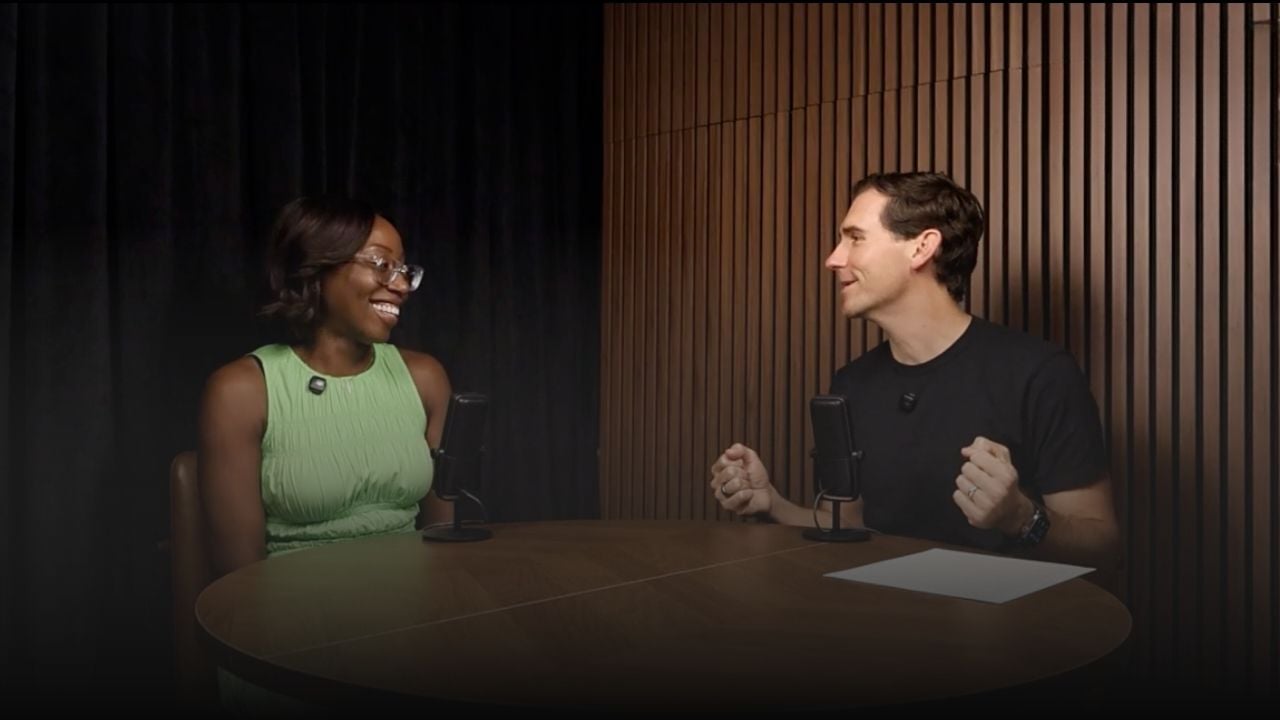
In this week's episode of The Justin Landis Show, Thomas talks with Justin about leaving teaching, waiting eight months for his first closing, walking away from a real estate business just as it was gaining momentum, and what he did differently when he had to start all over again.
The biggest difference?
He stopped trying to build someone else's real estate business and started building one that actually fit him.
The Sale That Changed Everything
Real estate wasn't initially part of Thomas's career plan.
He'd spent his twenties and early thirties in education, teaching English, developing curriculum, leading his department and coaching varsity soccer.
But by year seven of teaching, something happened that changed the way he thought about real estate.
Thomas and his wife had purchased and renovated a fixer upper. After their daughter learned how to open the front door of their home onto a street drivers regularly used as a cut-through, they decided it was time to move.
Then they sold the house.
At closing, Thomas received a check for the home's profit and equity that was larger than what he'd earned throughout his entire teaching career up to that point.
Suddenly, real estate wasn't abstract.
He saw firsthand what homeownership could do for a family's financial trajectory. The proceeds allowed his family to purchase a horse farm—something his wife had dreamed about.
It also planted the seed for what would eventually become an entirely new career.
Starting With Almost No Sphere
Thomas eventually left teaching, moved his family to Atlanta and joined the Justin Landis Group.
There was just one problem.
He barely knew anyone.
Although Thomas had gone to high school in Atlanta, he'd spent years building his adult life and community in Charlottesville. He didn't have the warm sphere most relationship-based agents hope to start with.
So he started meeting people.
Lots of people.
Looking back, Thomas describes his approach as pretty scattershot. He went everywhere, met everyone and tried just about anything that might create an opportunity.
When he recently looked back at his first five transactions, only one came from a genuine referral.
One of the others came from an AT&T fiber technician.
The technician spent three hours installing internet at Thomas's house while Thomas worked on the porch. They started talking. The technician mentioned that he and his wife had always wanted to own a home.
Six months later, Thomas sold him one.
It wasn't an elaborate lead-generation strategy.
It was a conversation.
Eight Months for the First One
Thomas's first Atlanta transaction took eight months.
Eight months of meeting people, following up, nearly getting somewhere and watching opportunities fall apart.
Then the first one finally closed.
After that, something shifted.
Thomas began averaging roughly one closing a month.
He door knocked all 251 homes in his neighborhood—not once, but three times. Eventually, he had one closing and another four opportunities building in the pipeline from that neighborhood alone.
The work was finally compounding.
And then, 18 months after arriving in Atlanta, Thomas and his family decided to move back to Charlottesville.
Walking away from the business he'd worked so hard to build wasn't easy.
But it gave him something most agents never get:
The opportunity to start over knowing exactly what he'd do differently.
The Second Time, He Picked One Thing
When Thomas arrived back in Charlottesville, he didn't repeat his Atlanta strategy.
No trying everything.
No door knocking every neighborhood, mailing everyone and making hundreds of calls simultaneously.
This time, he already understood his value. He knew what kind of service he could provide, what his team brought to the table and what kind of agent he wanted to be.
So instead of trying ten different ways to generate business, he chose one.
Social events.
Every social event on Thomas's calendar gets the same label: SE.
But "event" is a loose term.
It could be coffee with one person.
Lunch.
Trivia with a group.
A community event.
Playing in his adult soccer league.
The activity itself isn't really the point.
FaceTime is.
Thomas knows himself well enough to know that he genuinely enjoys being around people. It's part of what made him a successful teacher and coach.
So rather than forcing himself into a lead-generation strategy that worked for somebody else, he built one around something he would actually enjoy doing consistently.
And he's quick to point out that doesn't mean every agent should copy him.
For someone else, five social events a week might sound exhausting.
The lesson isn't to adopt Thomas's strategy.
It's to find your version of it.
Three Questions That Changed How He Builds Relationships
Eventually, Thomas's social-event strategy developed into a simple three-question framework he now applies to relationships inside and outside of real estate:
Can we hang out?
Can I help you?
Can you help me?
The third question was the hardest for him.
For the first 15 years of his adult life, Thomas says his instinct was to put his head down and figure everything out himself.
Learning to genuinely ask other people for help changed the way he built relationships.
And importantly, "Can you help me?" doesn't mean asking everyone you meet whether they know someone buying or selling a house.
Sometimes it's actually asking for their expertise.
Thomas was developing a webinar about how parents over 55 could help their adult children purchase homes. He reached out to a former colleague in that demographic and asked if he could come over for coffee and get his feedback.
The colleague helped.
He pointed out things Thomas hadn't considered.
And two weeks later, without Thomas asking, he referred his neighbor.
Thomas had given him an opportunity to contribute to something—and the relationship became stronger because of it.
Building Webs of Goodwill
Thomas has a phrase for what happened next:
Webs of goodwill.
Instead of thinking about his sphere as one giant database of potential clients, Thomas can see distinct communities of relationships beginning to overlap.
One is soccer.
Long before Thomas was selling real estate in Charlottesville, he was coaching and playing soccer there. He formed real relationships with players, parents and teammates with absolutely no expectation that those relationships would someday become business.
Years later, that one web has generated five closings and two active clients in the past 12 months alone.
Another web began with a property manager Thomas happened to sit next to at a Code of Ethics event.
They got coffee.
She introduced him to someone else.
He followed the introduction.
Then another.
Then another.
Thomas estimates that one original relationship has now connected him to roughly 200 people, multiple clients and prospects, his most trusted lending partner, and even a seat on the Ronald McDonald House board.
His third web comes from teaching.
Students Thomas taught when they were 14 are now in their late twenties. Former students, colleagues and families are still part of his life years later.
None of those relationships began because Thomas wanted something from them.
That's precisely why they matter now.
Relationships built without keeping score have a way of compounding.
Follow the Introduction
That's also one of Thomas's biggest pieces of advice for agents building their own network:
Follow the chain of referrals—even when it has nothing to do with real estate.
Not every coffee needs to produce a client.
Not every introduction needs an obvious business purpose.
Sometimes one person simply introduces you to another interesting person.
Go.
Have the conversation.
See where it leads.
The web gets bigger long before you know which connections will eventually matter.
Become a Local Celebrity
Thomas doesn't mean billboard famous.
He means known.
In Charlottesville, Thomas had spent more than a decade in highly visible roles as a teacher and coach. Plenty of people already knew who he was.
The challenge was getting those same people to see him differently.
They knew Thomas the teacher.
Thomas the coach.
Thomas the friend.
They didn't necessarily know Thomas the real estate advisor.
When JLG Charlottesville launched, Thomas invited 60 people from his own sphere to the grand opening and asked Justin to come.
There was a reason.
Thomas could tell everyone he'd become a great agent.
Or someone with decades of experience in the industry could stand in front of the people who already trusted Thomas and tell them why he trusted Thomas with real estate.
That third-party credibility helped connect the person they already knew with the professional Thomas had become.
And that's really what becoming a "local celebrity" means.
You don't need everyone in your city to know your name.
You need the people in your community to know you, trust you, and understand what you do.
You Don't Have to Be Everywhere
Thomas's strategy worked particularly well in Charlottesville, but the principle doesn't depend on living in a smaller city.
In Atlanta, your "Charlottesville" might be Grant Park.
Or Ormewood Park.
Or your kids' school.
Your running club.
Your church.
Your neighborhood.
Your professional network.
Your version of Thomas's soccer community.
You don't have to become known across an entire metropolitan area.
You can start by becoming genuinely connected to one community.
And you don't have to execute every real estate lead-generation strategy you've ever heard about simultaneously.
Thomas tried that the first time.
The second time, he knew himself better.
He picked one thing he could do consistently, built real relationships around it, followed where those relationships led, and watched the webs begin to overlap.
The best business-building strategy might not be the one everyone else tells you to use.
It might be the one that makes the most sense for who you already are.
Hear Thomas's full conversation with Justin on this week's episode of The Justin Landis Show.
[Watch on YouTube] | [Listen on Spotify] | [Listen on Apple Podcasts]