
July Market Update
Despite a market that continues to feel challenging for many buyers and sellers, the data remains surprisingly resilient. The median sales price across Metro Atlanta increased 2.7% year-over-year, even as interest rates reached their highest levels in roughly a year and many homes experienced longer market times. That doesn’t mean every property is appreciating, but it does reinforce that prices overall have remained remarkably stable despite the headwinds facing the market.
The bigger story continues to be the difference between market segments. Single-family homes are showing greater strength, with some higher-end properties even setting new neighborhood records, while the condo market remains notably softer, with median prices down 4.1% year-over-year. Higher HOA fees, insurance costs, and mortgage rates—combined with greater rental availability—are creating additional affordability pressure for attached properties and making the decision to buy more difficult for some consumers.
Beyond pricing, most indicators look almost identical to last year. Days on market, months of supply, sales-to-list price ratios, and showing activity have changed very little. New listings have started to decline, however, as some homeowners appear less willing to trade a lower existing mortgage rate for today's higher rates. At the same time, the number of homes for sale remains elevated, giving buyers more choices even as fewer new properties enter the market.
Overall, this continues to be a highly selective market rather than one moving dramatically up or down. The strongest properties are still selling and commanding strong prices, while others may struggle to generate enough activity to sell without adjustments. For buyers and sellers alike, understanding the specific property type, neighborhood, competition, and pricing strategy matters far more than relying on broad market headlines.
Mark Daker from Ameris Bank Insights
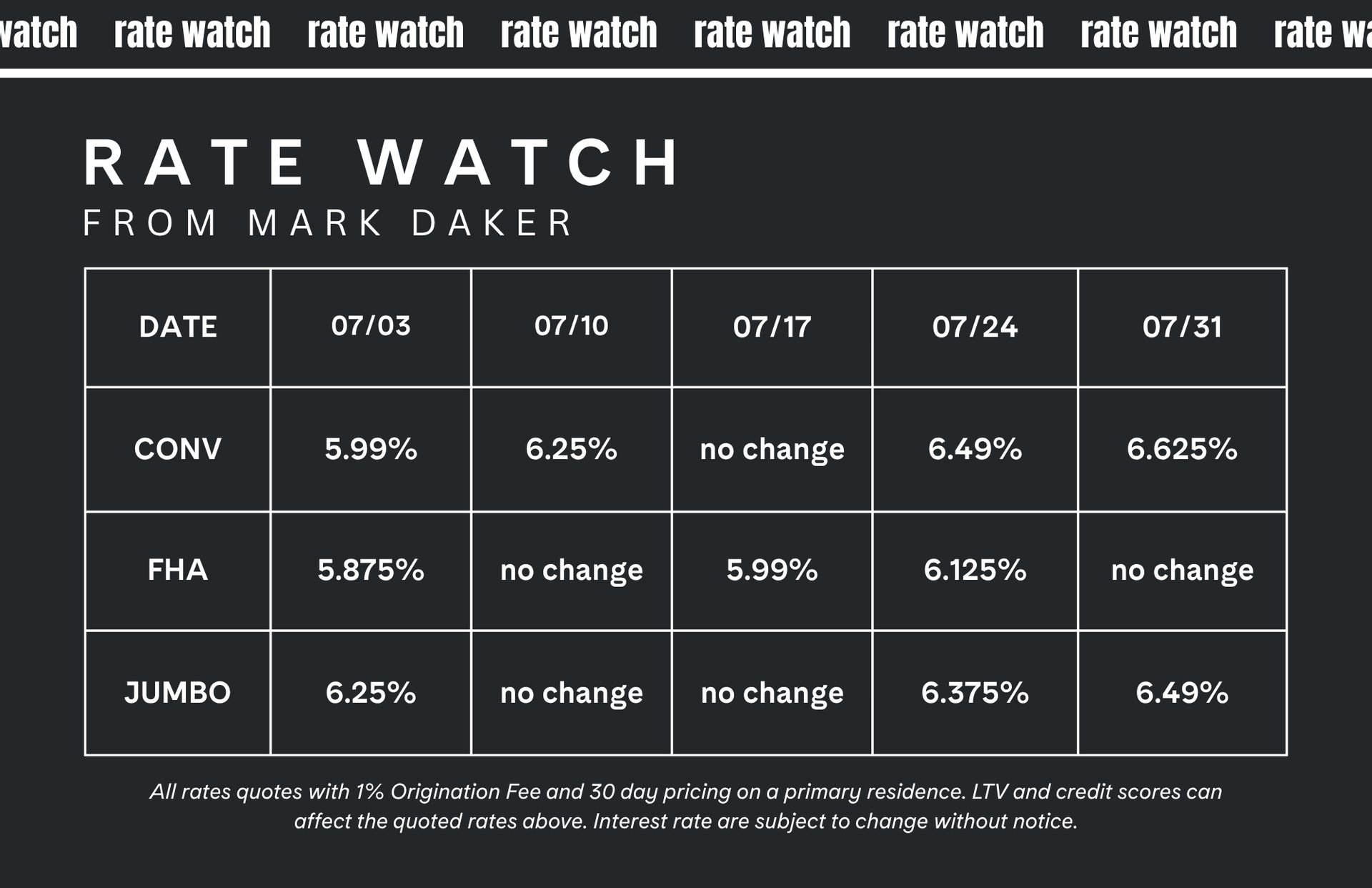
July brought continued uncertainty for mortgage rates as markets weighed weaker employment data against ongoing geopolitical tensions and concerns about inflation. Rates climbed to some of their highest levels in roughly a year during the month, driven largely by escalating conflict in the Middle East and rising oil prices. While weaker-than-expected job growth offered some hope for a more favorable Federal Reserve outlook, mortgage rates ultimately saw limited relief.
The economic picture also left the Federal Reserve unusually divided. Some officials favored lower rates, others suggested additional increases could still be necessary, while others preferred to hold steady and wait for more data. Inflation remained relatively contained, but the potential impact of prolonged geopolitical tensions and higher energy prices continued to create uncertainty around the Fed's next move.
Higher borrowing costs continued to weigh heavily on housing activity. Atlanta closed sales in June fell more than 10% from the previous year, while real estate activity as a share of GDP reached its lowest level in years. Despite slower sales and historically low activity, home prices remained relatively stable, highlighting just how sensitive buyer demand has become to changes in mortgage rates. July reinforced that meaningful improvement in the housing market will likely remain closely tied to the direction of rates and the broader economic and geopolitical outlook.