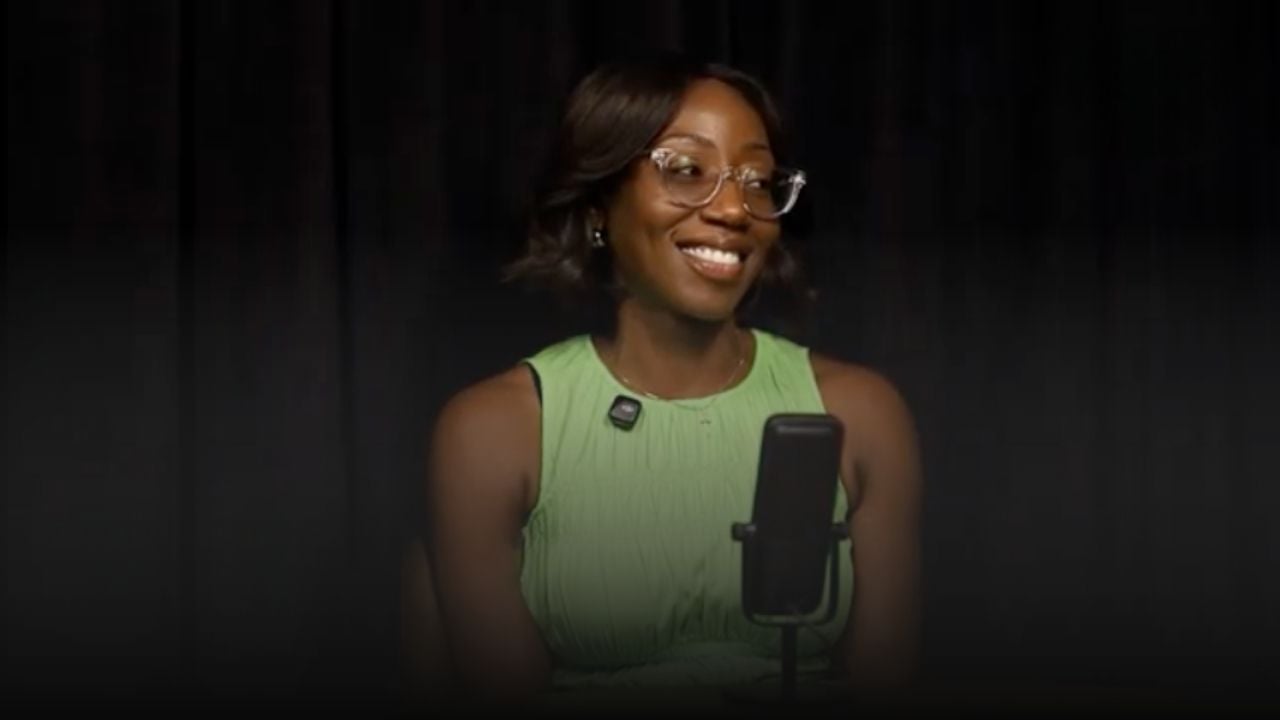
If you’d prefer to listen, you can stream the full episode on Spotify and Apple Podcasts or watch the video version here. For accessibility, we’ve included the full transcript below for anyone who prefers to read along or who is hearing impaired.
Khadeen Brooks: The success is always going to come first internally. I've recognized the common theme in my journey is the plowing, the planting, and the harvest. In order for you to get to that next stage, whatever that next stage is for you, you're going to have to understand that there's going to be a level of discomfort here.
Welcome to The Justin Landis Show, your real estate podcast about having conversations, building relationships, and creating freedom.
Justin Landis: Today I am here with Khadeen Brooks, an awesome JLG and Bolst agent. Khadeen, thanks for being here.
Khadeen Brooks: Oh, thank you so much for having me.
Justin Landis: All right, I'm excited to dig into this. We almost always start with, how did you get into real estate? Because you had a corporate job and things were going well, you were doing well. What made you decide it was time for a change?
Khadeen Brooks: On the outside, things were well, yes. But on the inside, they were unwell.
Justin Landis: On your inside.
Khadeen Brooks: On my insides. They were unwell. I was working in corporate America for a long time, and I struck a period where I just started to feel dissatisfied, feeling stuck. I like to say my personality even started to change. And so when my personality started to change, I started to ask myself, why am I feeling like this? Throughout that journey of just understanding me is when I discovered it was time to transition.
Justin Landis: And you didn't just jump into real estate like that. You had an awesome plan, and I think this could be really helpful for somebody listening. Share what you did to decide how to move into real estate.
Khadeen Brooks: Yeah, I sometimes say I'm really jealous of those folks who very early on know exactly what they want to do. I was not that person. But when I decided I was ready for a change, I really didn't want to create or recreate behaviors I'd observed, which was, okay, I don't like this job, so I'll just apply for another one. So before doing that, I said, let me take a more strategic approach here. I also was going through a lot of emotional things at that time, so I started therapy, found a therapist. But then because I wasn't really sure about where I wanted to land professionally, I decided to also hire a career coach. So while the therapist was working on my insides emotionally, the career coach was trying to figure out, okay, girl, what's next, what do you enjoy, what have you done, what is your personality type, and where can we leverage that in the next thing? It was really, really helpful. A lot of the work had nothing to do with the exterior, it was all about uncovering myself, like inside. That was my approach.
Justin Landis: And then that led you to figure out, hey, real estate might be the ideal.
Khadeen Brooks: Yes. A lot of the activities we did with the career coach were, okay, what are some of the things you've done that you really enjoy? I really enjoy problem solving, I was behind the screen a lot in my prior roles, I really enjoy engaging with people, talking with people. So we sort of started pulling things, and then we started to narrow. Okay, these are some careers, some areas, consulting was one. And at the time I was toying around with real estate, and I said, you know, I've thought about real estate, and she's like, why not, think more about that. And she encouraged me to talk to some realtors, be more forthright about it. I reached out to folks on LinkedIn, had coffee chats with people on LinkedIn, really just trying to understand more about the business. That's what propelled me, it was very helpful, it was helpful to understand their journeys, and what I've learned with real estate is every journey is different. I've never met anyone who woke up and said, yeah, I wanted to get into real estate. But it was really helpful to understand a bit more about the business and really whether or not it aligns with those skill sets I had identified.
Justin Landis: And so then you figured out it did align. And there is one thing everybody in real estate does have in common: you're not getting a paycheck on day one.
Khadeen Brooks: No, I mean, everybody knows that.
Justin Landis: No. So when you figured that out, you also did something that I think was really wise. Tell what you did to help work through the challenge that real estate is a 100% commission job, that you don't get paid right off the bat.
Khadeen Brooks: Yeah, that's a pretty obvious thing, but I think going into real estate, a big part, again, learning more about me, one of my insecurities is financial insecurity, which is why I kept going through corporate America as I did, because every level unlocked more financial gain. So that stemmed from an insecurity. Going into real estate, I was very aware it was all commission based. So I am thankful that I had that runway. I worked with my financial planner and said, okay, where am I now financially, what's my position, am I healthy, and what are some things I have that I could lean on in an off chance I need to press the red button. He really helped me craft this one-year runway to say, okay, this is what you have for a year, these are your expenses, you're going to have to be very mindful of how you're living. I needed to shift my lifestyle and just really be regimented. But yeah, that was my runway.
Justin Landis: Man, Khadeen, I wish I could deliver this to everybody who's thinking about getting into real estate: get with a financial planner and have a one-year plan. I mean, the odds of success increase so much by having something like that.
Khadeen Brooks: Yeah, especially in this day and age, it's even more difficult financially, it's not the easiest real estate market, things are more expensive than they've ever been.
Justin Landis: Yeah, this is not an easy time to get in. So you got in, you got the plan, you get in, some things go great, but also there was a rejection that you were not quite prepared for. Tell a little bit about that.
Khadeen Brooks: So I won't say my entire journey has been smooth, but what I realize is I've set my mind to something and reaped a reward, I want to go back to school, I study and go back to school, I want this, I get that, that has been my formula. Now coming into this business, I quickly realized that no matter how much I want something, if the other person doesn't want it, it's not going to match. You're not the one buying or selling the house, I am not the one. So that was sort of a smack in the face for me, honestly, realizing there was a lot of no's, a lot of missed appointments, a lot of ghosting, a lot of hang-ups, a lot of left-on-reads. I would imagine that's not uncommon for some people, but for me it was a shock, especially when I felt like I was doing my best and not getting that result. It was traumatizing, not to be as dramatic, but it was traumatizing to realize I was taking the no's very personally.
Justin Landis: It's very hard not to. How did you overcome that?
Khadeen Brooks: A lot was through my faith. We talk about the financial transition, but there was also a lot of faith transition that went into this too, like deepening that and understanding there's a lot of trust that needs to go into any career transition. But overcoming that was through reps and time. I had committed to honoring the now. What I mean by that is a friend of mine challenged me, we sort of set goals toward the end of the year and we always do a look back, and with my look back reflection it was, I was crumbling at every no. I would go home, close the curtains, I would be crying at home in bed, and my whole day gone. And I realized that happened so many times throughout the year. I need to build up more endurance for this. So it was, okay, how do you build that up? Well, you've got to just build up the endurance. People talk about pain tolerance, you either have a low pain tolerance or a high pain tolerance, I like to say my endurance tolerance was low, it was negative. You needed to run a marathon and I was walking one lap around the track and headed home, wheezing, falling out, my tolerance was low. So I needed to build that up, and the only way to build that up was just to continue doing the things. And also I was so focused on an outcome, and it was like, no, Khadeen, what are you trying to help them do, are you doing your best to help them do that, then that's it, focus on that and the rest, leave it. That really was the unlock for me, building up that endurance, positioning myself a different way. Another learning during that time was I was approaching people the same way, I adopted a very one-size-fits-all, this is how I communicate, and I'm going to communicate to you this way, the same. And I realized people, we're multifaceted, we're different, and I needed to recognize that. That doesn't mean I'm changing who I am as an individual, but I have to respect that this person may not communicate via text, they may need a call, or they may not like calls, they may need a text. Or if I'm getting stood up for appointments consistently, well, you may need to have some confirmations the day before, the hour before, stop doing this to yourself. So I had to flex and recognize I needed to shift a bit, but I also needed time to build up that endurance.
Justin Landis: Was there a moment it started to click and work for you, or did this just happen gradually, all of a sudden you're like, oh, I've turned the corner, I'm on the other side of this?
Khadeen Brooks: I am not at the corner today. I think where I am now is I feel a lot more centered about this business and really what I'm here to do and what I want to do in helping people, and the worry has gone away tremendously. But I think to say there was one flip, there isn't a one flip, it's a multitude of things. And that multitude of things can't happen if you don't give yourself time, you can't expect that this change is going to just come within a moment. So I would say it's just been that repetition, and surrounding myself with a community of people who speak life into me but also challenge me has been very helpful. I recognize I can't have people around me that just agree, like, oh, they want to cry with me, we're not getting anywhere. I need someone who I can cry to, but I also need someone who will say, okay, Khadeen, what did you do yesterday. So all of that has been the shift.
Justin Landis: So talk a little bit more about the community, because you've been here, you're in the office a lot, and you've built a great community, and this is a business where you can be on an island, but you're not. Talk about how you decided to do that.
Khadeen Brooks: Yeah, and that also came very naturally. The people here are wonderful, I was sitting in one of our holiday parties and I looked around one day and I'm like, wow, I really like this environment that I'm in. But what I love about it is everyone is at different stages in their career, there are people who have been doing this 20-plus years, there are people who are two-plus years or newer, but everyone is always willing to share their experiences. I'm always there to ask a question and listen, I'm a curious girl, and I think that's been a real value add. I think the more curious you are, the better, and I think that's also built a lot of the relationships I have in the office. I'm not afraid to talk to you, I want to learn more about you, I want to learn more about your business. So that's also helped me because I feel comfortable in sharing, hey, this is what's going on with mine, I need help here. That's been a game changer.
Justin Landis: I think I also see you being yourself with folks here, but I know you talked about doing the same thing with clients. Sounds like that's been really successful for you as well.
Khadeen Brooks: Yeah, I mean, people can spot a phony pretty quickly, really quickly. Again, the tailoring is understanding their personalities, whether they need someone who is more assuring and having more of that empathy. But I also want to bring a lot of enthusiasm to my work and my business, that's who I am as an individual. I think especially when someone is going through such a journey themselves, they want someone who, I think it's energy, and I want to also make them feel heard and seen, and have a little fun too. We're going on these journeys all day, like, I want it to be enjoyable, I want it to be pleasant. I source a lot of that from my own experience as a home buyer too. So I think those are the things I try to incorporate in my business: this is a journey, I lean a lot on education, but I also want to bring an enthusiasm and some fun to this as well, because, I mean, why not?
Justin Landis: I mean, it's you. Education, enthusiasm, fun.
Khadeen Brooks: Yeah, I mean, I think people can feel that.
Justin Landis: And that's been a big part of your success. If you're going to give advice to somebody who's early on in their real estate career, and what you've said today has resonated, the rejection, I'm not seeing the results, I'm used to doing this and getting the results, what do you think is the most important advice for somebody who's trailing where you are a little bit, to be able to keep moving forward and find success?
Khadeen Brooks: I think the success is always going to come first internally. I've recognized the common theme in my journey is the plowing, the planting, and the harvest. In order for you to get to that next stage, whatever that next stage is for you, you're going to have to understand there's going to be a level of discomfort here. My pastor says, in order to get the life you never had, you're going to have to endure some discomfort. I think for an agent or someone thinking about making this transition, my advice is going to be to think about those things, make sure you have a really good understanding of you and how you resonate with this uncertainty, because even when you're a high-producing agent, there's still ebbs and flows to the business, there's still a lot of rejection. So there has to be, crazy to say this now coming from where I am, there has to be a comfort level with the volatility, and a way of understanding that you can only control what you can control. The market is going to behave how it behaves, so you as a new person or a new agent coming into this business, being really steadfast in that and understanding that up front. And then also we talked about financial, I would be remiss if I didn't say, if you are in a position now where you're working or you have a job and thinking about making this change, you owe it to yourself to do a bit of planning there. You might not have a financial planner, not everyone does, but you have Google, you've got AI, you have a calculator, you know how much you spend a month. If you don't run the numbers and do a bit of planning so that you can give yourself a bit of buffer, that would be my advice.
Justin Landis: Man, I love it. So control what you can control. The things you've talked about today are: control who you are on the inside and your perspective on things and what you're bringing to it, control your finances, have a plan, figure that out, and then control your activities. I loved you talking about the endurance needed to be able to do it. Hey, when you're starting out, getting rejected one time a day, that's not going to produce enough clients, you've got to keep going, you've got to do more activity in order to be successful. And I think if people control those three things, like you said, your odds of success are just way higher, and you're living proof of that success.
Khadeen Brooks: Well, thank you. Thank you so much, Justin.
Justin Landis: Awesome. It has been so fun to see you grow in this business, to become successful, to be yourself, and to see what you bring to the table. I really appreciate you sharing with us today.
Khadeen Brooks: Thank you. Great having me.
Justin Landis: All right, if you're listening to this and you're thinking, man, I want to do what Khadeen did, but I need someone to walk alongside me and help me with it, we would love to do that. We have a program called Elevate and Advance, and that is exactly what it's for. It's to walk alongside you and help you get through that first year, become a great real estate agent, and have a successful business. So click on the link below and reach out, we will be in touch. For everybody else, thanks for listening again this week. Make sure you like or subscribe, and we will see you again next week.