If you’d prefer to listen, you can stream the full episode here or watch the video version here. For accessibility, we’ve included the full transcript below for anyone who prefers to read along or who is hearing impaired.
Rachel Reynolds: She stood in the atrium of Restoration House. She looked up and she saw a roof over her head and she started crying. Because that roof represented safety and sleep. And for the first time, she felt like her life had the potential to change. And it was so humbling for me when I heard her say that to me. I still get chills thinking about it. That was her dream home for the night. And that's what we are doing together. It looks totally different for all different people. But that night you helped provide a dream home that looked unconventional to you. It may not be you and I's dream home, but you helped provide a dream home for her. And that really, to me, represents this beautiful partnership that we have.
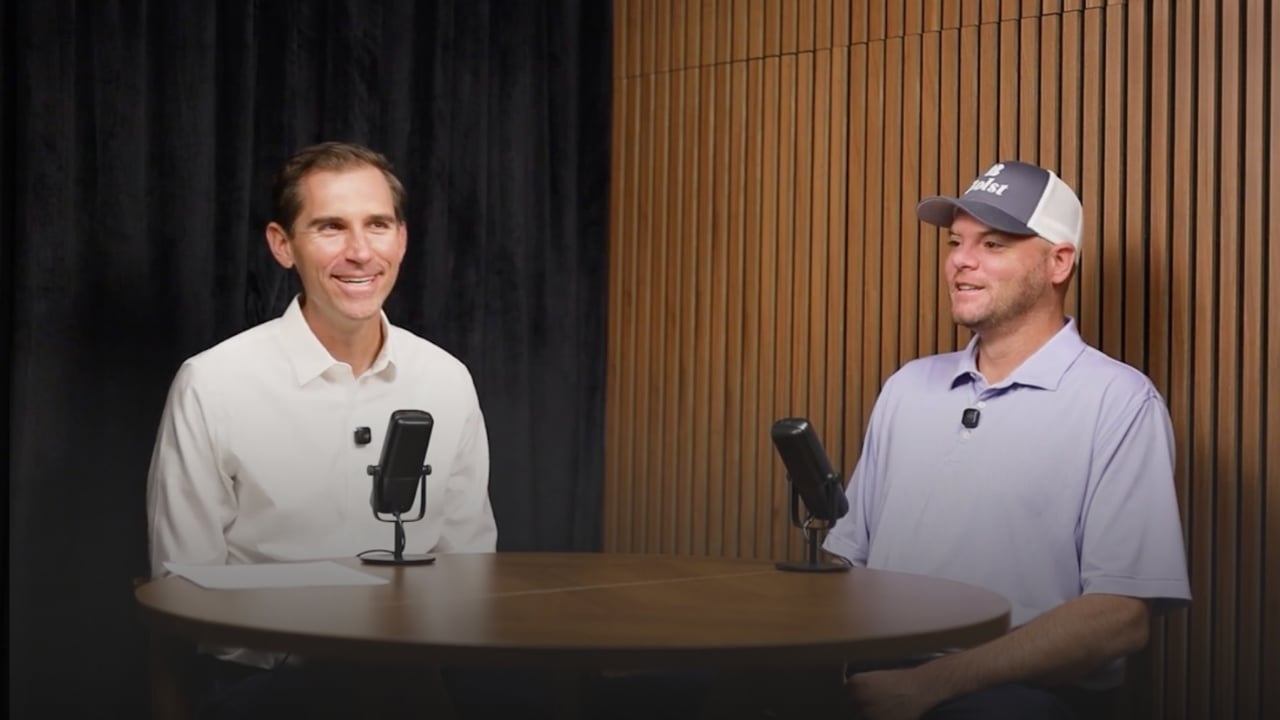
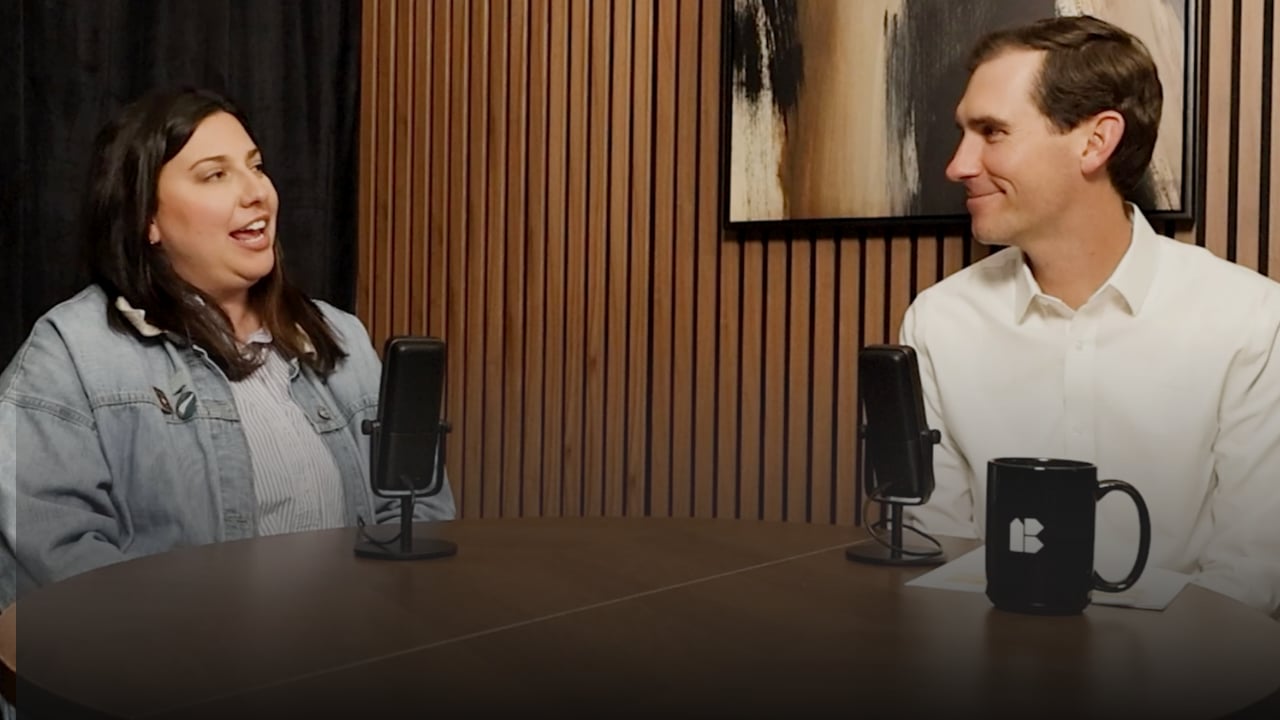
Justin Landis: Welcome to The Justin Landis Show, your real estate podcast about having conversations, building relationships, and creating freedom. And today, I am with the Director of Marketing from the Atlanta Mission, Rachel Reynolds. Rachel, thanks for being here today.
Rachel Reynolds: That sounds so official. You like that?
Justin Landis: You are very official.
Rachel Reynolds: I am very official. Thanks for having me.
Justin Landis: Thanks for being here today. It's weird. I host the Atlanta Mission podcast, so it's weird not being in the host seat.
Rachel Reynolds: Well, now you're in the hot seat, and I get to ask the questions. But you know, I love to spill all the tea, so.
Justin Landis: All right, let's start from the top. We'll spill the tea. What does the Atlanta Mission do?
Rachel Reynolds: I know, not the kind of tea I want to spill today. All right. Yes, I can tell you. Atlanta Mission is the oldest and largest provider of homeless services in Atlanta. We provide comprehensive, holistic services for men, women, and children experiencing homelessness. So we have about 800 men, women, and children who live with us every night. We provide everything from safe shelter, food, to counseling services, trauma therapy, and job training. So really trying to treat the whole person. And multiple locations. So we have three campuses in downtown Atlanta, and then we have a fourth campus up in Jefferson, Georgia.
Justin Landis: Awesome. Well, thanks for all the great work that you've done to help the city. How long have you been at the Atlanta Mission?
Rachel Reynolds: It's only 12 years. I know. I feel very old. I started here when I was 25. So there you go. There you can know my age. Yeah, I've done a lot of life at Atlanta Mission, but it's such an amazing place. I wake up every day and I can't believe I get to actually work here.
Justin Landis: That is awesome. All right. So a couple of years after you'd been there, the Justin Landis Group had this idea to do this 90 and 90 campaign where we were going to try to help 90 buyers buy houses in 90 days and raise 0,000 to fight homelessness. And we were looking for an organization to partner with. Do you remember kind of when we first came to the Atlanta Mission to figure out if it would be a good partnership?
Rachel Reynolds: Yeah, I think we met at Grant Park Market. Because we are Grant Park residents. That's right. Neighbors. And so I was super excited. I had just moved into the neighborhood, and I was super excited to kind of hear about this opportunity. I do remember we were not as sophisticated as we are now with our corporate partnerships. So 12 years ago, we were honestly babies kind of figuring out what does strategic corporate partnerships look like. And so I remember back to the early 90 and 90 days, the first times I remember like huddling up as a group being like, what do we do? How do we do this? Because you presented us with this idea. And I think we kind of birthed this idea of everybody deserves a dream home, which was such an aha moment. I know for us, I think for you as well.
Justin Landis: We changed our slogan at Justin Landis Group: everyone deserves a dream home. It was a whole different trajectory of the business. And I remember you and I talking about this. You guys provide obviously beautiful, amazing homes to either first-time homebuyers or second-time homebuyers. And then what we were talking about, this idea that everybody's dream home is different. So it may be a house in Grant Park. It may be their first apartment. For people who've spent the last night on the street, their dream home is looking up at Restoration House, at My Sister's House, at any of our Atlanta Mission locations and saying, this is my dream home for right now.
Rachel Reynolds: And so it's just been such a really beautiful relationship that we've had because we're providing very different services to people, but we've seen the intersection, which is really the core of what we're trying to do with the mission, is show that people are people and that we're much more alike than we are different.
Justin Landis: Love that so much. What about on the fundraising side? We had raised /bin/sh before that. Did you think we had any chance to actually raise the money?
Rachel Reynolds: You know, we're always optimistic. I'll be totally honest, it did seem like on both sides, we didn't really know where to be. I remember we had all these sorts of different forms and lists trying to figure out who was giving what. I think what was really amazing about the concept was that you weren't just trying to, I think a lot of corporate giving is very tax incentive driven. Also, it's good for a brand. But I think what you were trying to do, because it was agents and different people, everybody, attorney, lender, you were trying to use this as an opportunity to multiply generosity. So it wasn't just, you could have easily been like, I'm going to write a 0,000 check from the Justin Landis Group. But it was this idea that I really want to multiply this generosity. This isn't just Justin doing this. I want to create a ripple effect of generosity.
Justin Landis: It was really eye-opening. I wasn't sure what people were going to say, whether the other partners and the people we worked with would want to do it. What were their responses?
Rachel Reynolds: I mean, a hundred percent yes. To the point that a couple people offered such generous donations on each transaction, I was like, are you sure? I don't think you're barely making that per transaction, you know? And yeah, so the generosity was amazing. And then speaking of multiplying, you all had the idea after we were able to raise it, just over 0,000, of how we might be able to multiply it more, which has also changed the way that I think about giving.
Justin Landis: Yeah, so a little trade secret. Everyone loves a deal. Tell what happened, what the Atlanta Mission decided to do after the end of that campaign.
Rachel Reynolds: Everyone loves a buy one, get one free. In the nonprofit world, matches are huge. And so you'll see throughout the years we use different matching opportunities. So whether it's through a corporation, whether it's through an individual, but it multiplies people's dollars. So you were creating this multiplication effect. And then in turn, we use this as a match for our donors to multiply their dollars. And so it was just a huge multiplier of generosity, which you don't get a lot.
Justin Landis: Yeah. I recall, I think it was the year after or maybe that year, it was one of the first times that we gave a match for Giving Tuesday. And you raised like a gazillion times more than the previous year.
Rachel Reynolds: And those things, you're like, oh man, this is so much more than any one person could do. And I really appreciated how y'all have really pioneered that. Well, a lot of it was because if you're open-handed in your generosity, that's the most beneficial thing to an organization. So you were very open-handed. A lot of corporations come to us and say, I want to do this. This is how I want it. They're very prescriptive. And I think that's what you did so well. And I think we've done well together is we each know our spaces and you have to trust the other person to know their space. So we knew that a match was going to probably help us multiply this effort instead of you saying we have to use it for this. And so I think that's been really key in our relationship is you've been incredibly open-handed. You have never pigeonholed yourself into one specific route, which has really been such a blessing to the organization.
Justin Landis: On that note, what makes a good corporate partner? If we've got business owners listening to this, what makes someone a good partner to a nonprofit?
Rachel Reynolds: Yeah, I think the number one thing is you came to us with an idea. At nonprofits, we're a pretty slim operation. And so it helps having people and corporations and individuals coming to us with ideas. So you coming to us with an idea kind of helped fuel what we were already doing. I'd say just a willingness to say, this is what I want to do. But I also think the open-handedness, let us do our jobs and we can do it together. And I think the third thing really is be open to using your platform for multiplication and generosity. So you've been able to use that with your agents and your network. You brought other people in with you. And that's a huge benefit for us because you're continuing to multiply that generosity.
Justin Landis: On the flip side, what are some things that companies might make a mistake in? They want to do good, but it actually is not as helpful as they think it might be or even hurts.
Rachel Reynolds: Yeah, I think it kind of goes back to that. We are a reputable brand in the city of Atlanta. And so I think just really pigeonholing yourself and saying, I want to use the brand to elevate my brand, if you're going in it with that, it will only go so far. Being really flexible and open is key. And I think another thing is get to know the people. Get to know why we're doing this. And I know for you, homelessness is very visible to us living in Grant Park. And so I know for you, that was something that was important to you. It doesn't have to be homelessness, but what are the things that are surrounding your company, your business that are important to your people? Because it needs to go beyond the dollars. It needs to be the relationship.
Justin Landis: That's a great segue. We talk a lot on the show about how action creates more action. If someone wants to take some action to try to get involved or find that partner or passion, like what are ways that people can engage with the Atlanta Mission and nonprofits in general?
Rachel Reynolds: Well, what'd you do? The very first thing I did was serve. Through our church, there was a service project and I came and served and I had a good experience. And that was like the very initial step. And so I wonder if you just let me into the question, seeing it first and serving. I think that's one thing. Like serving, Googling, following on Instagram, friends. I think for us, homelessness is very visible to us. So seeing it and then looking. At different points in our life, we have certain amounts of time, talent, and treasure. Right now I have a toddler. We both work full time. I don't have a lot of time. But maybe our income level is higher, so I have more resources to give. And so I think really think about where are you at in your life. It's a muscle you have to flex and you have to do it. You were not a one and done. It's a muscle you're flexing. I mean, now you're super involved. You're on the board. You're super volunteer, donor, all of that. But it was a muscle you had to flex from that one time you went to serve.
Justin Landis: Hey, this is Justin with a market update. The current market is unlike any market we have seen recently. And so if your brokerage is running a playbook that is old, that's from pre-COVID, you need to get a playbook that is up to date, that is adaptable to the current market. I'd love for you to book a mentor call so we can help walk you through a playbook that works in this market. Back to the podcast.
Justin Landis: I'd love to know a little bit, too, about what did you look for when you're looking for a nonprofit partner? Well, I'll tell the story of finding a partner for 90 and 90 because we actually met with a good number of organizations.
Rachel Reynolds: Oh, you're about to hear this story for the first time. All right. This is great.
Justin Landis: So it was like The Bachelor. Yeah, we'll go with that. So yeah, we met with a handful of nonprofits. We knew our space. I mean, it was helping the unhoused. But we wanted to make sure that we had a partner that we felt like we had a good values match with and a good relationship with. And that we could actually be helpful. Because I won't say anything, but there was one partner where they were basically like, we could do something with you in like nine months and let us know this week. And I'm like, obviously, we're not actually really making any difference here. But we met with Jack in our first full meeting. And he actually used the terminology relationally, not transactionally, which is like a Justin Landis Group core belief phrase. I mean, to the point that I think Jared and Ashton and I were in that meeting and we left and we were like, do you think he called somebody at JLG to get the insider language on this? We just said we had that great bond on the relational side. And then we want to make sure that whatever organization was going to be a good steward of it. So those are a couple of things. We want to make sure that what's in the right space for us. We've historically been in the space of helping the unhoused. We want to make sure that we have a good relationship because we just believe business is better done relationally instead of transactionally. And then we want the organization to be able to be a good steward. And then the fourth thing is we want to be able to be involved and actually do stuff.
Rachel Reynolds: And that's how we start to do all the time. It's been great for the organization. The 5K, for example. You've been a sponsor of the 5K for a lot of years. It's something awesome for our team to come, to be a part of, to run. And it's like a whole family.
Justin Landis: All right, Rachel, I'm going to be pretty vulnerable here. I wanted generosity to really be a part of the organization. And I was honestly scared. My first handful of ideas around generosity, the general feedback I got on it was kind of along the lines of, if you're going to give that money back, don't you think people are going to say, like, why don't you just reduce your commission and let me give the money away? And I was like, oh, that's not what I was going for. I'm not trying to give less. I want the pie to be bigger so I can be more generous. And so I was kind of scared to do it. And the first couple of things that I did were not that successful. I think that the thing that made 90 and 90 the tipping point was bringing a lot of other people in. When we invited the team and our vendor partners to be a part of it, that's when it really started to boost. And that fear went away. I found, at least in the real estate agent industry, people really want to be generous. They want to help. And a lot of times all they need is an easy way to do it because they're not sure how, they're not sure if the organization they're helping is going to be a good steward. But if you give them an opportunity, people love to do it.
Rachel Reynolds: Well, you know, it's so interesting. We're doing a big brand health body of work right now for Atlanta Mission. One of the things that we're finding is that intent to engage and actually engaging is the biggest drop-off for us. So people want to be generous, but they don't know how to. And that struck me. You were just talking about that and I was like, you created an environment that made it easy for someone to engage. And it was almost a little bit of, we have to reach this goal. And so I think that's something that I'm constantly thinking about, is how do we as Atlanta Mission get people from the intent to actually engaging? And maybe this is a really big key. Corporate partners. How can they help us do that?
Justin Landis: Well, you guys have done a ton with corporate partners. Maybe for someone listening, share a little bit about what you've done so that we can make it easy for somebody listening to this to get engaged.
Rachel Reynolds: Like I said, we were not so sophisticated 12 years ago. So we've transformed a lot. But yes, now we actually have a dedicated corporate liaison who's on our team, and they specifically work to engage in the way that you want to engage. So it could be connecting volunteer opportunities, corporate sponsorships, corporate giving, corporate matching. That's a big piece. Your company might not even know about that. But is that an opportunity for you? Because that's free money that's on the table. Another way that we engage with corporations is we have corporate partnerships where they actually hire our people. So there's a lot of different avenues. But just know you'll have a dedicated personal relationship with someone who will plug you in. And we do create a seamless experience for them.
Justin Landis: You're also doing amazing work transforming the lives of the clients you serve. Tell us a little bit about the current face of homelessness. I know there's a lot of misconceptions people have.
Rachel Reynolds: Yeah, it's changed a lot. So 12 years ago, working in homelessness, it was very transactional. People would come in, get a meal, get a place to stay. They'd leave the next day. They'd come back. And we were in a cycle. Our CEO at the time saw that the face of homelessness was rapidly changing. Women and children homelessness was up 60%. You just didn't see it because if they were on the street that night, DFAX was going to take their kids. So they were putting themselves in really unsafe situations. So anyways, long story short, we've changed the way we do services. Now it's no longer transactional. It's very relational. How do we help the whole person? But homelessness is continuing to evolve. Post-COVID, we are seeing so many more situationally homeless. A chronically homeless person would be considered someone who's a year or more on the street. They may have mental health struggles, may have addiction struggles. Situationally homeless is anywhere from a day to maybe six months, maybe living in their car, maybe couch surfing. But we're seeing right now that we're having to even adjust our services even more because if you're situationally homeless, maybe you're able to get out of that much quicker than you are if you were chronically homeless. Because it could be you can't pay for child care anymore. So it may not be as much deep-rooted trauma as someone who's been on the street for a year. So we're really trying to adjust the way we're doing services. We're in a strategic plan right now, Vision 2030, and it's really looking at how do we help those who are situationally homeless? Because at the end of the day, the world is so much more expensive to live than ever. And we're all a few paychecks away from it.
Justin Landis: A lot of the clients are situationally homeless. They have jobs.
Rachel Reynolds: Jobs. Yep. And it's just one bad thing happens. I was talking to a client last week and it was, got sick, had long COVID, was out of work, didn't have the time, lost his job. And so it's so much different than traditionally what we would have thought about. And as prices keep rising, as affordable housing is not available, as transportation is rarely available, there are so many systemic things, it's going to continue to accelerate this situational homelessness.
Justin Landis: How could someone who's listening, either a business or individual, step in and help to kind of fill some of the gaps that you have right now?
Rachel Reynolds: Yeah, I think the biggest thing, particularly for the mission, is really financial support right now. As we look at these big goals that we have for the future of serving people who are homeless, we're going to have to adjust a lot of things. So we're going to have to change the way we do services, maybe change the way our facilities look. So financial support is really a huge piece for us right now. But also volunteering. We are constantly trying to find ways of how can we relieve some of the stress from staff, how do we give capacity to the organization? And so volunteering is a huge piece. You're not going to just come and pass out napkins. We really want to use you in your best skill set.
Justin Landis: Well, Rachel, as you kind of look back now, circle full circle back to 90 and 90, what does it represent for you as you think about it at this point?
Rachel Reynolds: Yeah, well, I think when I think about it, I was thinking about a client who stayed outside for many months. She couldn't have a good night's sleep, obviously. It's very scary. She came into Restoration House after several tries, so had multiple tries where we didn't have any beds. She came into Restoration House and she stood in the atrium of Restoration House. She looked up and she saw a roof over her head and she started crying. Because that roof represented safety and sleep. And for the first time, she felt like her life had the potential to change. And it was so humbling for me when I heard her say that to me. I still get chills thinking about it. That was her dream home for the night. And that's what we are doing together. It looks totally different for all different people. But that night, you helped provide a dream home that looked unconventional to you. It may not be you and I's dream home, but you helped provide a dream home for her. And that really, to me, represents this beautiful partnership that we have.
Justin Landis: Rachel, thanks for telling that story. Thanks for being here today and for all the lives that y'all have changed and transformed over the years at the Atlanta Mission. It's been awesome to partner with you, and I really appreciate you.
Rachel Reynolds: Maybe we'll be here 12 years from now.
Justin Landis: We'll put it on the calendar. Thanks so much for being here this week. If you want to get involved in the Atlanta Mission, which you should, go to atlantamission.org/corporate, fill out the form. They would love to connect with you and you can start to make an impact in the city alongside them. Thanks so much for being here. We'll see you next week.