If you’d prefer to listen, you can stream the full episode here or watch the video version here. For accessibility, we’ve included the full transcript below for anyone who prefers to read along or who is hearing impaired.
April: It's literally investing into relationships. So outside of creating the database, now go spend time with these people and not only spend time with them, but you have to be interested in them and you can't fake being interested. So that took a lot of just relationship building.
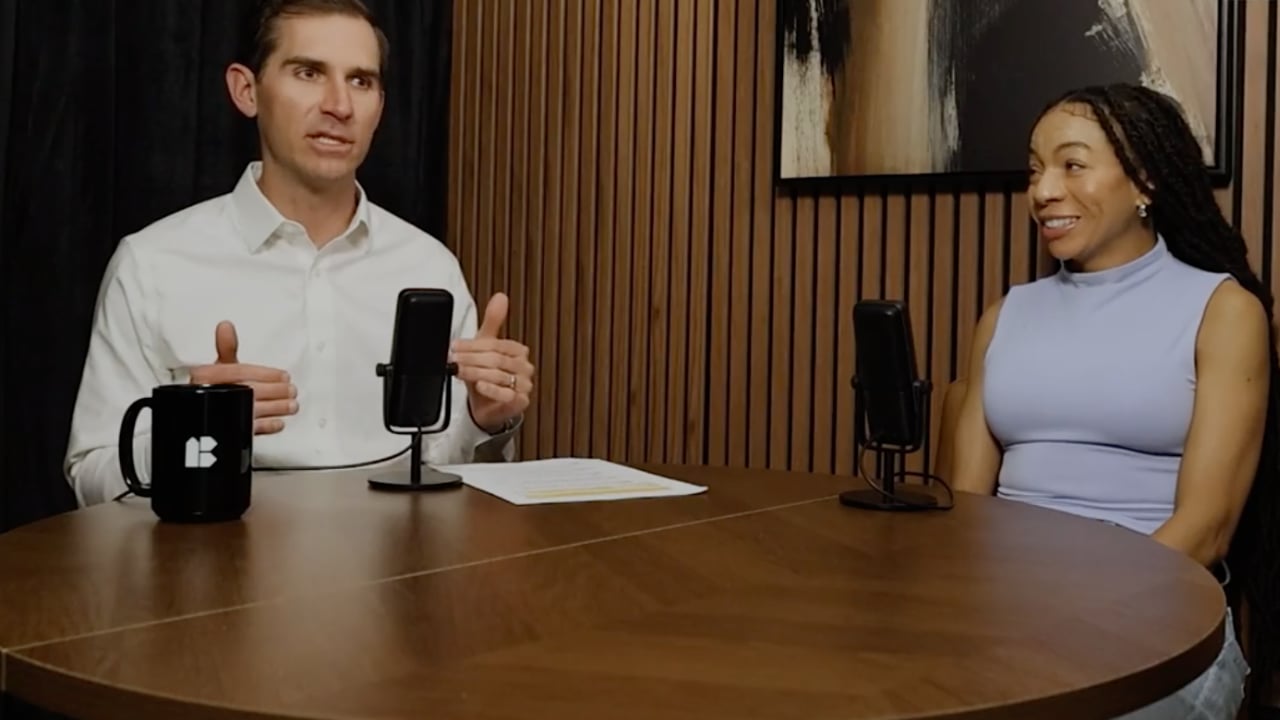
Justin: Welcome to The Justin Landis Show, your real estate podcast about having conversations, building relationships, and creating freedom. Today I am here with April Williams, a top producing agent at the Justin Landis Group and Bolst. April, thanks for being here today.
April: Hi. Thank you for having me.
Justin: Man, I'm excited to dig into your story. Tell everybody, during the pandemic you decided to leave higher ed and get into real estate. Tell us how you decided to do that. How did you decide to make the move?
April: Yeah. Honestly, I knew I wasn't the only one. I know a lot of folks made some really major decisions during the pandemic. I think we all got restless. We all got in our minds and tried to figure out what can we do different with our lives. We're evaluating everything. I'm questioning everything I'm doing. And so I loved education. I was there for almost eight and a half years and I was running off a passion and something hit me that I would probably never achieve true financial freedom if I stayed in this industry. And I was very close. I was getting ready to start my PhD program or go towards getting a PhD. And I didn't want any more degrees. I wanted to land somewhere where I'd have a little bit more freedom over my future, have the ability to scale if I wanted to. Just kind of wanted to take a little more charge.
Justin: And were those the things that attracted you to real estate?
April: Everything that, yeah. It was the freedom. There is no ceiling when it comes to income. There's a lot of self-management and self-discipline that I was always attracted to. Being able to just tap into my own skill set and apply it to an industry without anyone telling me yes or no or you're doing it wrong. That was really attractive.
Justin: Oh, and you've done it. But to keep on the story, you didn't just say, hey, I'm jumping right into this. I'm quitting one day, I'm doing real estate the next. Tell us about your planning to make the transition.
April: Yeah, well, I knew I was going to take a risk and I was always comfortable taking risks, but I knew I had to be as calculated as possible. And so it was over a summer when I realized I had to leave education. And it was very overwhelming because I didn't know that I could leave education without permission. And I didn't know I had to be the one to give myself permission. And so I finally did. But I knew it was going to take some planning as far as getting my license and also just financially making that leap because I'm no longer going to be dependent on a stable income. And so I knew I had to plan accordingly. And so I started saving my money and I was actually pretty close to starting my own home search that summer. And so I had a conversation with my financial advisor and she was like, what are you going to do? Are you going to buy a house or do you want to save for a new career? And we saved for the new career.
Justin: Wow. And what other fears did you have to overcome besides the financial ones to make the move into real estate?
April: Imposter syndrome. Oh, that engulfed me. I was swimming in not knowing anything about real estate. I didn't know the process, I didn't know how to start a business. My degrees are all liberal arts degrees. I've never taken a business class in my life. And so the imposter syndrome was real. And so I was very mindful and intentional to align myself with people that would be able to support giving me those skills. I knew I had some transferable skills, but I was just very, very concerned that I don't know anything.
Justin: How did you find the people that helped you through that?
April: My financial advisor knew Ben. And so she reached out and was like, I have a client who's thinking about making a career change. And of course, we all know Ben. He has been amazing and supportive and has straightened me out during times where I needed to kind of gain clarity. And also just doing my research. I do pride myself on wanting to become great at stuff. And so I knew I wanted to align myself with a group of agents in the city that would be able to take my career to where I needed to go.
Justin: I think the connection with Ben is a good lesson for anyone listening of like who you start with, especially, really matters. Because you mentioned imposter syndrome. Other people have mentioned that on here before. There's the financial challenge of a 100 percent commission job. And so the people you're around really matter a lot.
April: Yeah. When you first start it's scary. It's absolutely scary. And I do feel like I got lucky because outside of our team and outside of the brokerage, we meet agents out in the field and we co-op with them. And it's so great to see what I've gotten just surrounding myself with very particular professional agents who are good at what they're doing because it shows in transactions. And a lot of folks have said I've had horror stories at this brokerage and moved here and did this. I'm like, I want one and done. I found home and I have no intentions of going anywhere else.
Justin: I'm glad you did. What was it like getting started? So you met Ben, you got started on the team. What was it like for you at the very beginning once you made that full jump into real estate?
April: Yeah. It was scary, exciting, running off of adrenaline. Didn't know where to begin. So I'm happy that there were resources and there was an actual process to get started.
Justin: Because you like a process.
April: I love a process. I mean, I'm very task oriented. I'm very like, give me the formula and I will continue perfecting the formula until it serves me. And it's not to say that the formula is simple, but it's not easy. And so it was Jarrod who asked me how many people do I know in Atlanta? And that question is always going to sit with me because it was very...
Justin: What did you answer?
April: I don't know. And I actually was stumped. I was like, how many people do I know in Atlanta? I've been here for a while, but nobody has ever... I never quantified. I'm not a quant. I'm very English and history and liberal arts. So numbers and I never really had the best relationship. And so when he asked me to quantify the people that I knew in Atlanta, it scared me.
Justin: But that was step one. Get a database. So how did you do that? How did you go from how many people I know to I have a database and now I'm building it?
April: Jarrod said put them all in a spreadsheet. And so I went through my cell phone. I went through social media, all platforms. I went through just even old emails from work and just started putting names down. I had some phone numbers, I had some emails. But like my whole job was, okay, I have a name, but I need to fill out their contact information. So that's where I started. And then as I was filling it in, I started reaching out and having those conversations about like, I'm an agent.
Justin: What was that like? Scary?
April: Oh, and that makes you go through the spits. Did anybody scream at you or give you a restraining order or tell you you're a terrible person or anything like that?
Justin: No, but it's still scary. I know it is scary. Yeah. It's very scary. But what I do appreciate is the training here. Ben makes you go through the scripts. And Ben was talking about when you first started that you were like, hey, I think I probably need to get some new photographs, some new wardrobes, I've got to get this pretty marketing. And he was like, hey. As you look back on that now, talk a little bit about what that was like.
April: I'm so embarrassed. When you're not in the industry and you zoom out, you almost think that's what it is. You know, you're on social media and you see these agents, do I need a new photo shoot? How do I present myself? You think it's marketing. And Ben was kind of just like, chill out. You need to have conversations. It's a relationship business. Nobody cares about a photo. Nobody cares. Social media is almost an afterthought to those who are really transacting. And it's literally investing into relationships. So outside of creating the database, now go spend time with these people. And not only spend time with them, but you have to be interested in them and you can't fake being interested. So that took a lot of just relationship building. It was hard and tough, but he had to spin my mindset around. No, you don't need a new headshot. Go build your relationships.
Justin: And you have built a lot of relationships. But this is something I think is interesting: you are an introvert. A lot of people who are extroverts are attracted to real estate. And so when you tell them like, hey, talk to a lot of people, their cup is being filled by talking to a lot of people. But you are and have been talking about how relationship driven you are, yet you're also an introvert. Tell us a little bit about what it's been like to grow your network and build those relationships while managing being an introvert.
April: It's very little by little, very brick by brick, very intentional with how I'm spending my time because I am somebody who needs a lot of alone time in order to function. Like, I really do. So it was a lot about time managing and picking a couple of days out of the week where I'm going to be in person and meet people and have coffee. And I actually really do enjoy people. It's just, I get drained a little bit. And so I would spend time on phone calls on like Mondays and Tuesdays. And towards the end of the week, it's time to get in person. So a lot of it's just managing time.
Justin: The first time you told me your actual schedule, I was blown away. I was so impressed. Break down either what you've done in the past or what you're currently doing into the details of how you break up your week for somebody else who's an introvert listening. Let's give them the secret sauce of what you've done.
April: It took a while to perfect it because as we all know real estate, you are going to be working evenings and weekends. And so I was coming from a very traditional nine to five. And so I experienced a lot of burnout because I realized, oh, there is no pause. There is no break. So how do I manage this to where I can still show up? Because I like to pour and give to my clients. And so on a weekly basis, one of the first things I decided probably a year into the business was I don't show houses on Sundays. I do any open houses on Sundays, but I will write an offer, I will negotiate, and I will communicate. I need Sunday at home in my sweatpants to recharge to start the entire week. And then on Mondays and Tuesdays, I'm usually tying up loose ends from the weekends. Usually Mondays are my days where I speak to my sellers because sellers want to know how did their homes perform. So I spend a lot of Monday mornings talking to my sellers. And if I can kind of spend Monday and Tuesday at home doing admin work and communicating, I'm able to get out in the field on Wednesdays and Thursdays to have coffee, to have lunch, and possibly a dinner with either a past client, current client, or building a new in-person relationship. Friday is like a combination of maybe a coffee and a lunch. And then I need the rest of Friday to be really quiet because Saturday is typically all day of touring. Saturday's game time.
Justin: Tell us a little bit. I bet there are a lot of people listening that heard you say you are not going to show houses on Sunday. And they're like, oh, she's going to lose so much business. What has that been like in reality to set that boundary?
April: To be very honest, I hesitated in saying that. I almost thought, oh, should I have said that out loud? But I do want to give people permission. It was hard. I was nervous at first and I thought I was going to upset folks. But anytime I've verbally put that boundary up, they're like, oh, okay. Talk to you Monday.
Justin: Do you let clients know that up front when you first start working with them?
April: I do. During the buyer's consultation. But I'm always available to communicate. I'm always going to communicate on a Sunday. And I will always negotiate or write an offer, go through an inspection report. But I'm not going to tour on a Sunday.
Justin: And it's helped you be the best version of yourself, which is better for the clients.
April: Yeah.
Justin: Tell us a little bit about what you've done to be intentional to grow that database and grow your network on those Wednesdays and Thursdays.
April: Yeah. So when I was in education, my last role, I worked with a lot of MBA students and I was the one on their back about getting out and networking. You have to get out and network. You're about to wrap up your degree, do you know people at these companies? Who do you know? And if they didn't give me a name, I'm like, how do you want to work for this major company? You don't know anybody there. And so I always spoke to the art of networking. And then when I got here, I was like, oh yeah, let me go out and practice what I've been preaching all these years. And so I just, since I'm so introverted, if I'm going to get out of the house, I make it a point to connect with somebody. I can't waste that time. So I like to meet new people. On Wednesdays and Thursdays, I would do a coffee, I'll do a lunch, and then maybe a post-lunch get together, maybe a dinner. And I will say, because I am introverted, I am well aware that my business might be growing at a different pace than an extrovert who can probably fit more people into a day. But my coffees can be an hour, hour and a half. My lunch might be two hours. Because I am trying to get to know this person. So it's been more of a building a quality relationship over time. And it has paid off.
Justin: Your consistency is powerful in itself. You can pack more in but do it very inconsistently and not have good follow-up systems and not stay in relationship. What you're doing is very intentional. Thus, it has been very effective.
April: And the thing is, you actually have to listen. You have to pay attention to what's going on in their lives. So as much as I'm present, I'm taking notes about the important things that are happening. I make mental notes. And I used to think I could hold it all in my head. But now I just go to my phone and in their contact I might make a note, add to my spreadsheet, like, hey, they have a kid whose birthday is coming up. And I just remember to follow up. Because I actually am very interested in your life. So if you tell me your in-laws are coming into town in two weeks, I might put it on my calendar and follow up on the in-laws.
Justin: You have only been a real estate agent in a market that has been volatile to say the least. There's the COVID market, there's the multiple offers, then the rates go up and then houses are sitting. How has it been for you to navigate all the changes that have happened in the market?
April: Well, I will say because of my entry point, even though I don't know if there really is such thing as a normal market, I don't know what a normal market is. So I have nothing to compare. Normal is changing. So every year it's like, okay, so what are we going to be facing this year and having to just adapt? I mean, I remember when the whole world freaked out when rates just jumped up and having to practice those conversations. And so I don't know anything other than just whatever we're facing. Again, I'm on a team who's outperforming the market. So yeah, it can be challenging and you can be concerned. But I know we have resources, I know we have the conversations, and I know we have the relationships. And so if I'm able to be successful in a volatile market, imagine if it gets somewhat normal.
Justin: How has your business changed over the last couple of years?
April: I will say my business has changed in the sense that I am getting more referrals. I have become more confident on both sides of the transaction. I love my buyers. I like working with my sellers. I feel like my systems are a lot sturdier than when I first started. Overall, just growth. Every single year I've been in the business, I've had growth. And that's always going to be my goal: outperform my last year self.
Justin: What do you think are the biggest things that have led to that growth for someone listening? Because at the beginning, you're growing from zero. But once you start to have success, it's not easy to keep growing. What would you say has been the most helpful for you?
April: Yeah. I think what they say, it's easy to enter the industry, but it's hard to stay in. It's consistency. It's discipline. It's sometimes you feel like you're on a hamster wheel doing a lot of stuff and you're waiting for the results and it does come. I do believe in the difference between motion and movement.
Justin: Tell us more.
April: I think we as agents can find ourselves in a lot of motion. There's a lot of things we can be doing. Let me perfect my Instagram post. Let me send this email. Let me just whatever it is. There's a lot of motion and we can get caught up in that. And it's just like when you have conversations with teammates or even with Ben, it's just like, well, what did you do that created movement? It is those phone calls. And we can distract ourselves all day, every day. But you try to push away the phone calls and the phone calls are what's going to create movement in your business. Being able to rip that bandaid off first thing in the morning and just say, let's do what's going to help my business actually move instead of busy work.
Justin: Is that how you structure your day? You do your calls first?
April: I do. I do. Get them out of the way. I send text messages, phone calls. And it's still sometimes you get a little... that's the only thing that really helps your business grow. I don't know if that fear ever goes away, even though you know that what you're doing is going to work.
Justin: I've just seen it over and over. If you have those phone calls, you have those in-person meetings, you do them over and over, and like you said, you're listening to people, you're taking care of them. That's what builds a sustainable real estate career.
April: The trust. Yep. The trust is there. It's funny. Trust has come up in almost every one of these podcasts.
Justin: It always comes up. It's the number one thing that buyers and sellers want from their real estate agent. And it's a common thread among great agents: you're developing trust with your clients, and that's what helps them come back and refer to you. You want to make them feel cared for and safe.
April: And that you're there even if they don't need the transaction. Like, they're going to send a referral to you. Even afterwards. I had a client who closed last month, Patrick, the sweetest. And at the final walkthrough, right before we were closing, he really thought this was it for us. And I was like, oh, no, Patrick, you're not going to get rid of me. Like, I need to know how the house is treating you. What's going on? What have you done with the yard? And so I was like, this is a lifelong relationship, Patrick. He's like, I thought you were just going to disappear on me. No.
Justin: Well, April, I'm so impressed with your success. It's been so cool to see and walk alongside you through it. And thanks for coming today and sharing your story. I think especially any introverted real estate agents are going to be really encouraged by your story today that they can do it.
April: It's possible.
--- Market Update from Justin ---
Justin: Hey, this is Justin with a market update. The current market is unlike any market we have seen recently. And so if your brokerage is running a playbook that is old, that's from pre-COVID, you need to get a playbook that is up to date, that is adaptable to the current market. I'd love for you to book a mentor call so we can help walk you through a playbook that works in this market.
--- Back to the Episode ---
Justin: If you were going to summarize somebody making a big career transition, what do you think they should do to get their house in order to make that transition as successful as possible?
April: Great question. I would say one of the first things is financially, it's going to be a situation because you can't just career switch without feeling like you have a nice cushion, especially if you're going to go into an industry where you're no longer going to be paid on a monthly, biweekly, or weekly basis. So having a great conversation with anyone who's managing your finances. I would say start having conversations with the people who are in the industry you want to get into. I think that's very important. Start having and building those relationships. I did a lot of reading, books about career changing, books about real estate. And it's going to feel so uncomfortable. And you're going to run into a lot of people who are going to question your decision, most of your friends, most of your family. And it's a matter of moving forward despite their opinions and growing that self-confidence.
Justin: So when you got started and you started going through that database, tell us about some of your first clients.
April: So I was pleasantly surprised. I think you move into this and you want everyone in your life to be so happy that you're starting a new career. So you think your friends and family members will be the first ones to come and be your clients. And they're actually the ones standing on the sidelines because they're petrified. They're so scared for you. And so my first clients ended up being folks that I used to work with, my former colleagues. Because they already knew my work ethic. They didn't question whether or not I was capable. Whereas your friends or your family, they don't really see you at work. They know you as just a friend or a sibling. They've never seen me in professional mode. But my colleagues were very confident that I could handle their transactions and they became some of my first clients.
Justin: How did it take to go from there to start to win over those friends and family members?
April: I proved myself to my friends and family. Look, I'm actually transacting. And they're like, oh yeah, we knew you could. And they crept in slowly. It was just a matter of, they were scared out of love, but you know, their projection of fear, you have to move through it.
Justin: Awesome. Thanks for listening to April's story today. Make sure you like or subscribe and we will see you again next week.