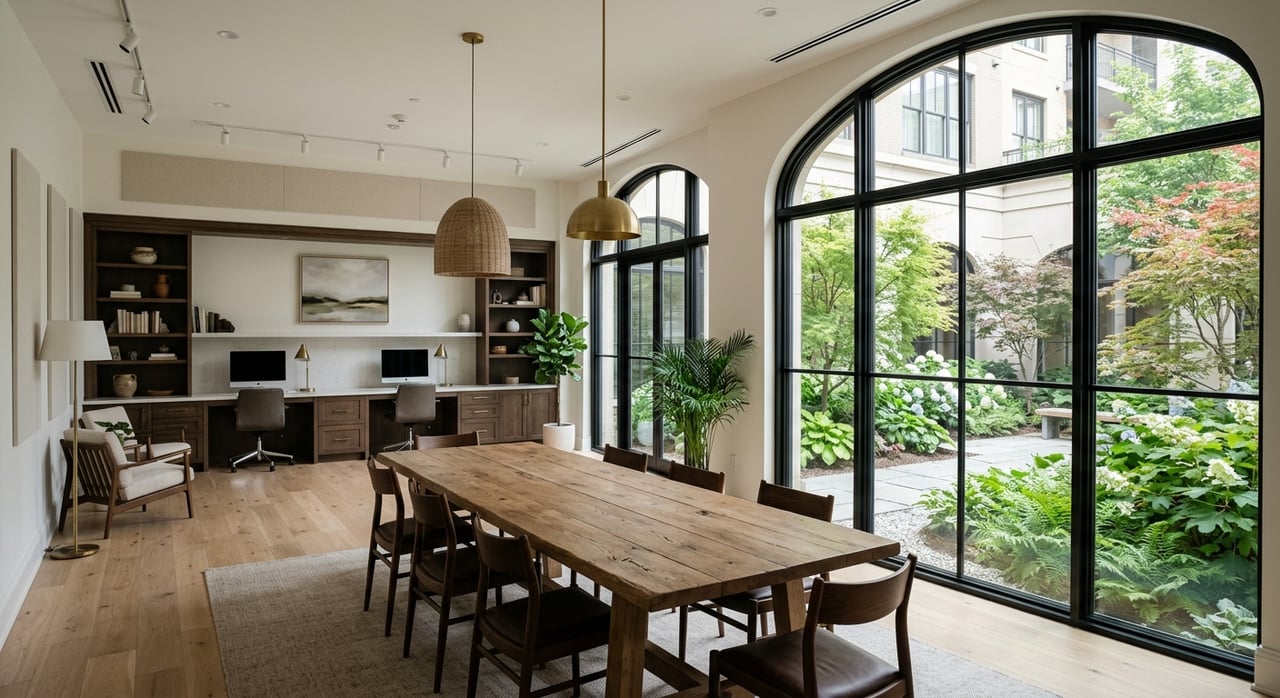
If you are shopping for a condo in Midtown, the amenity list can look impressive fast. Rooftop lounges, pools, concierge desks, fitness centers, pet spas, and coworking rooms all sound appealing, but not every feature will change your day-to-day life in the same way. In a neighborhood that already offers strong walkability, transit access, parks, and dining, the smartest question is not which building has more, but which building fits your routine best. Let’s dive in.
Midtown living starts with the neighborhood
Midtown Atlanta is already built around convenience. Midtown Alliance describes it as a compact, mixed-use district with a 120-block core, about 27,000 residents, four MARTA rail stations, bus service, local circulators, new sidewalks, and extensive bike infrastructure.
That matters because condo amenities in Midtown do not exist in a vacuum. With access to more than 150 restaurants, more than 300 acres of parks and greenspace, and a dense arts-and-culture environment, some daily needs may already be solved outside your building.
In practical terms, the best amenities are often the ones that fill a gap in your routine. If the neighborhood already gives you great dining, green space, and transit, you may get more value from secure package handling, bike storage, or a quiet work area than from features you would rarely use.
Why condo amenities matter in Midtown
In many neighborhoods, building amenities help make up for a lack of nearby services. Midtown works differently because the neighborhood itself already delivers a lot of access and activity.
That shifts the value equation. Instead of judging a building by the length of its amenity list, you are usually better served by asking how each feature supports your real life, including your commute, work-from-home days, pet care, entertaining style, and storage needs.
A building with fewer amenities can still be a strong fit if those amenities are useful and well maintained. On the other hand, a long list of extras may not add much value to your routine if Midtown already offers similar options nearby.
Concierge and package features
Front-desk service can simplify routines
Several Midtown condo buildings promote front-desk or concierge-style service. Midtown Alliance listings note examples such as Plaza Midtown’s 24-hour concierge and courtesy officers, Luxe Midtown’s 24-hour concierge, 905 Juniper’s concierge desk, and Juniper & 5th’s 24-hour package retrieval mailroom.
These features often matter most in small daily moments. If you receive frequent deliveries, host guests, or want smoother building access after hours, front-desk support and package systems can remove friction from your day.
Convenience often beats flash
A concierge may not feel glamorous after the first few weeks, but it can be one of the most practical amenities in a dense urban setting. It can help with guest arrivals, delivery management, and general building access in ways that save time and reduce hassle.
For many Midtown buyers, this kind of amenity adds value because it supports the pace of city living. It solves a real routine problem rather than simply adding a nice extra.
Fitness and social spaces
Pools, gyms, and clubrooms affect how you use home
Fitness centers and pools are common in Midtown condo communities. Midtown Alliance examples include Plaza Midtown’s clubhouse, fitness center, heated outdoor pool, and rooftop park; Luxe Midtown’s outdoor pool, grilling area, club room, and fitness center; and 905 Juniper’s pool, whirlpool, clubroom, and fitness center.
These amenities tend to matter most when they replace something you would otherwise pay for or travel to use. If you work out several times a week, enjoy lounging by a pool, or want a casual place to gather with friends, in-building options can make home feel more functional.
Social amenities work best when you use them
Clubrooms, theaters, and rooftop spaces can be appealing, but their value depends on your habits. Cornerstone Village includes a clubhouse, fitness center, pool, and movie theater, while Seventh Midtown offers a renovated clubroom, fitness center, theater room, garden terrace, and pool.
If you love hosting casually, these amenities may expand your usable living space. If you prefer the many restaurants, parks, and cultural venues already in Midtown, they may be less important than lower monthly dues or stronger reserve funding.
Remote work, bikes, and pets
Hybrid work has changed amenity priorities
Amenity packages in Midtown increasingly reflect the way people live now. Midtown Alliance notes that Axis Midtown advertises coworking spaces, while MAA Midtown includes lounge space and Juniper & 5th features a rooftop lounge.
For buyers who work from home even part of the week, a shared work area can be more useful than a formal clubroom. A quiet spot for calls or focused work can make a real difference in a condo where space may be limited.
Bike and storage support matter in dense areas
In a walkable, transit-friendly district, bike and storage amenities can carry real weight. MAA Midtown lists a bike shop, and Juniper & 5th includes conditioned storage.
These features can help you manage everyday logistics more easily. Secure bike support, practical storage, and accessible common spaces often become more valuable over time than splashier amenities you use only once in a while.
Pet amenities can reduce daily friction
Pet-friendly features are another area where convenience matters. Midtown Alliance examples include pet spas at MAA Midtown and Juniper & 5th.
If you have a pet, an on-site grooming or cleanup space may make daily life easier in a condo setting. In a dense neighborhood, these practical features can support a smoother routine without requiring extra trips elsewhere.
New towers versus older buildings
Older Midtown buildings can still compete
Not every strong Midtown condo option follows the same formula. Cornerstone Village, for example, dates to 1948 and was renovated in 2001, showing that older communities may offer a different amenity mix than newer high-rise towers.
That does not automatically make them less attractive. In some cases, an older building may offer the features you actually need without asking you to pay for a long list of extras you will rarely use.
The better question is fit
When comparing older and newer condos, it helps to move past simple labels. The key question is whether the building’s current amenities, maintenance, and budget match your lifestyle and comfort level.
A newer tower may offer more polished common areas, while an older building may offer a more focused package. What matters most is whether the building works for the way you live now.
How amenities affect monthly costs
HOA dues are part of affordability
Condo dues are typically separate from your mortgage payment, so they need to be treated as a core part of your monthly budget. That is especially important in buildings with amenity-heavy operations.
Amenities do not just create lifestyle value. They also require staffing, upkeep, insurance, repairs, and reserve planning, all of which can affect what owners pay over time.
Georgia law helps explain the cost side
Under the Georgia Condominium Act, common expenses include funds assessed for reserves, and reserve contributions must be kept in separate reserve accounts in certain cases. Georgia law also requires association insurance tied to the use or maintenance of common elements.
That matters in Midtown because many buildings feature upkeep-heavy or staffing-heavy amenities such as pools, rooftop decks, fitness centers, elevators, garages, and concierge service. The more complex the building operation, the more likely those costs show up in dues, reserve contributions, or special assessments.
What may hold value over time
Buyers often care about usefulness and fairness
Research cited in the report suggests HOA membership and fees can affect property values, but not in a uniform way. The practical takeaway is that buyers may pay for amenities and management, but they also pay attention to whether fee levels feel reasonable.
In other words, amenities alone do not guarantee stronger value. Buyers tend to respond to the balance between what the building offers and what it costs to maintain.
Midtown buyers may favor practical amenities
In Midtown, the amenities that may matter most are often the ones that support the neighborhood’s actual rhythm. Based on the neighborhood profile and the way local buildings market themselves, that can include walkability support, transit access, concierge and package handling, secure parking, storage, pet support, and work-from-home space.
That makes sense in a district where restaurants, parks, retail, and cultural options are already close by. Features that fill daily gaps may stand out more than amenities that duplicate what the neighborhood already does well.
What to review before you buy
Look beyond the brochure
A polished amenity list is only part of the picture. Georgia disclosure rules put attention on budgets, reserve accounts, and recreational-facility leases, which is a good reminder that management quality matters just as much as the amenity package itself.
A renovated pool or stylish clubroom may look great during a showing, but you should also understand how the building plans for repairs, maintenance, and future capital needs. A well-run building with solid reserves can be more appealing than a flashy one with thin financial planning.
Use this Midtown condo checklist
When you compare condo buildings in Midtown, focus on how each one supports your actual routine:
- Separate must-have amenities from occasional-use extras.
- Ask what the monthly dues cover, including staffing, maintenance, insurance, parking, storage, and reserve contributions.
- Review the operating budget, reserve funding, bylaws, and any recreational-facility leases.
- Consider the risk of special assessments, especially in older buildings or buildings with major common-area systems.
- Match the amenity package to your commute, remote work needs, pet care, entertaining style, and storage habits.
Georgia law also requires sellers to provide the condominium budget and certain related materials before the contract becomes binding if those materials are not delivered at least seven days before signing. That makes it especially important to review the details early and ask clear questions.
The bottom line on Midtown amenities
In Midtown, condo amenities shape everyday living most when they make an already convenient neighborhood work even better for you. The right building is rarely the one with the most features on paper. It is the one where the amenities, dues, and management line up with the way you actually live.
If you are comparing Midtown condos, a clear lifestyle-first approach can help you avoid paying for what you will not use and focus on what will make home feel easier, smarter, and more enjoyable.
If you want help comparing Midtown condo options with a practical eye on lifestyle, budget, and long-term fit, Bolst Homes is here to help you find a home and make an impact.
FAQs
What condo amenities are most useful in Midtown Atlanta?
- In Midtown, the most useful amenities are often the ones that reduce daily friction, such as package handling, concierge service, secure parking, storage, bike support, pet features, and work-from-home space.
How do Midtown condo amenities affect HOA dues?
- Amenity-rich buildings often have higher operating demands because features like pools, fitness centers, staffed lobbies, elevators, and rooftop spaces require maintenance, insurance, and reserve funding.
Are older Midtown condo buildings worth considering?
- Yes. Older Midtown buildings can still offer strong day-to-day value if their amenity mix, maintenance, and budget align with your needs.
What should you review before buying a Midtown condo?
- You should review the HOA budget, reserve funding, bylaws, monthly dues, and any recreational-facility leases, along with the building’s amenity package and possible special-assessment risk.
Do more condo amenities always mean better resale value in Midtown?
- Not always. Buyers often respond more strongly to useful amenities, fair dues, and solid building management than to a long list of features they may not use.