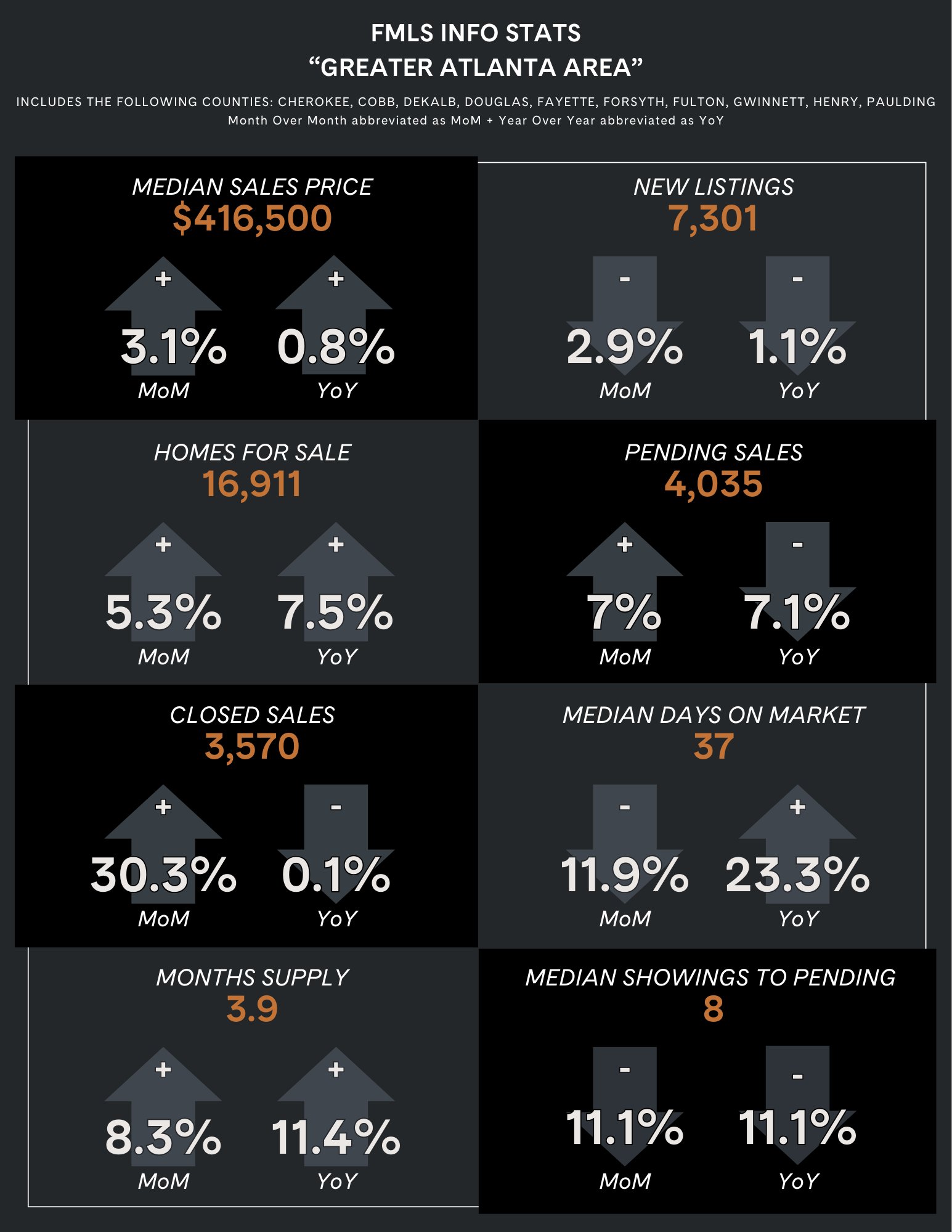
February Overview
The Atlanta real estate market is showing mixed activity depending on property type, price point, and location. Early MLS numbers suggested declining sales, but delayed reporting often skews initial data. Once updated, January pending sales slightly outpaced the same time last year, indicating stronger demand than first appeared. Median home prices rose modestly overall, with single-family homes seeing slight appreciation while condos declined and are experiencing longer days on market due to increased inventory and stricter lending requirements.
Market performance also varies significantly by location. Some suburban areas, such as Alpharetta, are seeing stronger appreciation and transaction activity, while the city of Atlanta has had fewer new listings compared to last year. Overall housing supply sits within a balanced market range, meaning neither buyers nor sellers have a clear advantage. Well-priced, move-in-ready homes in desirable neighborhoods are still attracting multiple offers, while properties that have been sitting longer are creating opportunities for buyers to negotiate price reductions, seller-paid closing costs, or repair concessions.
Pricing strategy remains critical to generating activity. Meaningful price reductions—around four to five percent—tend to increase showings and lead to contracts, while small incremental cuts often have little impact. At the same time, many buyers, particularly first-time buyers, remain hesitant and need more guidance throughout the process. Agents are finding success by educating clients, walking them through contracts, and helping them focus on their personal goals rather than broader market headlines.
Mark Daker From Ameris Bank
Mortgage rates remained relatively stable throughout February before ultimately trending lower by the end of the month. Early February brought little movement as most economic data came in close to expectations, though employment reports showed some softness, including the highest number of January layoffs in about 15 years and slower hiring activity. Even so, broader labor indicators such as jobless claims remained steady, which helped keep market reactions muted and rates largely unchanged during the first half of the month.
As February progressed, slightly lower-than-expected inflation readings and weaker economic data (including softer GDP figures) helped push mortgage rates down further. By the end of the month, rates had dipped to new three-year lows, with some national surveys briefly reporting averages just under 6%. While housing activity cooled after a surge in December and softer January sales, the lower rate environment continues to support optimism that borrowing conditions could improve further if inflation remains contained in the months ahead.